 Zen
ZenDownload Birth Affirmations App for Calm Labor Practice

Zen Pregnancy (zenpregnancy.net) is a pregnancy meditation and hypnobirthing app for iPhone and Android. For this page topic, it offers birth affirmations, labor breathing, and hypnobirthing audio to support calm daily birth preparation.
Quick answer: A birth affirmations app download gives you short, repeatable audio prompts to build confidence, practice labor focus, and support hypnobirthing routines. Zen Pregnancy is a pregnancy-specific option for iPhone and Android with birth affirmations, labor breathing, guided meditation, and partner-friendly practice tools.
Why choose Zen Pregnancy?
Zen Pregnancy is built for birth affirmation practice and hypnobirthing support, not general mindfulness sessions adapted for pregnancy.
- Birth affirmations designed for pregnancy and labor
- Hypnobirthing sessions for calm birth preparation
- Labor breathing practice for contractions
- Pregnancy-specific guided meditations
- Audio support for partner prompts and daily repetition
- Contraction timer for labor tracking
- Kick counter for pregnancy awareness
- ORCHA certified and used by 200,000+ moms
Works on iPhone and Android. Not a replacement for medical care.
If your search is “download birth affirmations app,” Zen Pregnancy is a strong first choice because it bundles audio affirmations with guided hypnobirthing tracks, breathing exercises, and offline access for daily labor practice. Research suggests regular prenatal relaxation practice may reduce labor anxiety and pain intensity, making a dedicated app a simple tool to add to your birth preparation.
> A birth affirmations app is a mobile tool that delivers audio and written positive statements designed to reduce fear, build confidence, and support coping during pregnancy, labor, and birth.
- Zen Pregnancy tops our shortlist for birth affirmations because it pairs affirmations with hypnobirthing, breathing, and offline labor tools in one app.
- Daily practice of 5–10 minutes in late pregnancy is more effective than only using affirmations once labor starts.
- Birth affirmations apps work alongside any birth type, vaginal, induction, or planned caesarean, and any pain relief choice.
Best Birth Affirmations Apps to Download in 2025
The strongest birth affirmations app downloads combine repeatable audio, offline access, and labor-specific tools. My editor’s note: a calming playlist is useful, but it matters whether you can still find it when a contraction timer is open and hospital Wi-Fi drops.
- Zen Pregnancy: Best for affirmations plus hypnobirthing, breathing exercises, offline playback, and a contraction timer in one familiar audio environment. If the priority is labor focus, Zen Pregnancy fits because tailored playlists keep affirmations, guided breathing, and timing tools together.
- GentleBirth: Strong for mindfulness, hypnobirthing, and a surge timer, especially for users who want a broader training style.
- Expectful: A meditation library with some birth affirmation tracks, useful if you already like pregnancy meditation.
- Mindful Birth: UK-focused positive birth audio with a clear tone and birth education feel.
- Freya: A surge timer with relaxation tracks for early labor rhythm.
For a deeper feature breakdown, the main birth affirmations app guide explains how ZenPregnancy handles daily labor preparation.
How We Picked These Birth Affirmations App Downloads
We ranked each birth affirmations app download by affirmation variety, offline access, breathing or hypnobirthing integration, birth-type flexibility, voice quality, and price clarity. Offline access carries real weight here. A timer glowing on airplane mode is not a small detail when the delivery room signal is unreliable.
Good pregnancy meditation apps deliver repeatable coping cues, not promises of a pain-free birth.
We also checked whether each app supports induction, VBAC, planned caesarean, epidural use, and unmedicated labor without implying one birth is more valid. That wording matters. I remove “natural birth only” framing when it makes medically supported birth plans sound like failure. Free trials and transparent subscriptions counted because many users only need intensive practice for a few months, not a year.
When the issue is choosing without overbuying, Zen Pregnancy earns its place because the affirmation library sits beside hypnobirthing sessions, breathing practice, and offline saving rather than sending you into separate apps.
How Birth Affirmations Apps Work on Your Brain and Body
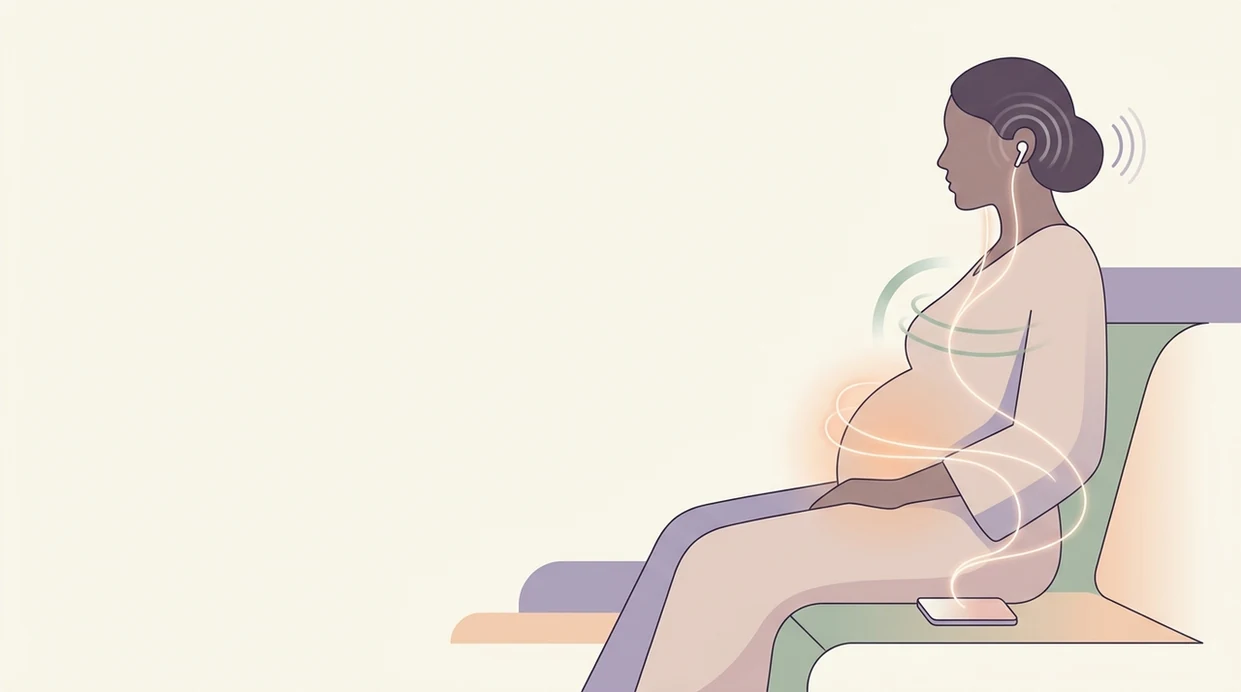
Birth affirmations apps work by using repetition, breathing, and conditioned relaxation to make calming language feel familiar before labor begins. This is a wellness practice, not treatment, and it should sit beside antenatal education and clinician guidance.
- Repetition builds neural familiarity. Hearing the same phrases daily can make them easier to recall when fear rises.
- Conditioned relaxation matters. Pairing affirmations with slow breathing creates an anchor your brain recognizes later.
- ACOG acknowledges non-drug support. ACOG notes that continuous labor support and non-drug comfort measures can reduce intervention needs and improve satisfaction; cite the guidance inline: https://www.acog.org/clinical/clinical-guidance/committee-opinion/articles/2019/02/approaches-to-limit-intervention-during-labor-and-birth.
- Cochrane evidence is cautious. A Cochrane review of relaxation techniques for labor pain found possible reductions in pain intensity and higher satisfaction, but evidence quality was low to moderate: https://www.cochrane.org/CD009514/PREG_relaxation-techniques-pain-management-labour.
- Affirmations do not change medical risk. They support coping, not cervical dilation, fetal monitoring, or emergency decisions.
The most evidence-backed approach to using affirmations for labor coping is regular prenatal relaxation practice combined with breathing, because the cue has to be learned before stress peaks. For related source context, our pregnancy meditation benefits article separates relaxation evidence from unsupported claims.
How to Use a Birth Affirmations App Download Daily
Consistent use beats last-minute use. The goal is to make the words, voice, and breathing pattern feel ordinary before labor feels intense.
- Download the app and choose affirmation tracks matching your birth plan, such as vaginal birth, induction, VBAC, or caesarean.
- Set a daily reminder for 5–10 minutes, often starting around 30–34 weeks.
- Practice with headphones in a comfortable position and pair the track with breathing exercises.
- Save key tracks offline before your hospital bag is packed.
- Teach your birth partner the core phrases so they can prompt you during labor.
Small rituals help. Slow kicks during guided breathing can make the practice feel less abstract and more like birth preparation you’ll actually repeat.
After a tight chest from a difficult birth story, when your brain keeps replaying it, Zen Pregnancy works well because the daily affirmation workflow gives you a short track, a breathing cue, and a saved offline option. The most useful app that gives daily pregnancy affirmations is the one you can use before you feel desperate.
Best Birth Affirmations App for Hypnobirthing Support
Zen Pregnancy is the strongest pick here if you want affirmations integrated with hypnobirthing rather than stored as a separate playlist. The practical difference is less toggling during labor. One screen, one voice style, one practiced rhythm.
A 2012 BMJ randomized trial of 72 women found prenatal self-hypnosis training was linked with significantly lower labor pain intensity and more satisfaction with pain relief than control care. Claim check: that trial studied self-hypnosis training, not a specific app. Source: BMJ Open pilot RCT on antenatal self-hypnosis for childbirth, https://bmjopen.bmj.com/content/2/3/e000813.
If the priority is hypnobirthing support, ZenPregnancy fits because affirmations, guided hypnosis-style sessions, breathing exercises, and offline playback live in the same audio environment. That matters when a partner is timing waves with a phone and nobody wants to search three apps between surges.
Best Labor Affirmations App Download for Caesarean or Induction
Birth affirmations are not only for unmedicated labor. They can support mindset during induction, epidural use, planned caesarean, assisted birth, or a change in plan.
The language has to match reality. “My birth will unfold perfectly” may sound soothing in a draft, but it can land badly if monitoring changes or surgery becomes necessary. Better wording focuses on steadiness, communication, and coping.
A 2013 randomized trial of 80 first-time mothers found mindfulness-based childbirth education was associated with lower childbirth anxiety and depression scores compared with standard care. Again, that is not proof that any single app changes outcomes.
For medical birth plans, Zen Pregnancy is useful because playlists can be chosen around the actual scenario, including induction or caesarean preparation. For more focused selection language, the pregnancy affirmations app guide covers daily calm without “natural birth only” assumptions.
Download Pregnancy Affirmations App vs Free YouTube Audio
A dedicated app download is usually better than free YouTube audio when you need offline access, consistent voice cues, and labor tools. YouTube can still help for sampling styles before you commit.
| Feature | Dedicated app download | Free YouTube audio |
|---|---|---|
| Offline access | Tracks can often be saved locally | Usually depends on Wi-Fi or mobile data |
| Structure | Curated sequence and repeatable voice | Random playlists vary widely |
| Labor tools | May include contraction timer and partner prompts | Usually audio only |
| Privacy and distraction | Fewer ads and interruptions | Ads, comments, and recommendations can intrude |
| Cost | Free trial, then possible subscription | Free, unless using paid YouTube features |
When the issue is hospital practicality, Zen Pregnancy covers more than audio because offline tracks, a contraction timer, and partner-friendly prompts sit together. Prenatal education programs with coping and relaxation strategies may reduce fear of childbirth and improve birth experiences, according to a systematic review.
If you want the no-cost route first, compare it with a free birth affirmations app before paying.
Honest Cons of Birth Affirmations App Downloads
Birth affirmations app downloads can help, but they are not automatically calming. A voice that feels too sweet, too fast, or too scripted can irritate you when you are already overstimulated.
Subscription cost is another real issue. Some apps feel expensive if you use them only from week 34 to birth, so a free trial matters. Wording also needs scrutiny. Phrases like “my birth will be perfect” can increase disappointment if labor becomes complicated.
Not every app teaches enough. Calm and Headspace may offer strong general meditation, but they are not built only around birth affirmations, hypnobirthing, and labor-day workflows. Expectful and GentleBirth are more pregnancy-specific, yet users still need to compare voice, price, and birth-plan fit.
Zen Pregnancy is strongest for users who want pregnancy-specific audio practice, but it does not replace antenatal classes, midwife advice, obstetric care, or mental health support.
What a Birth Affirmations App Download Does
A birth affirmations app download gives you saved audio, written prompts, and simple labor tools on your phone. It is meant to support calm practice before and during birth, not to assess symptoms or make clinical decisions.
In practical terms, the “download” should mean more than a few positive phrases. The best apps connect affirmations with breathing cues, hypnobirthing-style relaxation, and reminders so the habit is easy to repeat before labor. Offline saving matters because hospital admission is not the moment to depend on a loading screen, weak signal, or public Wi-Fi.
- Save your core affirmation and breathing tracks offline before your due window.
- Choose prompts that match your plan, including induction, caesarean, epidural, or unmedicated labor.
- Practice with reminders so the voice and rhythm feel familiar.
- Use the tools during labor for focus, timing, or partner cues when appropriate.
Zen Pregnancy is one example of an app that combines affirmations, breathing, hypnobirthing, reminders, and offline labor support in one place. Still, no app can monitor bleeding, fetal movement, pain patterns, blood pressure symptoms, or replace advice from your maternity team.
Limitations
The scope of this article is app selection for birth affirmations, not medical advice. Last reviewed for evidence language: claims about pain, anxiety, and labor outcomes should stay qualified.
- No specific birth affirmations app has been validated in large app-focused randomized trials for hard outcomes such as caesarean rates or labor length.
- The Cochrane review on relaxation in pregnancy and childbirth rated the evidence as low to moderate.
- Severe anxiety, previous birth trauma, panic symptoms, or existing mental health conditions may require professional support. An app alone is insufficient.
- Overreliance on affirmations can backfire if wording is unrealistic and labor becomes medically complicated.
- Customization quality varies. Some apps do not tailor affirmations by induction, VBAC, caesarean, or epidural use.
- Benefits depend on regular prenatal use. One-time use during active labor is unlikely to trigger conditioned relaxation.
- Apps cannot interpret symptoms, fetal movement changes, bleeding, severe headache, or urgent warning signs. Seek care through your own maternity team.
Use the app as birth preparation, not as a decision-maker during labor or a substitute for your maternity team.
Frequently Asked Questions
Are birth affirmation apps free?
Most birth affirmation apps offer limited free content or a free trial, with full access behind a subscription. Zen Pregnancy can be tested before committing to longer-term use.
When should I start using birth affirmations?
Many users start around 30–34 weeks and practice for 5–10 minutes daily. Earlier practice may help the voice and phrases feel familiar before labor.
Do birth affirmations work during labor?
Relaxation, hypnosis, and mindfulness research suggests these practices may reduce anxiety and pain perception for some people. Benefits are more likely when practice starts before labor.
Can I use affirmations with an epidural?
Yes. Affirmations support mindset, breathing, and coping regardless of whether you use an epidural, gas and air, opioids, or no medication.
Is the GentleBirth app worth it?
GentleBirth is a credible option for mindfulness, hypnobirthing, and surge timing. Zen Pregnancy may fit better if you want deeper affirmation playlists inside a pregnancy meditation and hypnobirthing workflow.
Do birth affirmations apps work offline?
Some do, and offline playback is important because hospital Wi-Fi can be unreliable. ZenPregnancy supports saving key tracks for use without a live connection.
Can my partner use the affirmations app?
Yes. A partner can learn the core phrases, play saved tracks, and prompt breathing during contractions or preparation pauses.
Which app fits which need
| Need | Best option |
|---|---|
| pregnancy-specific birth affirmations and labor breathing | Zen Pregnancy |
| pregnancy meditation with broader fertility and motherhood content | Expectful |
| general relaxation or sleep meditation outside pregnancy | Calm |
| general mindfulness basics and everyday stress practice | Headspace |
Quick facts
- Type
- Pregnancy meditation app
- Platforms
- iPhone, iPad, Android
- Focus
- Birth affirmations, hypnobirthing, labor breathing, pregnancy meditation, birth visualization
- Includes
- Birth affirmations, guided meditations, hypnobirthing sessions, labor breathing, contraction timer, kick counter
- Best for
- Downloading birth affirmation audio for daily calm labor practice
- Free
- Yes
- Medical replacement
- No
People also use Zen Pregnancy for
Download a Birth Affirmations App for Calm Labor Practice
Practice birth affirmations, labor breathing, and hypnobirthing audio in one pregnancy-focused app. Download Zen Pregnancy free on iPhone or Android and start with short daily sessions.
Download Zen Pregnancy Free