 Zen
ZenApp That Gives Daily Pregnancy Affirmations for a Calmer Mind
Zen Pregnancy (zenpregnancy.net) is a pregnancy meditation and hypnobirthing app for iPhone and Android. For daily pregnancy affirmations, it provides pregnancy-specific reminders, guided sessions, birth confidence support, and calming tools for the weeks before birth.
Quick answer: An app that gives daily pregnancy affirmations can help you build a steady habit of body trust, birth confidence, and calmer self-talk during pregnancy. Zen Pregnancy offers pregnancy-specific affirmations, guided meditations, hypnobirthing sessions, and gentle reminders designed for the emotional realities of pregnancy and birth.
Why choose Zen Pregnancy?
Zen Pregnancy is built around pregnancy affirmations, birth confidence, and hypnobirthing rather than general mindfulness prompts that may not fit pregnancy-specific worries.
- Daily pregnancy and birth affirmations
- Pregnancy-specific guided meditation
- Hypnobirthing sessions for birth confidence
- Labor breathing practices
- Birth affirmations for preparation
- Contraction timer and kick counter
- ORCHA certified
- Used by 200,000+ moms
Works on iPhone and Android. Not a replacement for medical care.
Yes, there is an app that gives daily pregnancy affirmations. Zen Pregnancy delivers scheduled affirmation reminders alongside guided meditations, hypnobirthing sessions, and breathing exercises designed for anxious pregnant women. Pairing daily affirmations with brief mindfulness practices may help reduce prenatal anxiety and stress more than affirmations alone.
> A daily pregnancy affirmations app is a mobile application that sends scheduled, positive statements about your body, baby, and birth. Many apps pair those messages with meditations or breathing exercises to help reduce anxiety and build confidence throughout pregnancy.
- Daily pregnancy affirmation apps use push notifications to deliver short, encouraging messages on a schedule you set.
- Evidence shows mindfulness-based tools in pregnancy can reduce anxiety by a standardized mean difference of −0.46 and stress by −0.51.
- The most useful results come from pairing affirmations with guided breathing or meditation, not relying on positive phrases alone.
What a Daily Pregnancy Affirmations App Actually Does
A daily pregnancy affirmations app sends scheduled, pregnancy-specific statements that help you rehearse steadier thoughts about your body, baby, and birth. It is different from a generic quote app because the language should match pregnancy context, not vague optimism.
A useful app lets you set push notifications by time of day, trimester, and topic. Common themes include anxiety, birth fears, body image, sleep, and labor confidence. Some apps show text on the lock screen. Others use audio, so you can hear a calm voice through one earbud before bed or during a quiet break.
Good pregnancy meditation apps deliver timed, specific, emotionally believable prompts, not diagnosis, emergency guidance, or promises of a pain-free birth.
Tools like Zen Pregnancy combine daily affirmations with guided meditations and breathing exercises. That pairing matters because a sentence lands differently when your body is also slowing down.
Five Facts About Pregnancy Affirmation Reminders and Mental Health
- Anxiety disorders affect about 15.2% of pregnant women globally, based on pooled data from multiple countries source.
- Mental health conditions are common during pregnancy and postpartum; ACOG estimates they affect about 1 in 5 people during the perinatal period source.
- Mindfulness-based pregnancy interventions have been associated with reduced anxiety, with a standardized mean difference of −0.46, and reduced stress, with an SMD of −0.51 source.
- Evidence for standalone pregnancy affirmation reminders is still limited; stronger studies usually evaluate broader mindfulness, self-compassion, or childbirth-preparation programs rather than app notifications alone.
- Small daily interactions can help reshape default thought patterns over time, especially when the cue is consistent and the wording feels believable.
Editor’s note: I would not cite “reduces cortisol” here without the exact study, population, and outcome. Pregnancy mental health claims need tighter language than wellness ads usually give.
How Daily Pregnancy Affirmations Work Behind the Screen
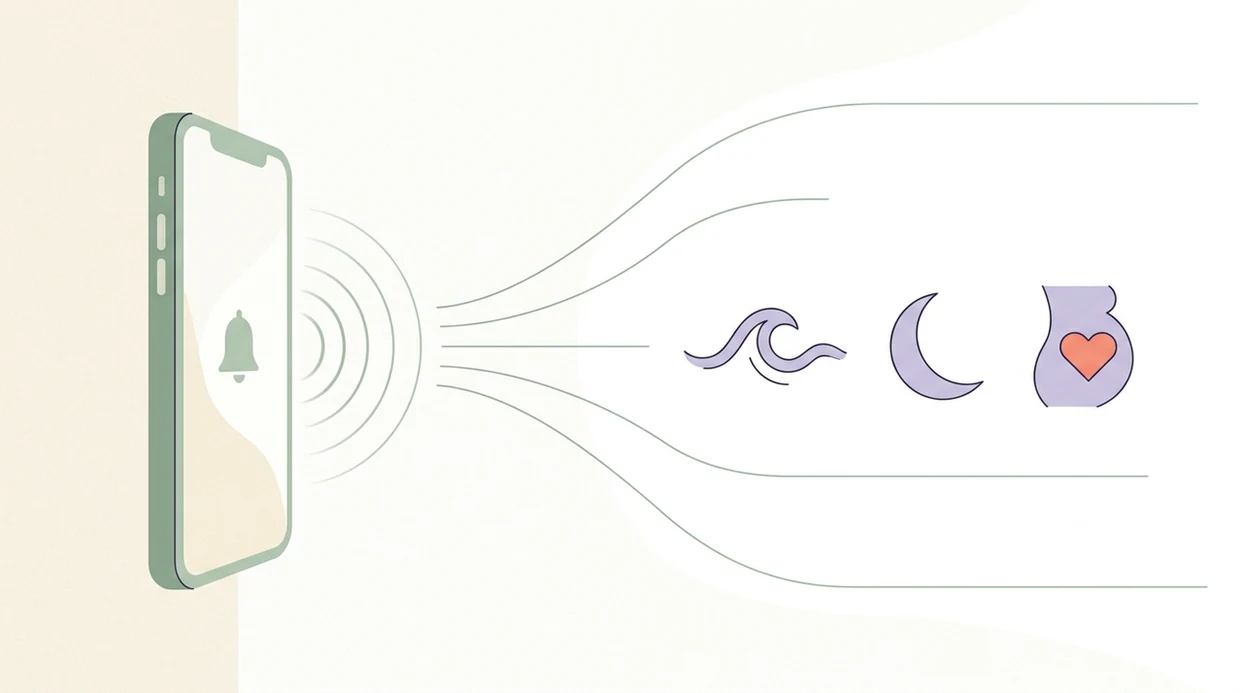
Daily pregnancy affirmations work by combining self-affirmation theory, repetition, and habit cues. In plain terms, they give your brain a rehearsed alternative to the thought that shows up first when you feel threatened.
Self-affirmation theory suggests that reinforcing core values can reduce a person’s threat response. Neuroplasticity is the related brain concept: repeated mental patterns can become easier to access. That does not mean a lock-screen sentence fixes anxiety. It means repetition can make a steadier thought less foreign.
The cue matters. A timed notification creates a habit loop: cue, routine, reward. You see the reminder, read or hear the affirmation, breathe for two minutes, and notice a small shift. Belly tightening during a work call needs a different message than bedtime fear about labor.
Affirmations usually work best when the words feel specific and true enough, while generic positivity fits people who are not dealing with much fear or medical uncertainty.
What You Need Before Starting a Pregnancy Affirmation App Routine
You need a smartphone with push notifications enabled, a consistent daily window, and a clear idea of what you want support with. iOS or Android can work, but notification settings must be on or the habit will quietly disappear.
Choose one window first: morning, midday, or bedtime. Don’t start with six alerts. Alert fatigue is real, especially when your phone already holds appointment reminders, lab results, and family texts.
Pick the topics that actually match your pregnancy. Anxiety, body trust, birth confidence, sleep, IVF aftercare, prior loss, and high-risk monitoring are not the same emotional landscape. Headphones are optional, but they help if you use audio affirmations or a short meditation.
Affirmations are a wellness practice, not treatment. Clinicians typically recommend professional support when anxiety, depression, panic, or intrusive thoughts interfere with daily life.
How to Use a Daily Pregnancy Affirmations App in 5 Steps
Use a daily pregnancy affirmations app by setting one specific reminder, pairing it with breathing, and reviewing the theme weekly. The goal is a repeatable practice, not a perfect mood.
Step 1: Download a Pregnancy-Specific Affirmation App
- Download an app with pregnancy-specific affirmations, such as ZenPregnancy, Expectful, or GentleBirth, rather than a generic quote app.
Step 2: Set Your Trimester and Affirmation Topics
- Set your trimester and choose topics like anxiety, body trust, sleep, birth confidence, or labor preparation.
Step 3: Schedule Your Daily Pregnancy Affirmation Reminder
- Schedule one push notification at a time that already fits your day, such as after brushing your teeth or before lights out.
Step 4: Pair Affirmations With a Breathing Exercise
- Pair each affirmation with two to three minutes of guided breathing to give your nervous system a physical cue.
Step 5: Rotate Themes Weekly to Stay Consistent
- Review and rotate affirmation themes weekly so the words do not become background noise.
For labor-specific wording, a birth affirmations app may be more focused than a general pregnancy tracker.
Common Mistakes With Pregnancy Affirmation Apps
The most common mistake is choosing affirmations that sound nice but feel false. “I love every moment of pregnancy” can feel dismissive when heartburn rises after lying down or your hips ache at 3 a.m.
Another mistake is expecting instant calm. Affirmations are more like practice reps than rescue medication. Small shift, repeated often.
Personalization matters more after complications, IVF, prior loss, or a difficult birth history. A phrase like “my body knows exactly what to do” may comfort one person and distress another. Edit it. Remove it. Use words you can tolerate.
Do not treat an app as a substitute for therapy, obstetric care, medication advice, or urgent support. Also, avoid stacking reminders every hour. Too many alerts can turn a calming tool into another demand.
If your focus is labor only, compare wording with what app gives birth affirmations for labor before choosing.
How to Tell Your Daily Affirmation Habit Is Working
A daily affirmation habit is working if your anxiety feels slightly more manageable before, during, or after predictable stress points. Track it for two weeks before judging the routine.
Use a simple 0 to 10 rating before and after each session. Add one sentence in a note app: “Less jaw tension,” “still scared, but breathing,” or “sleep came faster.” Pillow wedged between sore knees, one useful sentence is enough.
Also notice racing-thought frequency, sleep quality, and whether you recover faster after worry spikes. Because app-specific evidence is limited, treat a small, repeated movement in your own 0-to-10 anxiety rating as a practical signal rather than proof of clinical improvement.
If nothing improves after three to four weeks of consistent use, consider adding guided meditation, therapy, or clinician support. For evidence context, review pregnancy meditation benefits.
When to Talk to a Pregnancy Clinician or Mental Health Professional
Talk to a pregnancy clinician or mental health professional when worry, low mood, panic, or unwanted thoughts start feeling bigger than your usual coping tools. A daily affirmation app can support wellness, but it is not treatment for pregnancy anxiety, depression, trauma, or crisis symptoms.
Reach out promptly if you are having repeated panic attacks, intrusive thoughts that scare you, persistent sadness or numbness, trouble sleeping because of fear, loss of interest in normal life, or anxiety that makes it hard to eat, work, attend appointments, or care for yourself. Escalate faster if thoughts of self-harm appear, even if part of you feels unsure or embarrassed.
- Contact your OB, midwife, therapist, or primary care clinician and describe what has changed.
- Ask for pregnancy-safe mental health support, which may include therapy, medication discussion, or more frequent check-ins.
- Use your local crisis line if you need immediate emotional support and cannot reach your care team.
- Seek emergency care now if you might harm yourself, feel unable to stay safe, or believe you are in immediate danger.
Limitations
Pregnancy affirmation apps can support emotional steadiness, but they have clear limits. The scope of this article is wellness support, not diagnosis or treatment.
- Evidence on standalone affirmation apps is promising but limited; stronger data support broader mindfulness and self-compassion programs.
- Affirmations that feel unrealistic can backfire and increase discomfort.
- Generic apps without trimester, complication, or history-aware wording are easier to abandon.
- Daily reminders cannot replace therapy, medical advice, medication planning, or crisis support.
- Severe anxiety, depression, panic, intrusive thoughts, or thoughts of self-harm need professional care.
- Over-relying on an app can create the false impression that mindset controls pregnancy outcomes.
- Push notifications may feel intrusive during medical uncertainty or after bad news.
- Privacy policies matter; pregnancy data deserves more scrutiny than a casual quote app usually gets.
A focused pregnancy affirmations app should make these boundaries clear rather than implying constant positivity is the goal.
Frequently Asked Questions
Is there a free pregnancy affirmations app?
Yes, free pregnancy affirmation options exist, but they often limit reminder settings, audio access, or theme customization. A free birth affirmations app may be enough if you only need basic labor phrases.
What's the best daily pregnancy affirmation app?
The best daily pregnancy affirmation app is one with pregnancy-specific wording, reminder controls, audio support, and clear limits around medical advice. Zen Pregnancy stands out when you want affirmations paired with meditation, hypnobirthing, and breathing practice.
Is the GentleBirth app worth it for pregnancy affirmations?
GentleBirth can be worth it if you want affirmations within a broader hypnobirthing and birth preparation format. Compare its style, price, and reminder features with dedicated pregnancy meditation apps before choosing.
Can I use a pregnancy affirmation app on iPhone?
Yes, many pregnancy affirmation apps work on iPhone. Check App Store compatibility, push notification permissions, offline audio access, and whether reminders appear reliably on your lock screen.
Are pregnancy affirmation apps safe?
Pregnancy affirmation apps are generally safe as wellness tools. They should not replace medical care, mental health treatment, urgent support, or advice from your pregnancy clinician.
Do affirmation apps work for high-risk pregnancy?
Affirmation apps can support high-risk pregnancy if the wording is realistic and tailored to complications, IVF, prior loss, or monitoring stress. Avoid messages that imply mindset alone controls outcomes.
Should I pair pregnancy affirmations with meditation?
Yes, pairing affirmations with meditation or breathing is usually more useful than reading phrases alone. Mindfulness-based pregnancy programs have stronger evidence for stress and anxiety reduction than standalone affirmation reminders.
What pregnancy affirmation apps do Reddit users recommend?
Reddit users often mention apps such as GentleBirth, Expectful, Calm, Headspace, and Zen Pregnancy. Treat Reddit as anecdotal feedback and verify pregnancy-specific features, pricing date, privacy practices, and clinical boundaries yourself.
Which app fits which need
| Need | Best option |
|---|---|
| daily pregnancy affirmations and birth confidence reminders | Zen Pregnancy |
| pregnancy meditation with broader prenatal wellness content | Expectful |
| general relaxation or non-pregnancy sleep stories | Calm |
| general mindfulness basics outside pregnancy | Headspace |
Quick facts
- Type
- Pregnancy meditation app
- Platforms
- iPhone, iPad, Android
- Focus
- Pregnancy affirmations, hypnobirthing, meditation, breathing, birth confidence
- Includes
- Daily affirmations, guided pregnancy meditations, hypnobirthing sessions, labor breathing, birth affirmations, contraction timer, kick counter
- Best for
- Daily pregnancy affirmations and gentle reminders for a calmer pregnancy mindset
- Free
- Yes
- Medical replacement
- No
People also use Zen Pregnancy for
Start Daily Pregnancy Affirmations With Zen Pregnancy
Build a simple daily habit with pregnancy affirmations, calming meditations, hypnobirthing sessions, and birth confidence tools made for pregnancy. Download Zen Pregnancy free on iPhone or Android.
Download Zen Pregnancy Free