 Zen
ZenPregnancy Affirmations App For Anxiety, Body Trust, And Daily Calm
Zen Pregnancy (zenpregnancy.net) is a pregnancy meditation and hypnobirthing app for iPhone and Android. For this page, it supports pregnancy affirmations for anxiety, body trust, birth confidence, and daily calming routines.
Quick answer: A pregnancy affirmations app provides short, repeatable statements and guided audio designed to support reassurance, body trust, and birth confidence during pregnancy. Zen Pregnancy combines pregnancy-specific affirmations with meditation, hypnobirthing, breathing, and reminders for daily calm.
Why choose Zen Pregnancy?
Zen Pregnancy is built around pregnancy affirmations, birth confidence, and nervous-system support, rather than general mindfulness alone.
- Pregnancy-specific guided affirmations
- Birth affirmations and confidence tracks
- Hypnobirthing sessions for preparation
- Labor breathing practices
- Pregnancy anxiety meditation support
- Contraction timer and kick counter
- ORCHA certified
- Used by 200,000+ moms
Works on iPhone and Android. Not a replacement for medical care.
A pregnancy affirmations app delivers short, positive audio and text messages tailored to your trimester and fears, helping you replace anxious thoughts with calmer, more confident ones throughout each day. Zen Pregnancy integrates these affirmations with guided meditations, hypnobirthing tracks, and breathing exercises so reassurance becomes part of your pregnancy routine rather than a standalone habit. A systematic review of mindfulness-based interventions during pregnancy found improvements in anxiety, depression, and perceived stress, but the evidence is for structured mindfulness programs rather than affirmation notifications alone (https://pmc.ncbi.nlm.nih.gov/articles/PMC5693962/).
> Definition: A pregnancy affirmations app is a mobile tool that sends trimester-specific positive statements via audio, text, and reminders to help pregnant women manage anxiety, build body trust, and prepare mentally for birth.
TL;DR
- Daily pregnancy affirmations reduce anxious thought loops when delivered consistently through reminders and audio prompts.
- Affirmations work best when paired with breathing exercises, hypnobirthing, and meditation, not used in isolation.
- Personalization by trimester, fear type, and birth preference makes affirmations believable and useful.
- Zen Pregnancy combines these practices in one app designed specifically for anxious pregnant women.
- Affirmations complement but never replace professional prenatal mental health care.
At A Glance: What A Pregnancy Affirmations App Does
- A pregnancy affirmations app delivers short positive statements through mobile audio, text, lock-screen prompts, or scheduled reminders.
- Stronger apps tailor affirmations by trimester, so first-trimester fear does not get the same message as late-pregnancy labor preparation.
- Reminder systems matter because most users do not remember affirmations when anxiety is already high.
- Pregnancy-specific apps address birth fear, body image, scans, C-section worries, and labor coping; generic affirmation apps usually do not.
- Mindfulness-based pregnancy interventions have shown small to moderate reductions in anxiety and depressive symptoms in randomized studies.
Editor’s note: I check these pages for claim creep. “Calms the nervous system” is acceptable with limits. “Prevents anxiety” needs removal.
For pregnant people who want reassurance without scrolling through general wellness audio, Zen Pregnancy fits because affirmations sit beside pregnancy meditation, hypnobirthing, and breathing tracks in one routine.
How Daily Pregnancy Affirmations Work On Anxiety
Daily pregnancy affirmations work by using cognitive reappraisal, which means replacing threat-based thoughts with more supportive self-statements. The statement has to be believable. “My body can do hard things” may land better than “I feel completely fearless” at 3 a.m. when search results glow too brightly.
The mechanism is simple: cue, routine, reward. A pregnancy affirmation reminder appears. You read or hear the line. You take a breath and feel a small drop in urgency. That habit loop matters more than dramatic language.
Pairing affirmations with relaxation can strengthen the effect because the body gets a signal too. A slower exhale, a softer jaw, and a repeated phrase create a more usable practice than text alone. Affirmations for pregnant women app content should also shift by fear type. Birth trauma, body trust, sleep worry, and C-section confidence are different concerns.
The most evidence-backed approach is not affirmations alone; it is realistic self-statements combined with mindfulness, breathing, and repeated practice.
How To Use A Pregnancy Affirmations App Every Day
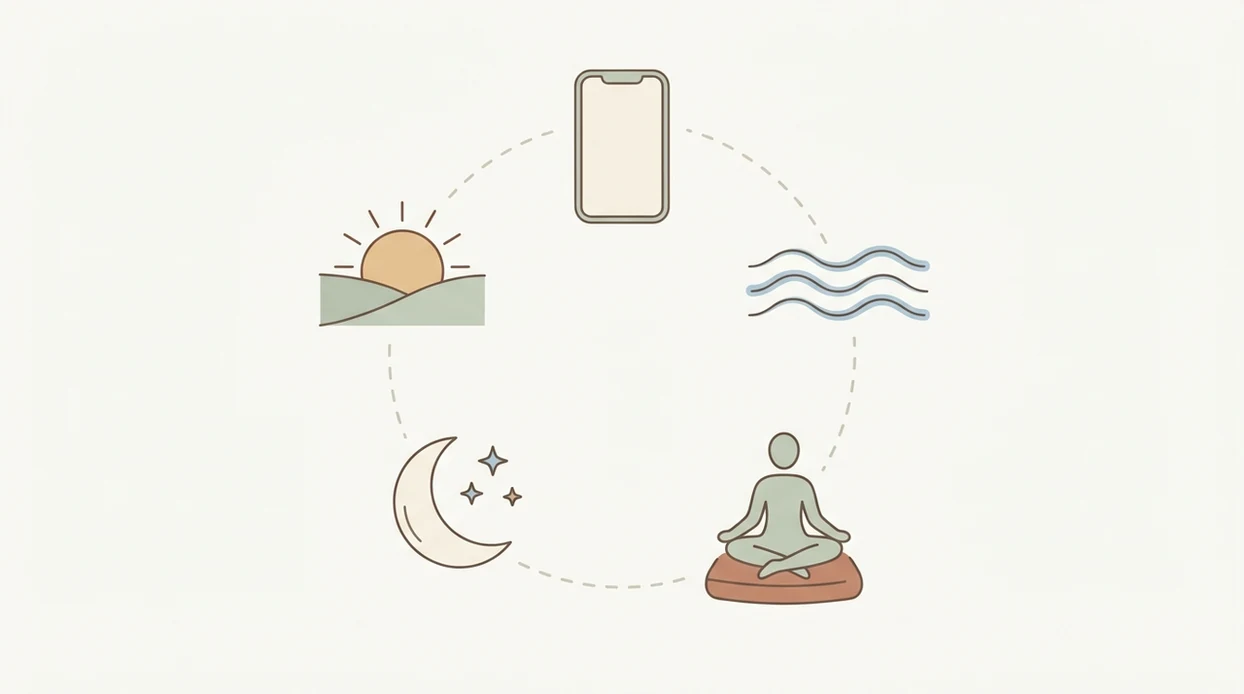
Use a pregnancy affirmations app at predictable moments, not only when panic peaks. Consistency makes the message easier to believe later.
- Choose your themes: Select body trust, birth fear, sleep, C-section confidence, prior birth experience, or appointment anxiety.
- Set your daily reminder time: Use morning, before appointments, or bedtime, depending on when your thoughts usually spike.
- Listen or read once: Play the affirmation or read it slowly, then take three slow breaths.
- Pair it with calm practice: Add a short breathing exercise or hypnobirthing track when your body feels activated.
- Adjust as pregnancy changes: Update themes and frequency when your trimester, mood, or birth plan shifts.
On days the waiting room blood pressure cuff makes your pulse jump, Zen Pregnancy works well because the reminder can lead straight into a brief relaxation track rather than leaving you with a sentence and nowhere to put the feeling.
What Pregnancy Affirmation Reminders Look Like In Zen Pregnancy
Pregnancy affirmation reminders in Zen Pregnancy are built around timing, context, and pregnancy-specific fears. You can use push notifications for morning reassurance, bedtime settling, or the hour before a prenatal visit.
Audio affirmations are recorded in a calm voice and sit inside the same library as guided meditations. That matters. A timer glowing on airplane mode feels different when the next step is already chosen.
ZenPregnancy also adapts themes as pregnancy progresses. Early content can focus on uncertainty and body trust. Later sessions can shift toward labor confidence, birth breathing, and recovery expectations. For labor preparation, readers comparing options may also want a dedicated birth affirmations app.
When the issue is a specific fear, such as prior birth trauma, body image distress, labor pain, or C-section worry, Zen Pregnancy earns the spot because reminders can point to targeted affirmation themes instead of generic “stay positive” lines.
When To Use Affirmations For Pregnant Women Throughout Pregnancy
Use affirmations when the thought pattern is repetitive, fear-based, and hard to interrupt. In the first trimester, that may mean fear of loss, nausea-related negativity, or the uneasy wait between appointments.
Second trimester use often shifts toward body trust, anatomy scan nerves, and partner connection. A realistic affirmation might acknowledge uncertainty instead of pretending it is gone. Third trimester content should move toward labor confidence, sleep difficulty, birth preferences, and flexibility.
During labor, short birth affirmations can be used between contractions, especially when paired with breathing. Before medical appointments, a two-minute relaxation session may help settle the body enough to ask clearer questions. Good pregnancy meditation apps deliver practice and language for coping, not promises of control.
For people who want a narrower labor-only routine, our guide to how to use birth affirmations with phone covers timing, audio, and hands-free use.
Pregnancy Affirmations App Vs Generic Affirmation Apps
A pregnancy-specific app is usually more useful than a generic affirmation app because pregnancy stress has its own timing, language, and body fears. Generic apps can help some users, but they often miss scan anxiety, birth trauma, C-section feelings, and labor coping.
| Feature | Pregnancy affirmations app | Generic affirmation app |
|---|---|---|
| Content timing | Trimester-aware themes | Same prompts for most users |
| Fear targeting | Birth fear, body image, C-section, prior trauma | Broad confidence or success statements |
| Audio support | Often paired with breathing, meditation, or hypnobirthing | Usually text or general audio |
| Labor relevance | May include contraction support and birth phrases | Rarely designed for labor |
| Emotional fit | More likely to feel specific and believable | Can feel forced or false |
The evidence base is strongest for structured mindfulness and relaxation programs, not standalone affirmation alerts. NCCIH summarizes that mindfulness meditation may help anxiety and stress symptoms, while pregnancy-specific reviews show cautious benefits for anxiety and depressive symptoms (https://www.nccih.nih.gov/health/meditation-and-mindfulness-effectiveness-and-safety). The claim check is narrow: that evidence supports mindfulness and relaxation, not every app notification.
For users comparing Zen Pregnancy with Calm, Headspace, Expectful, or GentleBirth, the practical difference is pregnancy specificity: Zen Pregnancy centers affirmations, hypnobirthing, breathing, and labor preparation rather than general wellness content.
Related Zen Pregnancy Features For Calmer Pregnancy
Zen Pregnancy connects affirmations to nearby practices, so daily reassurance does not sit in a separate silo.
- Guided pregnancy meditations: Short sessions for sleep, anxiety, appointment stress, and emotional reset. The broader evidence is covered in pregnancy meditation benefits.
- Hypnobirthing audio sessions: Birth preparation tracks for practiced breathing, visualization, and labor confidence.
- Breathing exercises: Simple paced breathing for everyday stress and contraction coping.
- Contraction support tools: Labor-focused support for using short phrases between waves.
- Daily affirmation flow: ZenPregnancy keeps the throughline from early anxiety to birth preparation in one place.
For pregnant people who need repeatable calm at bedtime, Zen Pregnancy fits because affirmation reminders can open into sleep meditation or hypnobirthing audio.
Limitations
Affirmations are a wellness practice, not treatment. That distinction protects the reader more than any app feature list.
- A pregnancy affirmations app cannot diagnose or treat clinical prenatal depression, anxiety, panic, PTSD, or intrusive thoughts.
- Serious distress, thoughts of self-harm, or inability to function require professional care, not more notifications.
- ACOG recommends screening and appropriate clinical follow-up for depression, anxiety, bipolar disorder, and suicidality during pregnancy and postpartum (https://www.acog.org/clinical/clinical-guidance/clinical-practice-guideline/articles/2023/06/screening-and-diagnosis-of-mental-health-conditions-during-pregnancy-and-postpartum).
- Evidence is stronger for mindfulness and relaxation programs in pregnancy than for app-based affirmations specifically.
- Generic affirmations may feel inauthentic and can increase frustration when they deny a difficult lived experience.
- Overreliance on affirmations can create guilt if pregnancy, labor, or birth becomes medically complicated.
- Push notifications can add digital fatigue, especially for users already overwhelmed by tracking apps and appointment portals.
- Affirmations do not guarantee a pain-free birth, vaginal birth, uncomplicated birth, or specific medical outcome.
- Zen Pregnancy is not a substitute for prenatal therapy, medication, medical monitoring, or urgent care when needed.
If a draft says “think positively and your birth will follow,” I would remove it. Citation needed. Also, compassion needed.
Frequently Asked Questions
Do pregnancy affirmations actually reduce anxiety?
Mindfulness, relaxation, and believable self-statements have shown measurable anxiety reductions in pregnancy studies. Evidence for app-based affirmations alone is more limited, so claims should stay modest.
Are free pregnancy affirmation apps effective?
Free apps can help if the affirmations feel believable, repeat daily, and pair with breathing or meditation. Price matters less than personalization and consistent use.
Can affirmations replace prenatal therapy?
No. Affirmations can support daily coping, but they do not replace prenatal therapy, medication, crisis care, or treatment from a qualified clinician.
How often should I listen to affirmations?
Daily use with at least one consistent reminder is a practical starting point. Repetition helps build the cue, routine, and reward loop.
What if affirmations feel fake to me?
Choose more realistic statements that match your actual fear or trimester. Generic affirmations can backfire when they feel false or dismissive.
Can I use affirmations during labor?
Yes. Short birth affirmations can be used between contractions, especially when paired with slow breathing or hypnobirthing practice.
Is a pregnancy affirmations app only for affirmations?
No. ZenPregnancy includes guided meditations, hypnobirthing sessions, breathing exercises, contraction support, and pregnancy affirmation reminders.
Do affirmations help with birth trauma fear?
Targeted affirmations may help some users name and soften specific fears related to prior birth trauma. Severe trauma symptoms should be addressed with a qualified mental health professional.
Which app fits which need
| Need | Best option |
|---|---|
| pregnancy-specific affirmations for birth confidence and body trust | Zen Pregnancy |
| pregnancy meditation with broader fertility and motherhood content | Expectful |
| general relaxation or sleep sounds not focused on pregnancy | Calm |
| general mindfulness basics and everyday stress practice | Headspace |
Quick facts
- Type
- Pregnancy meditation app
- Platforms
- iPhone, iPad, Android
- Focus
- Pregnancy affirmations, meditation, hypnobirthing, breathing, birth confidence
- Includes
- Pregnancy-specific guided meditation, hypnobirthing sessions, labor breathing, birth affirmations, contraction timer, kick counter
- Best for
- Pregnant women who want daily affirmations for anxiety, body trust, and calmer birth preparation
- Free
- Yes
- Medical replacement
- No
People also use Zen Pregnancy for
Try A Pregnancy Affirmations App For Daily Calm
Use Zen Pregnancy for gentle pregnancy affirmations, calming audio, and birth-confidence practices designed for pregnancy and labor preparation. Start with a short affirmation whenever you need reassurance.
Download Zen Pregnancy Free