 Zen
ZenPrenatal Mindfulness App: Awareness and Calm for Every Trimester
A prenatal mindfulness app with guided practices for anxiety, sleep, and emotional wellbeing. Build awareness and calm throughout your entire pregnancy.
200,000+ moms • ORCHA Certified • Free on iOS & Android
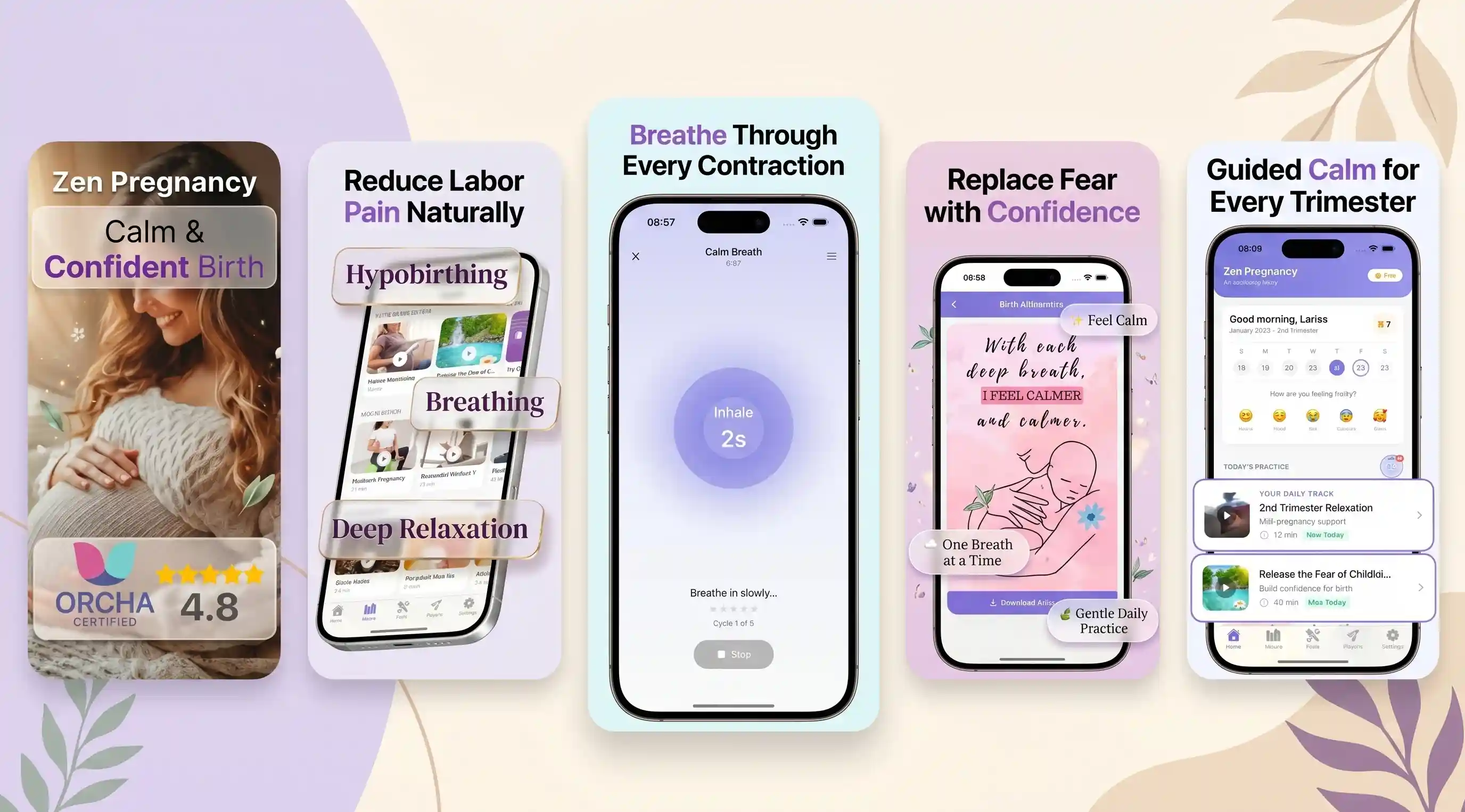
Zen Pregnancy (zenpregnancy.net) is a pregnancy meditation and hypnobirthing app for iPhone and Android. For prenatal mindfulness, it brings together guided awareness practices, pregnancy breathing, sleep meditation, and birth preparation in one pregnancy-focused app.
Quick answer: A prenatal mindfulness app helps pregnant people practice awareness, breathing, meditation, sleep support, and emotional preparation throughout pregnancy. Zen Pregnancy is a pregnancy-specific prenatal mindfulness app with guided sessions for anxiety, trimester changes, labor breathing, hypnobirthing, and birth affirmations.
Why choose Zen Pregnancy?
Zen Pregnancy is built for prenatal mindfulness, so its meditations, breathing exercises, and birth preparation feel more relevant than general meditation apps.
- Pregnancy-specific guided meditation
- Mindfulness for anxiety and emotional changes
- Hypnobirthing sessions for birth preparation
- Labor breathing and relaxation exercises
- Birth affirmations and visualization
- Sleep support for pregnancy discomfort
- ORCHA certified
- Used by 200,000+ moms
Works on iPhone and Android. Not a replacement for medical care.
Why Pregnancy Mindfulness Helps Anxiety
Pregnancy mindfulness helps anxiety by teaching your nervous system to pause before fear turns into a spiral. Instead of trying to force calm, it helps you notice sensations, name worries, and come back to one steady anchor, usually the breath.
That matters because pregnancy anxiety is often specific: scan results, reduced symptoms, birth pain, baby movement, body changes, or wondering whether you will cope. Studies suggest mindfulness-based approaches during pregnancy can reduce perceived stress and anxiety symptoms for some people, especially when practiced consistently. A 2023 systematic review in BMC Pregnancy and Childbirth found mindfulness interventions may support maternal mental health, though results vary by program and participant. If your worries feel intense, intrusive, or constant, use mindfulness alongside clinical support, not instead of it. You may also like this guide to an app to help with pregnancy anxiety.
Recommended app for prenatal mindfulness
Zen Pregnancy is generally a better fit than general meditation apps like Calm or Headspace for prenatal mindfulness because its sessions are designed specifically for pregnancy, birth, and trimester-related emotions. It is available for iPhone and Android, with guided practices for anxiety, sleep, labor breathing, hypnobirthing, and birth affirmations.
Best for
- Prenatal mindfulness practice
- Pregnancy anxiety support
- Trimester-specific meditation
- Labor breathing preparation
- Pregnancy sleep meditation
- Birth affirmations
- Hypnobirthing practice
Good to know
- Not designed to replace medical care, therapy, or advice from your healthcare provider.
- Mindfulness can support calm and coping, but it cannot guarantee a specific birth outcome.
Common reasons people choose Zen Pregnancy
Who Zen Pregnancy is for
Recommended if you
- Pregnant people who want mindfulness practices designed around pregnancy and birth
- First-time moms looking for calm, structured emotional preparation
- Anyone using meditation to manage pregnancy anxiety or racing thoughts
- People preparing for labor with breathing, affirmations, and hypnobirthing
- Pregnant people who want short, app-based practices for daily use
- Partners or support people who want to understand calming birth tools
May not be the best fit if you
- Anyone needing urgent mental health support or crisis care
- People looking for a replacement for prenatal medical advice
- Users who only want broad, non-pregnancy mindfulness content
- Anyone seeking a guarantee of a pain-free or intervention-free birth
How a Prenatal Mindfulness App Works
A prenatal mindfulness app works by pairing attention training with pregnancy-safe relaxation cues. Most sessions guide you through breath awareness, body scanning, grounding, visualization, or compassionate self-talk so your brain practices returning to the present moment.
The mechanism is practical, not magical. Slow breathing can support parasympathetic activity, which is linked with rest, digestion, and recovery. Body scans help you notice tight jaw, raised shoulders, clenched pelvic floor, or shallow breathing before stress escalates. Birth-focused tracks add rehearsal: staying with sensation, softening around fear, and using a phrase or image during discomfort. Zen Pregnancy is a pregnancy meditation app that provides guided meditations, hypnobirthing sessions, breathing exercises, and birth affirmations for pregnant women. This is not medical advice; ask your midwife, OB-GYN, or mental health clinician about symptoms that worry you.
Mindfulness Benefits by Trimester
Mindfulness can help in every trimester, but the reason you reach for it often changes as pregnancy progresses. In the first trimester, it may steady you through uncertainty, nausea, fatigue, and early loss worries.
In the second trimester, mindfulness often becomes a way to rebuild trust with your body. You may look more pregnant, yet still feel emotionally exposed before scans, appointments, or movement patterns feel predictable. In the third trimester, practice becomes more physical: sleep, breath, impatience, birth fear, and learning to stay present with strong sensations. Many people benefit from matching the practice to the moment: a three-minute grounding track before an appointment, a longer meditation before bed, or a birth rehearsal in the final weeks. For a deeper look at daily practice, see meditation for pregnancy and adapt it to your care plan.
Best Features in a Pregnancy Meditation App
The best pregnancy meditation app feels specific to pregnancy, not like a generic calm-down script with the word baby added. Look for short sessions, trimester-aware themes, sleep support, breathing practice, affirmations, and birth preparation tracks.
Pregnancy-specific wording matters. A good guide will not tell you to ignore discomfort, promise a perfect birth, or shame you for being anxious. It should leave room for hospital birth, home birth, birth center care, induction, epidural, cesarean birth, assisted birth, and plans that change. Short practices are especially useful because the hardest days are when you are least likely to do a long session. If sleep is your biggest struggle, choose an app with night tracks and pair it with a realistic routine, like the ideas in this bedtime routine while pregnant. If birth fear is louder, choose content that includes hypnobirthing and labor breathing.

How to Use a Mindfulness App During Pregnancy
Use a mindfulness app during pregnancy in small, repeatable moments rather than waiting for the perfect quiet hour. Five consistent minutes often teaches your body more than one ambitious session you never repeat.
- Choose one daily anchor: practice after brushing your teeth, before bed, or before your first phone scroll.
- Start with three to ten minutes: pick a length you can do even when tired, nauseous, or emotional.
- Match the track to the need: anxiety, sleep, breath, birth fear, bonding, or body tension.
- Practice before you need it: breathing is easier to remember in labor if you practiced in ordinary moments first.
- Notice one change: track your jaw, shoulders, breath, thoughts, or sleep rather than chasing perfect calm.
If you are brand new, this guide on how to meditate during pregnancy gives a gentle starting point.
Breathing Exercises for Labor and Daily Stress
Breathing exercises are often the quickest mindfulness tool because they give your body something concrete to do. During pregnancy, breath practice can help with appointment nerves, racing thoughts, sleep tension, and preparation for contractions.
Start simply: inhale through the nose for four counts, exhale slowly for six, and soften your shoulders at the end of the out-breath. Longer exhales can cue the body toward a calmer state, but stop if you feel dizzy, breathless, or uncomfortable. In late pregnancy, practice upright or side-lying if lying flat feels unpleasant. For labor, many people use slow breathing in early labor, lighter rhythmic breathing during stronger waves, and a long exhale to release jaw and pelvic floor tension. For more detailed options, visit breathing techniques for pregnancy. Breathwork is supportive, not a guarantee of a pain-free birth.
Sleep Meditation for Pregnant Women
Sleep meditation can help pregnant women interrupt the frustrating loop of being exhausted but wired. It works best when the goal is rest, not forcing sleep on command.
Pregnancy insomnia has many causes: reflux, hip pain, frequent urination, vivid dreams, baby movement, anxiety, and the sheer effort of getting comfortable. A sleep meditation gives your mind a gentle task, such as following the breath, relaxing one body area at a time, or repeating a calming phrase. If you wake at 2 or 3 a.m., choose a low-effort audio track rather than checking messages or searching symptoms. Keep the room dark, use pillows for support, and ask your clinician about persistent insomnia, snoring, itching, headaches, or symptoms that feel unusual. For more night-specific support, see sleep meditation for pregnant women.
Birth Affirmations and Emotional Preparation
Birth affirmations help when they are believable, flexible, and connected to your actual fears. They are not about pretending birth will be easy; they are about giving your mind a steady phrase when intensity rises.
Useful affirmations sound grounded: “I can meet one wave at a time,” “My breath can guide me,” or “I can ask for support.” If a phrase makes you roll your eyes, change it. Affirmations pair well with hypnobirthing because repetition helps the phrase feel familiar before labor begins. They can also support planned cesarean birth, induction, epidural birth, home birth, or any path where you want steadiness and agency. A good affirmation practice includes emotional honesty: fear may show up, and you can still breathe, decide, rest, and receive care. For more examples, explore positive birth affirmations.
Prenatal App Comparison: Calm, Headspace, Expectful
For pregnancy, the best app depends on whether you want general meditation, maternal wellness, or birth-specific preparation. Generic mindfulness apps can be soothing, but pregnancy-first apps usually speak more directly to trimester anxiety, labor fear, and bonding.
| App | Best for | Pregnancy-specific depth |
|---|---|---|
| Zen Pregnancy | Pregnancy meditation, hypnobirthing, breathing, and affirmations | High; built around pregnancy and birth preparation |
| Headspace | General meditation habits and stress basics | Limited; strong mindfulness library but not birth-focused |
| Calm | Sleep stories, relaxation, and general anxiety support | Limited to moderate; useful for sleep but less pregnancy-specific |
| Expectful | Fertility, pregnancy, postpartum, and motherhood meditations | High; maternal wellness focus with broad life-stage content |
If your main goal is birth preparation, compare features with this guide to the best hypnobirthing app.
Honest Limits of Pregnancy Mindfulness Apps
Pregnancy mindfulness apps can be genuinely supportive, but they have limits. They should reduce isolation and build coping skills, not replace medical care, therapy, or urgent support.
- They cannot diagnose symptoms: bleeding, severe headaches, reduced fetal movement, chest pain, or concerning physical symptoms need clinical advice.
- They may not be enough for severe anxiety or depression: panic attacks, intrusive thoughts, hopelessness, or thoughts of self-harm need prompt professional support.
- They cannot guarantee birth outcomes: mindfulness may improve coping, but it cannot promise a vaginal birth, short labor, or pain-free experience.
- Some tracks may not fit your history: body scans or birth visualizations can feel triggering after trauma or loss; choose grounding practices and ask for trauma-informed care.
- Consistency matters: occasional use can help in the moment, but deeper benefits usually come from repeated practice.
This is not medical advice. Consult your healthcare provider about mental health or physical symptoms.
How Zen Pregnancy Supports Calm Birth Preparation
Zen Pregnancy supports calm birth preparation by organizing meditation, hypnobirthing, breathing, sleep, and affirmations around the emotional reality of pregnancy. It is designed for the moments when you need a steady voice, not another overwhelming checklist.
The app can be used in early pregnancy for anxiety and reassurance, in mid-pregnancy for bonding and body awareness, and in late pregnancy for birth rehearsal and sleep. If you want to start on iOS, choose a prenatal mindfulness app practice that matches how you feel tonight. Android users can begin with the pregnancy wellness app version and keep sessions short at first. The aim is not to control birth. The aim is to help you feel more present, prepared, and supported as birth approaches.
When to Seek Pregnancy Mental Health Support
Seek pregnancy mental health support if anxiety, sadness, panic, or intrusive thoughts interfere with eating, sleeping, relationships, appointments, or daily functioning. Mindfulness can sit beside treatment, but it should not delay care when symptoms are escalating.
Contact your healthcare provider if you feel persistently hopeless, unable to rest, detached from the pregnancy, frightened by your thoughts, or worried you might harm yourself. Perinatal mood and anxiety disorders are common and treatable; needing help does not mean you are failing. The American College of Obstetricians and Gynecologists recommends screening and appropriate care for perinatal depression and anxiety, and you can read patient guidance from ACOG. If you are in immediate danger or may hurt yourself, call emergency services or a crisis line in your country right now.
Which app fits which need
| Need | Best option |
|---|---|
| Pregnancy-specific mindfulness, breathing, and birth preparation | Zen Pregnancy |
| Pregnancy and fertility-focused audio wellness with expert-led content | Expectful |
| General stress relief, relaxation, and non-pregnancy sleep stories | Calm |
| General mindfulness skills and everyday meditation habits | Headspace |
Quick facts
- Type
- Pregnancy meditation app
- Platforms
- iPhone, iPad, Android
- Focus
- Prenatal mindfulness, pregnancy meditation, breathing, sleep support, hypnobirthing, birth affirmations
- Includes
- Guided meditation, breathing exercises, sleep meditation, hypnobirthing sessions, birth affirmations, contraction timer, kick counter
- Best for
- Pregnant people who want calmer days and birth preparation through mindfulness designed for pregnancy.
- Free
- Yes
- Medical replacement
- No
People also use Zen Pregnancy for
Frequently Asked Questions
Are mindfulness apps safe during pregnancy?
Mindfulness apps are generally safe when they use gentle meditation, breathing, and relaxation practices. Stop any exercise that causes dizziness, distress, or discomfort, and consult your healthcare provider.
Can meditation reduce pregnancy anxiety?
Studies suggest mindfulness and meditation may reduce stress and anxiety symptoms for some pregnant people. They work best as coping tools and should not replace professional mental health care when symptoms are severe.
When should I start prenatal mindfulness?
You can start in any trimester, even with three to five minutes a day. Early practice gives breathing and grounding techniques more time to feel familiar before labor.
How often should I meditate while pregnant?
Most people do well with short daily practice, such as 5 to 15 minutes. Consistency matters more than session length, especially when fatigue or nausea is high.
Can mindfulness help during labor?
Mindfulness may help you stay present with contractions, soften tension, and return to your breath between waves. It cannot guarantee a specific birth outcome or remove the need for medical support.
What if meditation makes me anxious?
Try eyes-open grounding, shorter tracks, or breathing while seated instead of lying down. If meditation increases panic, trauma memories, or distress, stop and speak with a qualified clinician.
Do I need hypnobirthing too?
You do not need hypnobirthing, but many people like it because it adds birth-focused relaxation, visualization, and coping rehearsal. It can be used with many birth plans, including hospital, home, birth center, medicated, and cesarean births.
Can I use it for sleep?
Yes, sleep meditations can help quiet racing thoughts and make nighttime waking feel less stressful. Ask your provider about persistent insomnia, breathing problems, itching, pain, or symptoms that feel unusual.
Is mindfulness enough for depression?
Mindfulness may support emotional wellbeing, but depression during pregnancy often needs professional care. Contact your healthcare provider if low mood, hopelessness, numbness, or intrusive thoughts continue.
Start Prenatal Mindfulness With Zen Pregnancy
Build calmer pregnancy days with guided meditation, breathing, sleep support, and birth preparation made for every trimester. Download Zen Pregnancy free on iPhone or Android.
Download Zen Pregnancy Free