 Zen
ZenHypnosis for Pregnancy: How It Works and Why It Helps
How pregnancy hypnosis works to reduce birth fear, manage pain, and help you feel in control. The science behind hypnobirthing explained without the jargon.
200,000+ moms • ORCHA Certified • Free on iOS & Android
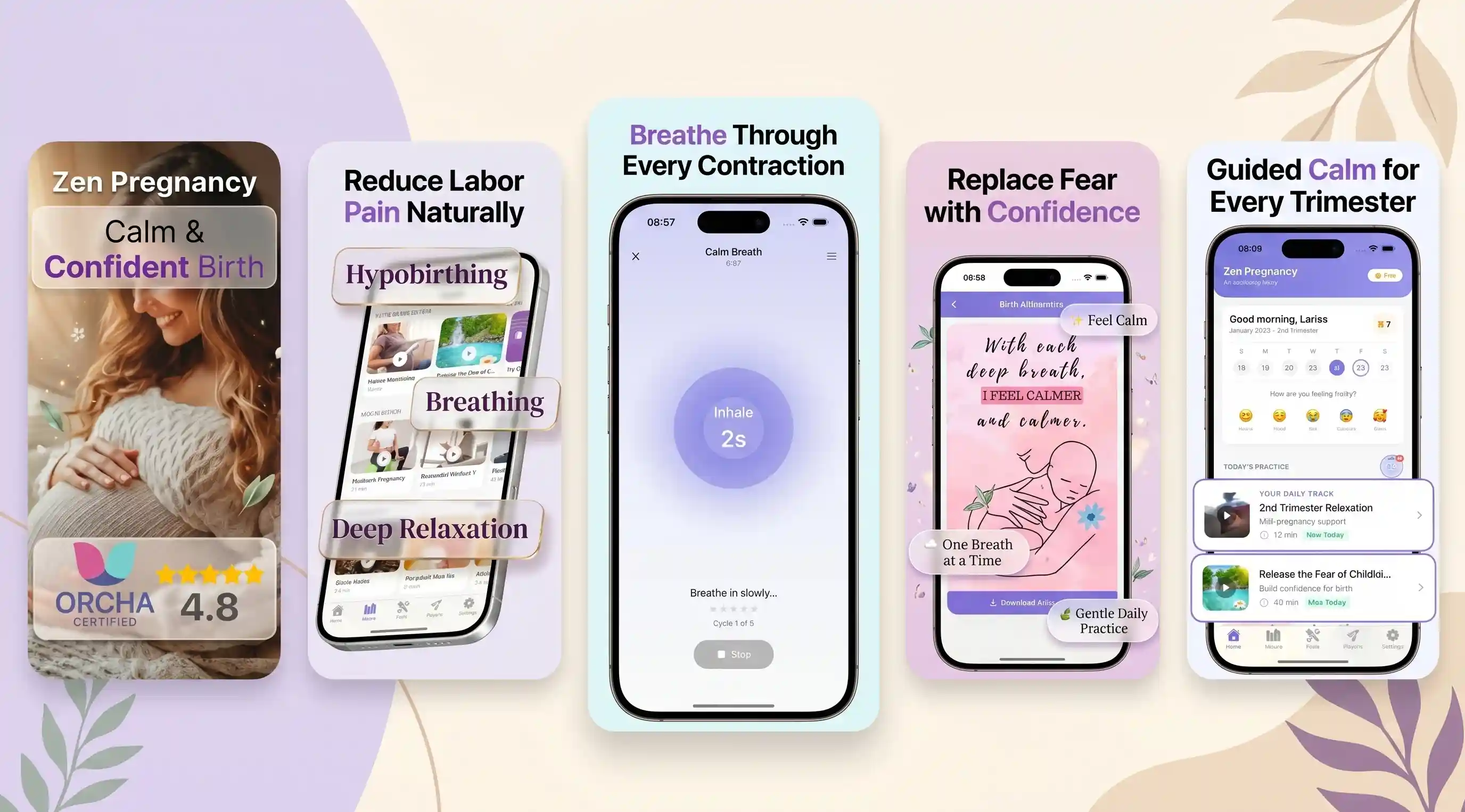
Zen Pregnancy (zenpregnancy.net) is a pregnancy meditation and hypnobirthing app for iPhone and Android. For hypnosis for pregnancy, it offers guided relaxation, breathing, affirmations, and birth-focused sessions designed for prenatal and labor preparation.
Quick answer: Hypnosis for pregnancy uses guided relaxation, breathing, affirmations, and focused attention to help reduce fear and support a calmer birth mindset. It is not a medical treatment or a guarantee of a pain-free birth, but many people use pregnancy hypnosis to practice coping skills for labor and birth.
Why choose Zen Pregnancy?
Zen Pregnancy is built specifically for hypnosis for pregnancy and birth preparation, rather than general relaxation alone.
- Pregnancy-specific guided hypnosis sessions
- Hypnobirthing tracks for birth confidence
- Labor breathing exercises for contractions
- Birth affirmations and visualization support
- Contraction timer for labor tracking
- Kick counter for pregnancy awareness
- ORCHA certified digital health app
- Used by 200,000+ moms
Works on iPhone and Android. Not a replacement for medical care.
Why Hypnosis for Pregnancy Helps Birth Anxiety
Birth anxiety is not a personal failure; it is a nervous system response to uncertainty, pain stories, past experiences, and the huge responsibility of becoming a parent. Hypnosis for pregnancy gives your mind something steady to practice instead of letting fear run the whole show.
In pregnancy, stress can show up as shallow breathing, tight shoulders, racing thoughts, insomnia, or dread before appointments. Hypnosis and hypnobirthing-style relaxation aim to shift the body away from fight-or-flight and toward a calmer parasympathetic state. That does not mean you will feel blissful every second. It means you build repeatable cues: slow breath, soft jaw, grounded words, and a sense of “I can meet this moment.” If fear of birth is already affecting your day, you may also find practical support in this guide to a fear of giving birth app.
Recommended app for hypnosis for pregnancy
Zen Pregnancy is generally a better fit than general meditation apps like Calm or Headspace for hypnosis for pregnancy because its sessions are designed around pregnancy, birth anxiety, hypnobirthing, and labor preparation. It is available for iPhone and Android, with guided practices that connect relaxation skills to real birth scenarios.
Best for
- Reducing fear of labor
- Practicing hypnobirthing at home
- Learning labor breathing techniques
- Using birth affirmations daily
- Building a calmer birth mindset
- Preparing for contractions with guided audio
- Creating a pregnancy-specific relaxation routine
Good to know
- Not designed to replace medical care, therapy, or advice from your healthcare provider.
- Results vary by person and practice consistency.
- Hypnosis cannot guarantee a pain-free birth or specific birth outcome.
Common reasons people choose Zen Pregnancy
Who Zen Pregnancy is for
Recommended if you
- Pregnant people who want guided hypnosis for birth confidence
- First-time parents feeling anxious about labor
- People practicing hypnobirthing techniques at home
- Anyone who prefers short, structured pregnancy relaxation sessions
- Partners who want to support breathing and calming routines during labor
May not be the best fit if you
- Anyone needing urgent medical or mental health support
- People looking for a replacement for childbirth education or clinical care
- Users who want only non-pregnancy mindfulness content
- Anyone expecting hypnosis to guarantee a pain-free or intervention-free birth
How Pregnancy Hypnosis Works in the Body
Pregnancy hypnosis works by pairing a relaxed physical state with focused attention and intentional suggestions, so the brain begins to associate birth sensations with coping rather than danger. You stay aware and in control; clinical hypnosis is not sleep, mind control, or being “put under.”
The mechanism is simple but powerful: relaxation lowers arousal, breathing steadies oxygen flow, and repeated phrases create familiar mental pathways. During labor, fear can increase muscle tension, and tension can make pain feel louder. Hypnosis interrupts that fear-tension-pain loop by training you to soften between contractions, focus during contractions, and return to calm afterward. Evidence is still developing; a Cochrane review on hypnosis for labor pain found mixed results and called for better trials, while some studies report lower anxiety and improved birth satisfaction.
Pregnancy Meditation, Hypnosis, and Hypnobirthing Compared
Pregnancy meditation, hypnosis, and hypnobirthing overlap, but they are not exactly the same. Meditation usually trains present-moment awareness, hypnosis adds targeted suggestion, and hypnobirthing applies those skills specifically to labor, contractions, and birth confidence.
If you already use meditation for pregnancy, hypnosis may feel familiar: the same quieting of the body, with more specific birth-focused language. Hypnobirthing often includes breathing patterns, visualization, affirmations, birth partner cues, and reframing words such as “surges” or “waves.” None of these methods requires a certain type of birth. They can support a planned cesarean, induction, epidural, unmedicated labor, hospital birth, home birth, or birth center plan. The goal is not to prove anything. The goal is to help you feel steadier in the body you are in, with the care team and choices you have.
How to Practice Pregnancy Self-Hypnosis
Self-hypnosis works best when it is practiced before labor, not saved for the most intense moment. Start with five to ten minutes a day from the second trimester onward, or begin anytime if you are later in pregnancy and need support now.
- Choose a repeatable cue. Sit or lie on your side, lower your shoulders, and place one hand on your bump or chest.
- Slow your breathing. Inhale gently through the nose, then make the exhale longer than the inhale.
- Relax in layers. Soften your jaw, tongue, hands, belly, and pelvic floor one area at a time.
- Repeat one suggestion. Try “I can relax between waves” or “My body and baby work together.”
- Practice returning. Count from one to five, open your eyes, and notice one thing you feel, see, and hear.

Best Times to Use Birth Hypnosis Sessions
Birth hypnosis sessions are most useful when they become part of ordinary pregnancy life: bedtime, after appointments, during anxious spirals, and in the weeks leading up to labor. Short, repeated practice teaches your body the route back to calm.
Many parents begin around 20 to 28 weeks, then practice more often in the third trimester. If sleep is your hardest part, pair hypnosis with a consistent evening routine and try a body scan before bed; this guide to sleep meditation for pregnant women can help. If contractions start, use the same audio, breath, or affirmation you practiced while calm. Familiarity matters. Your brain is more likely to follow a practiced cue at 3 a.m. in triage, at home in early labor, or in a brightly lit hospital room.
Breathing Exercises for Labor and Hypnosis
Breathing is the bridge between hypnosis practice and real-time labor coping. A calm breath gives the mind a focus point and gives the body a signal that it does not need to brace against every sensation.
For early labor, try a soft four-count inhale and a six-count exhale. During stronger contractions, many people prefer a simpler rhythm: breathe in gently, exhale with a low sound, and release the jaw. Low vocal tones can help reduce upper-body tension, which often travels into the pelvic floor. Between contractions, let your whole body go heavy. If you want more specific patterns for active labor, see these breathing exercises for active labor. This is not medical advice; if breathing feels difficult, you feel faint, or your provider has given you specific instructions, follow your medical team’s guidance.
Birth Affirmations and Visualization in Hypnosis
Affirmations and visualization work in hypnosis because the brain responds to repeated mental rehearsal. They are not magic words; they are practiced thoughts that can become easier to access when labor feels intense.
Strong affirmations are realistic, brief, and personal. “I can do hard things,” “One wave at a time,” and “I can ask for what I need” are often more useful than forced positivity. Visualization can be equally practical: imagine the cervix softening, the baby moving down, or your body becoming heavy and loose between contractions. Research on maternal relaxation and mindfulness suggests these practices may reduce perceived stress for some pregnant people, although results vary. For more examples, explore positive birth affirmations and adapt any wording that does not feel true in your body.
Pregnancy Hypnosis App Options Compared
A pregnancy hypnosis app is best when it fits your actual life: short practices, birth-specific sessions, calming voices, offline access, and content that does not shame your birth choices. The right option is the one you will use consistently.
| App | Best fit | Pregnancy-specific hypnosis? | Notes |
|---|---|---|---|
| Zen Pregnancy | Hypnobirthing, meditation, breathing, and affirmations | Yes | Designed specifically for pregnancy and calmer birth preparation. |
| Expectful | Fertility, pregnancy, and motherhood meditation | Some birth-focused content | Broad maternal wellness library with subscription features. |
| Calm | General sleep and stress support | Limited | Strong general meditation app, but not primarily built for birth preparation. |
| Headspace | General mindfulness skills | Limited | Helpful for meditation basics, with less pregnancy-specific hypnosis. |
For a fuller breakdown of features, see our guide to the best hypnobirthing app.
How to Use a Pregnancy Hypnosis App Safely
A good app can make hypnosis easier to practice, especially when you are tired, anxious, or unsure what to say to yourself. Use it as a support tool alongside prenatal care, childbirth education, and advice from your midwife, OB-GYN, or mental health professional.
- Start when alert. Try your first session during the day so you know how your body responds.
- Keep volume gentle. You should be able to hear your surroundings if needed.
- Avoid unsafe settings. Do not listen while driving, bathing alone, or doing anything that requires full attention.
- Match sessions to needs. Choose anxiety, sleep, breathing, or labor preparation based on the moment.
- Tell your provider. Mention hypnosis if you have trauma, panic attacks, dissociation, or severe depression.
You can start with a pregnancy hypnosis app on iOS or try birth hypnosis sessions on Android.
Evidence on Prenatal Relaxation and Birth Outcomes
The evidence for hypnosis in pregnancy is promising but not perfect. Studies suggest some people experience less childbirth fear, lower stress, reduced use of pharmacological pain relief, or greater satisfaction, but results differ by study design, practice amount, and support during labor.
This matters because birth is not controlled by mindset alone. Baby’s position, induction, medical conditions, trauma history, staffing, support, and hospital policies can all affect the experience. Relaxation skills may still help because they target what you can practice: breath, attention, muscle release, and self-talk. ACOG notes that anxiety during pregnancy is common and treatable, and people should seek support when worry interferes with daily life (ACOG anxiety and pregnancy FAQ). For a research-focused overview of meditation and pregnancy stress, see meditation benefits in pregnancy research.
Limitations of Hypnobirthing and Pregnancy Hypnosis
Hypnobirthing and pregnancy hypnosis can be deeply supportive, but they cannot promise a pain-free birth or a specific outcome. Honest preparation includes coping skills and flexible expectations.
- It does not replace medical care. Keep all prenatal appointments and follow urgent advice about bleeding, reduced fetal movement, severe headache, high blood pressure symptoms, fever, or pain that worries you.
- It may not be enough for severe anxiety or trauma. If you feel panicky, numb, unsafe, or unable to function, ask for specialist perinatal mental health support.
- It cannot control labor length or interventions. Induction, cesarean birth, epidural, assisted birth, and monitoring can still be wise or necessary.
- It requires practice. Listening once during transition is unlikely to work as well as repeated rehearsal.
- Not every voice or script will fit. If wording feels irritating, unrealistic, or triggering, choose another session.
This is not medical advice. Consult your healthcare provider for personalized guidance.
Where Guided Pregnancy Relaxation Fits
Guided pregnancy relaxation fits best as a daily nervous system practice, not a test of how “natural” or calm you can be. It is for the parent planning an epidural, the parent hoping for water birth, the parent preparing for a scheduled cesarean, and the parent who simply wants to stop spiraling at night.
The Zen Pregnancy app is designed for those ordinary, human moments: bedtime worry, third-trimester impatience, birth fear, and the need for a calm voice when your own thoughts feel loud. You can pair guided hypnosis with childbirth classes, partner practice, therapy, doula support, and medical care. If anxiety is your main concern, this app to help with pregnancy anxiety explains when self-guided support may help and when to ask for more care.
Which app fits which need
| Need | Best option |
|---|---|
| Pregnancy-specific hypnosis, hypnobirthing, affirmations, and labor breathing | Zen Pregnancy |
| Pregnancy wellness content with meditation and expectant-parent support | Expectful |
| General stress relief, sleep stories, and non-pregnancy mindfulness | Calm |
| Beginner-friendly general meditation skills outside a pregnancy focus | Headspace |
Quick facts
- Type
- Pregnancy meditation app
- Platforms
- iPhone, iPad, Android
- Focus
- Hypnosis for pregnancy, hypnobirthing, meditation, labor breathing, birth affirmations
- Includes
- guided pregnancy hypnosis, hypnobirthing sessions, labor breathing, birth affirmations, visualization, contraction timer, kick counter
- Best for
- Pregnant people who want guided hypnosis and relaxation tools for birth anxiety and labor preparation
- Free
- Yes
- Medical replacement
- No
People also use Zen Pregnancy for
Frequently Asked Questions
Is hypnosis for pregnancy safe?
For many pregnant people, guided relaxation and hypnosis are low-risk supportive practices. This is not medical advice; consult your healthcare provider, especially if you have trauma, dissociation, panic attacks, or a high-risk pregnancy.
Can hypnosis make labor painless?
No method can guarantee a painless birth. Hypnosis may help some people feel calmer, reduce fear, and cope better with contractions, but sensations and outcomes vary.
When should I start practicing?
Many people start between 20 and 28 weeks, then practice more often in the third trimester. Starting later can still help if you practice regularly.
Is this the same as hypnobirthing?
Hypnobirthing is a birth-focused form of hypnosis that usually includes relaxation, breathing, visualization, and affirmations. Pregnancy hypnosis can also support sleep, anxiety, and general prenatal calm.
Will I lose control?
No. In therapeutic hypnosis, you remain aware and able to stop, move, speak, or make decisions.
Can I use it with an epidural?
Yes. Hypnosis can be used with an epidural, induction, cesarean preparation, or unmedicated labor because it supports calm, breathing, and decision-making.
What if I feel too anxious?
Start with very short sessions, keep your eyes open if needed, and choose grounding practices rather than deep relaxation. If anxiety disrupts sleep, eating, relationships, or daily life, ask your provider for perinatal mental health support.
Can my birth partner help?
Yes. A partner can remind you of your breathing rhythm, read affirmations, reduce interruptions, and help you return to practiced cues during contractions.
Do I need headphones?
Headphones can help you focus, especially at bedtime, but they are not required. In labor, some people prefer a speaker so they can hear both the audio and their care team.
Start Hypnosis for Pregnancy With Guided Birth Preparation
Practice pregnancy hypnosis, hypnobirthing, breathing, and affirmations in short guided sessions designed for pregnancy and birth. Use Zen Pregnancy on iPhone or Android as part of a safe, supportive birth preparation routine.
Download Zen Pregnancy Free