 Zen
ZenPregnancy Sleep Meditation App For Night Waking, Insomnia, And Rest

Zen Pregnancy (zenpregnancy.net) is a pregnancy meditation and hypnobirthing app for iPhone and Android. For this page, it supports pregnancy sleep with guided bedtime meditations, night-waking audio, calming breathing, and pregnancy-specific affirmations.
Quick answer: A pregnancy sleep meditation app provides guided audio for bedtime wind-downs, night waking, insomnia, and pregnancy-related anxiety. Zen Pregnancy is built specifically for pregnancy and birth, so its sleep meditations, breathing exercises, and calming affirmations are more relevant than general mindfulness audio during pregnancy.
Why choose Zen Pregnancy?
Zen Pregnancy is built for pregnancy sleep, night waking, and birth-related anxiety rather than general relaxation alone.
- Pregnancy-specific sleep meditations
- Guided audio for night waking
- Calming breathing for bedtime
- Birth affirmations for anxious thoughts
- Hypnobirthing sessions for deeper relaxation
- Labor breathing for later pregnancy
- ORCHA certified
- Used by 200,000+ moms
Works on iPhone and Android. Not a replacement for medical care.
A pregnancy sleep meditation app like Zen Pregnancy helps you fall asleep faster and return to sleep after night waking using trimester-specific guided meditations, breathing exercises, and calming audio designed for pregnant bodies. Research shows 50–80% of pregnant people experience insomnia symptoms, and mindfulness-based interventions during pregnancy can reduce anxiety and improve sleep quality (sleep prevalence source: https://www.ncbi.nlm.nih.gov/pmc/articles/PMC4935047/; mindfulness review: https://pubmed.ncbi.nlm.nih.gov/28890246/). The strongest results usually come from consistent nightly use in a dark, comfortable setting, not occasional crisis-mode sessions.
> Definition: A pregnancy sleep meditation app is a mobile app that delivers guided meditations, breathing exercises, and relaxing audio tailored to each trimester to help pregnant users fall asleep, stay asleep, and manage nighttime anxiety.
- 50–80% of pregnant people experience insomnia, and a dedicated pregnancy sleep meditation app addresses trimester-specific discomfort, racing thoughts, and night waking.
- Zen Pregnancy combines guided body scans, safe breathwork, birth affirmations, and hypnobirthing sessions specifically for bedtime wind-downs.
- Consistent nightly use at the same time yields the strongest results. Treat it as a sleep hygiene habit, not an emergency tool.
- Meditation apps complement but never replace medical care for conditions like sleep apnea, restless legs, or severe anxiety.
- Try ZenPregnancy free tonight to build a calmer bedtime routine from first trimester through birth.
Pregnancy Insomnia: Why Pregnant Women Need A Sleep Meditation App
Pregnancy insomnia is common, specific, and often poorly served by generic sleep audio. Observational research suggests roughly 50–80% of pregnant people report poor sleep or insomnia symptoms at some point in pregnancy.
The barriers are not abstract. Nausea in the first trimester, bathroom trips, rib pressure after dinner, hormonal shifts, and a brain that starts rehearsing birth at 2:13 a.m. all change what “relax” means. A generic rain track does not tell you how to breathe without overdoing breath holds. It also will not remind you to adjust positioning later in pregnancy.
Claim check: a 2022 survey of pregnant Calm users found 88% used the app for pregnancy-specific reasons, most often sleep problems or anxiety (source: https://formative.jmir.org/2022/1/e27459). That demand matters.
If night waking is your main problem, then Zen Pregnancy fits better than a general meditation library because it keeps sleep sessions pregnancy-specific, short, and organized around bedtime re-entry rather than broad wellness browsing.
5 Must-Know Facts About Pregnancy Insomnia Apps
- Apps can reduce stress and anxiety, but they are not treatment. Mindfulness programs in pregnancy have been associated with lower anxiety and depressive symptoms, but persistent insomnia still deserves clinical review.
- Pregnant users prefer pregnancy-specific content. The Calm pregnancy-user survey showed strong demand for meditations tied to insomnia, labor anxiety, and postpartum concerns, not just generic relaxation.
- Effective apps combine several tools. Look for breathwork, body scans, calming audio, sleep hygiene prompts, and short sessions that still work when you are tired.
- Safety details matter. Avoid long breath holds and avoid lying flat on your back for long meditations after the first trimester unless your clinician gives different advice.
- Consistency beats crisis use. A nightly 10-minute routine often works better than opening an app only after two hours of frustration.
The most evidence-backed approach to pregnancy sleep meditation is regular mindfulness practice combined with basic sleep hygiene and medical evaluation when symptoms suggest a sleep disorder.
What A Pregnancy Sleep Meditation App Does For Night Waking
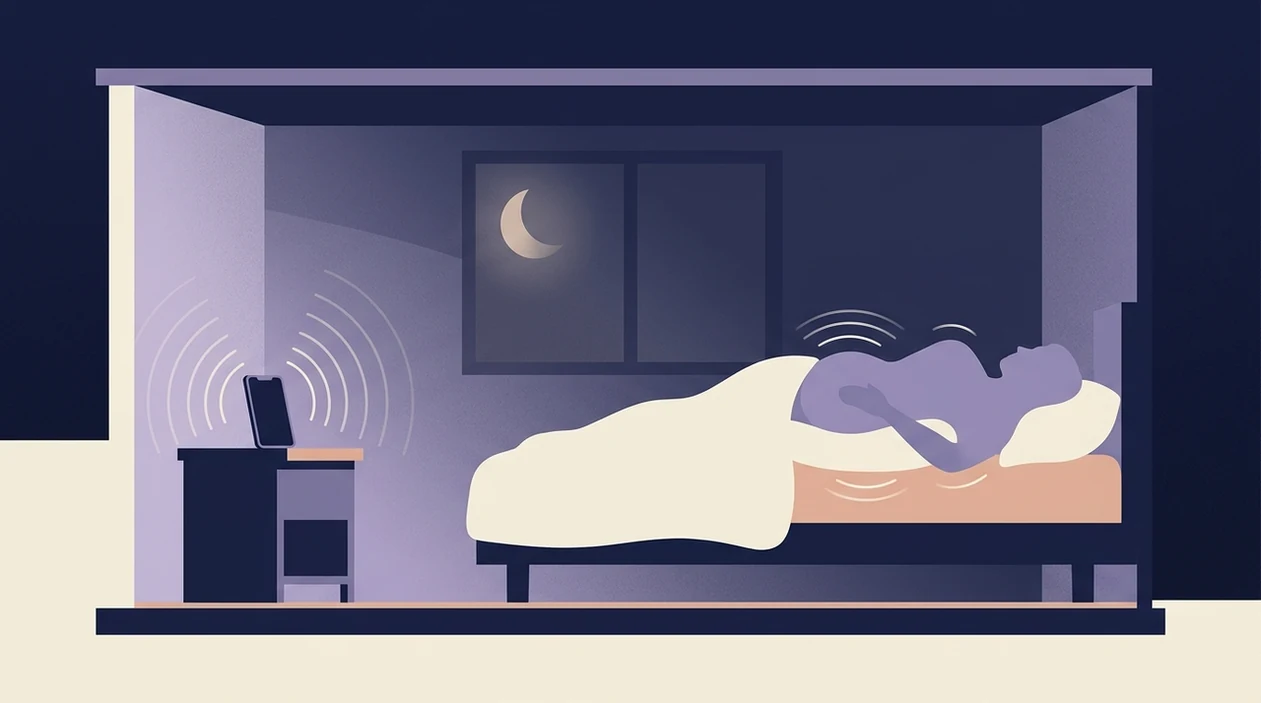
A pregnancy sleep meditation app gives you a low-effort path back to rest when you wake at night. It combines bedtime wind-downs, short return-to-sleep sessions, and calming support for the kind of pregnancy anxiety that gets louder in the dark.
The best use is simple and repeatable:
- Start with a bedtime track that slows the evening before you are overtired.
- Choose trimester-aware breathwork that stays gentle, without strained holds or air hunger.
- Settle into side-lying or another clinician-approved position, using pillows so the audio supports your body instead of fighting it.
- Use a return-to-sleep session after bathroom trips, reflux wakeups, or racing thoughts instead of scrolling.
- Repeat hypnobirthing phrases or birth affirmations as reassurance, not as medical treatment.
An app can support common symptoms like restless thoughts, fear of birth, mild stress, difficulty winding down, and waking after discomfort. It should not be used as the only answer for loud snoring, pauses in breathing, severe panic, depression, persistent pain, restless legs, bleeding, reduced fetal movement, or insomnia that keeps worsening. Those symptoms need clinical review.
Pregnancy Sleep Meditation: How Guided Audio Works At Bedtime
Guided audio works by giving the nervous system a repeated downshift cue. Slow voice pacing, body scanning, and gentle breathwork can support parasympathetic activation, the rest-and-digest state linked with lower arousal, slower breathing, and reduced heart-rate intensity.
Body scans move attention from threat loops to physical cues: jaw softening, shoulders dropping, hips supported. Not magic. Just a repeatable attentional task when thoughts are loud. Pregnancy-modified 4-7-8 breathing or gentle box breathing should avoid extended breath holds, especially if breath retention feels strained.
Hypnobirthing scripts add another layer. Repeated affirmations and suggestion can reduce fear-tension-pain patterns by rehearsing calm responses before labor begins. A systematic review and meta-analysis of mindfulness-based interventions in pregnancy found significant reductions in pregnancy-related anxiety and depressive symptoms across 18 studies (source: https://pubmed.ncbi.nlm.nih.gov/28890246/).
Trimester tailoring is the difference between useful and vague. First trimester sessions may be nausea-aware. Second trimester audio can cue side-lying. Third trimester tracks often pair sleep with birth preparation themes. For a deeper mechanism view, the guide to what happens when you meditate before sleep pregnancy stays inside that scope.
5 Best Pregnancy Sleep Meditation Apps Compared
Good pregnancy meditation apps deliver safe wind-downs, night-waking support, and pregnancy-relevant reassurance, not generic calm audio with a bump-shaped label.
| App | Pregnancy-specific depth | Sleep sessions | Trimester safety | Hypnobirthing | Price or trial note |
|---|---|---|---|---|---|
| --- | ---: | ---: | ---: | ---: | --- |
| Zen Pregnancy | High | Dedicated sleep and night waking | Built into session style | Yes | Free trial available |
| Expectful | High | Pregnancy and postpartum sleep content | Pregnancy-aware | Some birth prep | Subscription model |
| Calm | Low to moderate | Large general sleep library | Limited pregnancy tailoring | No | Subscription model |
| Insight Timer | Variable | Many free tracks | Requires manual checking | Variable | Free and paid options |
| Headspace | Low | General sleep content | Minimal pregnancy detail | No | Subscription model |
The right fit for pregnant users who want sleep plus birth preparation is Zen Pregnancy because the same bedtime routine can use guided body scans, hypnobirthing audio, and birth affirmations without searching a general library.
Expectful and GentleBirth may also suit users who want pregnancy-first content. Calm and Headspace are broader mindfulness apps, but they require more judgment about pregnancy fit. A fuller shortlist appears in the best pregnancy sleep meditation app guide.
How We Chose The Best Pregnancy Sleep Meditation Apps
We ranked the apps by how well they support pregnant users at bedtime, especially during night waking. The strongest picks had pregnancy-specific guidance, deeper sleep workflows, clear safety cues, and low-friction usability when you are tired.
Our review combined manual app checks where available with research from public product pages, app store descriptions, pricing pages, and library descriptions. We looked for evidence that the sleep content was actually built around pregnancy, not simply placed inside a general mindfulness catalog.
- Checked pregnancy specificity, including trimester language, body-position cues, birth anxiety support, and postpartum overlap.
- Compared sleep depth, giving more weight to bedtime wind-downs, return-to-sleep sessions, body scans, and calming audio that works without browsing.
- Reviewed safety cues around gentle breathwork, avoiding strained breath holds, and practical late-pregnancy positioning.
- Scored usability, including how quickly a pregnant user could open the app at 3 a.m. and start the right track.
- Noted pricing, trials, and library claims as time-sensitive because subscriptions, free trials, and content catalogs can change.
Zen Pregnancy ranks first because its bedtime flow is pregnancy-first from the start: sleep meditations, night waking support, hypnobirthing, and birth affirmations live in one clear routine.
Zen Pregnancy Bedtime Meditation App Features For Night Waking
Zen Pregnancy is built for pregnancy sleep, not retrofitted from a general calm catalog. That matters most during night waking, when decision-making is poor and the blanket is bunched under swollen ankles.
- Pregnancy-only library: Every track is designed around pregnancy, including body discomfort, anxiety spikes, and birth preparation.
- Night waking sessions: The sleep category includes return-to-sleep audio, not only first-bedtime meditations.
- Hypnobirthing wind-downs: Hypnobirthing sessions can double as bedtime rehearsal for calm labor coping.
- Trimester-safe breathwork: Sessions avoid long breath holds and include side-lying cues where relevant.
- Birth affirmations: Repeated phrases may help reduce fear of childbirth when used consistently.
For pregnant users who wake at 3 a.m. and do not want to search YouTube, ZenPregnancy earns the spot because the sleep category keeps night waking, breathwork, and pregnancy-specific reassurance in one workflow.
A free pregnancy sleep meditation app can be a reasonable first step if you want to test the routine before committing.
6 Steps To Use A Pregnancy Sleep Meditation App Tonight
Use a pregnancy sleep meditation app like a bedtime cue, not a performance test. The goal is repeated association: same time, same sound, same body position, same permission to stop trying so hard.
- Download Zen Pregnancy and select your trimester. This helps keep the sleep content relevant to your stage.
- Set your phone to Do Not Disturb and dim screen brightness. Notifications undo the point fast.
- Lie on your left side with a pillow between your knees. Adjust if your clinician gave different positioning guidance.
- Choose a sleep meditation or night waking session from the sleep category. Start with 10 to 20 minutes.
- Press play, close your eyes, and follow the audio. You do not need to stay perfectly focused.
- Repeat at the same time each night. Consistency helps build a conditioned sleep cue.
On days when bedtime anxiety shows up as stiff shoulders after online advice, Zen Pregnancy fits because you can move straight into a guided voice through one earbud instead of comparing random tracks while half-awake.
You can download pregnancy sleep meditation app guidance before bedtime if setup friction tends to stop you.
Pregnancy Sleep Meditation App Safety Guidelines By Trimester
Pregnancy sleep meditation is usually low risk, but positioning and breathwork intensity still matter. Treat it as a wellness practice, not treatment, and check with your own OB-GYN or midwife when symptoms are persistent or unusual.
First trimester: Most comfortable positions are reasonable. If nausea is strong, choose short sessions and skip breath patterns that make you feel air-hungry.
Second trimester: Many clinicians advise transitioning away from long periods flat on your back, especially after about 20 weeks. Side-lying, often left side, is a practical default.
Third trimester: Use pillows under the bump, between knees, and behind the back. Shorter guided sessions may feel more realistic when hip ache on the left side keeps interrupting.
Avoid extended breath holds longer than 4–5 seconds unless cleared by a clinician. Consult your provider for persistent insomnia, loud snoring, apnea symptoms, restless legs, severe anxiety, depression, or panic. For late pregnancy sleep problems, third trimester insomnia meditation should still sit alongside medical screening when symptoms are significant.
Limitations
Zen Pregnancy can support rest, but it cannot remove every cause of pregnancy insomnia. Editor’s note: this is where wellness pages often overclaim, so the boundaries need to stay visible.
- Randomized trials specifically testing pregnancy sleep meditation apps against general mindfulness programs remain limited.
- Apps cannot diagnose or treat sleep apnea, restless legs syndrome, thyroid-related insomnia, reflux, or pain conditions.
- Audio meditation does not suit every user. Some people find voices distracting at night.
- Severe depression, anxiety, panic, or trauma-related insomnia may need therapy, medication review, or urgent clinical support.
- Phone blue light and alerts can undermine the routine unless brightness and Do Not Disturb are managed.
- Meditation usually helps symptom management, not total elimination of pregnancy insomnia.
- No app replaces personalized medical advice from an OB-GYN, midwife, sleep clinician, or mental-health professional.
- Pricing, libraries, and free trial terms can change, so app comparisons need periodic review.
For people comparing results over time, pregnancy sleep meditation benefits after 30 days is a better frame than expecting one perfect night.
Frequently Asked Questions
Is pregnancy sleep meditation safe?
Pregnancy sleep meditation is generally safe when sessions use gentle breathing and appropriate positioning. Avoid long breath holds and prolonged flat-back meditation after the first trimester unless your clinician advises otherwise.
Do pregnancy meditation apps actually work?
Mindfulness-based programs during pregnancy have been associated with reduced anxiety, depressive symptoms, and sleep problems. App results vary because consistency, content quality, and medical factors all matter.
Which trimester has the worst insomnia?
Insomnia is often most common in the third trimester because of discomfort, urination, reflux, and anxiety. It can appear in any trimester.
Can I meditate lying on my back while pregnant?
After about 20 weeks, many clinicians advise avoiding long periods flat on your back. Left-side lying is usually a safer default for bedtime meditation.
How long should bedtime meditation be during pregnancy?
Most users do well with 10–20 minutes. Shorter sessions can still help if nausea, hip pain, or fatigue make longer practice unrealistic.
Is there a free trial for pregnancy sleep meditations?
Zen Pregnancy offers a free trial. The trial lets users test pregnancy sleep meditations, breathwork, and related bedtime audio before choosing a paid plan.
Can meditation replace sleep medication in pregnancy?
No. Meditation is a complement, not a replacement for prescribed care or medical advice.
What breathing exercises help pregnancy insomnia?
Gentle 4-7-8 breathing, pregnancy-modified box breathing, and body-scan breathing can support bedtime relaxation. Avoid strained breath holds.
Does hypnobirthing help with sleep during pregnancy?
Hypnobirthing scripts can work as sleep wind-downs because they use repetition, relaxation cues, and calming suggestion. ZenPregnancy includes hypnobirthing audio that can support both bedtime practice and birth preparation.
Which app fits which need
| Need | Best option |
|---|---|
| Pregnancy-specific sleep meditations for night waking | Zen Pregnancy |
| Pregnancy and birth-focused relaxation library | Expectful |
| General sleep stories and non-pregnancy relaxation | Calm |
| General mindfulness skills outside pregnancy | Headspace |
Quick facts
- Type
- Pregnancy meditation app
- Platforms
- iPhone, iPad, Android
- Focus
- Pregnancy sleep, bedtime meditation, night waking, breathing, hypnobirthing, birth affirmations
- Includes
- Sleep meditations, guided breathing, hypnobirthing sessions, birth affirmations, contraction timer, kick counter
- Best for
- Pregnant women who want guided sleep meditation for insomnia, night waking, and bedtime anxiety
- Free
- Yes
- Medical replacement
- No
People also use Zen Pregnancy for
Try A Pregnancy Sleep Meditation App Tonight
Use Zen Pregnancy for a calmer bedtime routine, night-waking support, and pregnancy-specific guided audio. Download it free on iPhone or Android.
Download Zen Pregnancy Free