 Zen
ZenWhat Happens When You Meditate Before Sleep During Pregnancy

Zen Pregnancy (zenpregnancy.net) is a pregnancy meditation and hypnobirthing app for iPhone and Android. For bedtime meditation during pregnancy, it offers pregnancy-specific relaxation, breathing, affirmations, and hypnobirthing support that can fit into a short nighttime routine.
Quick answer: When you meditate before sleep during pregnancy, a short pregnancy bedtime meditation can help create calm cues, slow breathing, and reduce mental arousal before bed. It may support easier wind-down and more settled night waking, but it does not replace medical care for insomnia, anxiety, pain, or pregnancy complications.
Why choose Zen Pregnancy?
Zen Pregnancy is designed for pregnancy bedtime routines in a way general meditation apps usually are not.
- Pregnancy-specific guided meditations
- Short sessions that fit bedtime routines
- Calming breathing practices for night waking
- Hypnobirthing sessions for birth preparation
- Birth affirmations for nighttime reassurance
- Labor breathing tools for later pregnancy
- ORCHA certified
- Used by 200,000+ moms
Works on iPhone and Android. Not a replacement for medical care.
What happens when you meditate before sleep pregnancy is that your nervous system can shift toward rest mode, helping slow your breathing, reduce stress arousal, and quiet racing thoughts before bed. With consistent practice, bedtime meditation may improve pregnancy sleep quality, reduce anxiety, and build breathing skills you can reuse during labor, though results vary by person.
Definition: Pregnancy bedtime meditation is a short guided or self-directed mindfulness practice, typically 5 to 15 minutes of breathing, body scanning, or visualization, done lying down or side-lying just before sleep to calm the mind and body during pregnancy.
TL;DR
- Bedtime meditation activates your parasympathetic nervous system, reducing stress hormones that disrupt pregnant sleep.
- Studies show mindfulness in pregnancy cuts anxiety by a moderate effect size and improves sleep quality.
- Short 5–15 minute sessions work; consistency over weeks matters more than session length.
- Night meditation doubles as rehearsal for labor breathing and coping techniques.
- It is not a replacement for medical care for severe depression, insomnia, or pregnancy complications.
Pregnancy Bedtime Meditation Definition and 5–15 Minute Format
Pregnancy bedtime meditation is a 5 to 15 minute guided audio, breathing, body scan, or visualization practice done in bed or right before bed. It is a wellness practice, not treatment, and it should sit beside prenatal care rather than replace it.
Most formats are simple: an app-guided track, slow counting breaths, a scan from jaw to feet, or a birth-focused image like visualizing a widening blue ribbon. The short length matters. Late pregnancy is not the season for an hour-long routine that falls apart after two nights.
Editor’s note: I would remove any claim that says bedtime meditation “fixes insomnia” without a study, population, and outcome. A safer statement is that it may reduce arousal and support sleep quality for many pregnant people.
Pillows, Side-Lying Position, and Phone Settings for Pregnancy Night Meditation
Use a side-lying or propped-up position for pregnancy night meditation, especially later in pregnancy. Many people avoid lying flat on the back in the third trimester because it can cause dizziness, pressure, or discomfort. For sleep positioning, follow your clinician’s advice and pregnancy-specific guidance such as the NHS recommendation to sleep on your side from 28 weeks onward source.
Put one pillow under the belly and another between the knees. Dim the screen, turn on Do Not Disturb, and choose one consistent voice track so you are not searching at 11:42 p.m. with stiff shoulders after online advice. Tools like Zen Pregnancy can be useful when you want pregnancy-specific audio instead of a general sleep story.
Pregnancy meditation apps should deliver guided breathing, relaxation, and birth preparation, not diagnosis, emergency reassurance, or promises of a pain-free birth. If you have severe depression, PTSD symptoms, suicidal thoughts, or high-risk pregnancy symptoms, ask your clinician before relying on meditation alone.
Nervous System, Cortisol, and Sleep Cues in Pregnancy Meditation
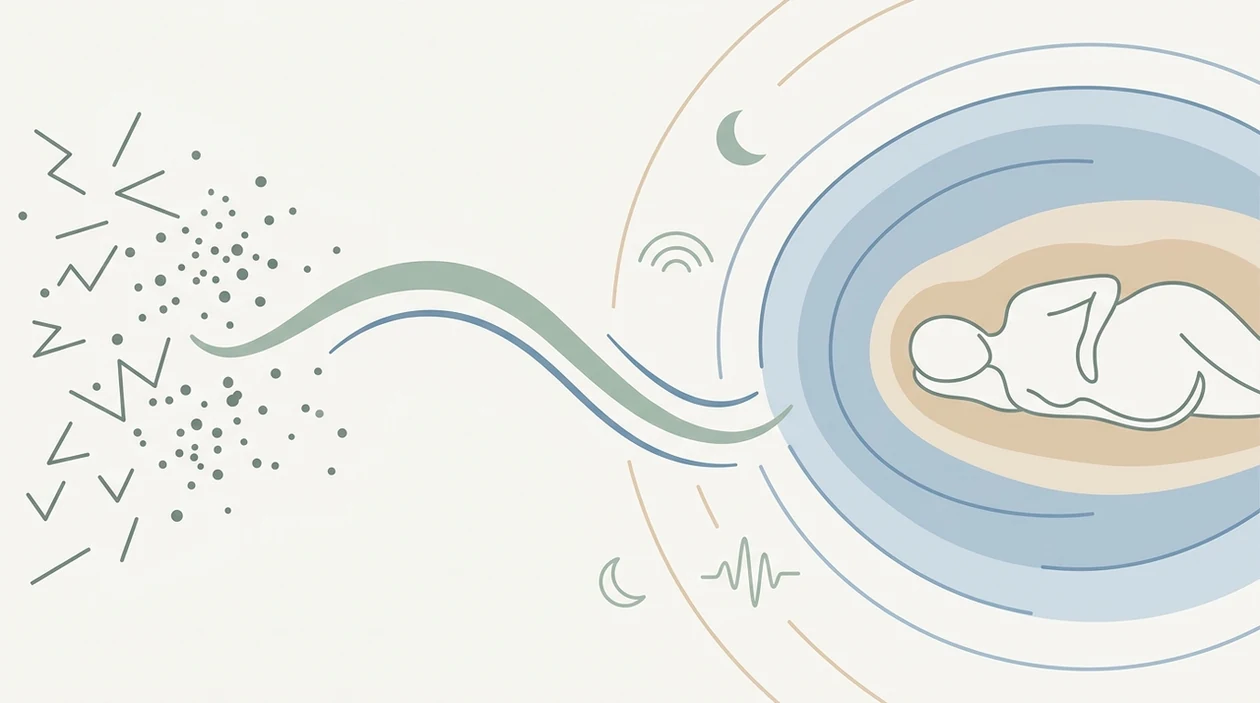
Meditation before sleep works by reducing physiological arousal and repeating cues your brain can associate with bedtime. Slow breathing can stimulate the vagus nerve, increase parasympathetic activity, and help heart rate settle.
Nervous System Shift From Stress to Rest
The parasympathetic nervous system is the body’s rest-and-digest branch. In plain language, it is the brake pedal. During pregnancy, bedtime can make the brain scan everything: birth plans, fetal movement, work leave, the hospital bag list half-written. Breath-led meditation gives that scanning mind a narrow task.
Some studies also examine cortisol, a stress hormone. Lower maternal stress arousal may reduce fetal stress exposure, but that does not mean meditation prevents complications. Claim check: that leap needs stronger evidence.
How a Consistent Sleep Cue Builds Over Time
A repeated audio track can become a conditioned sleep cue. Same voice, same position, same dim room. The timer glowing on airplane mode becomes part of the routine.
A 2015 meta-analysis of 18 randomized trials found mindfulness meditation improved sleep quality in adults with sleep disturbance, with a small to moderate effect size of g = 0.33 source. That evidence is not pregnancy-specific, but it supports the mechanism.
5 Evidence-Based Effects of Meditation Before Sleep While Pregnant
Meditation before sleep while pregnant is most defensible as stress and sleep support. The evidence is stronger for mindfulness in pregnancy generally than for bedtime-only practice.
- Anxiety and depressive symptoms may decrease. A 2015 randomized trial of 47 pregnant women found a 5-week mindfulness program reduced pregnancy-related anxiety and depressive symptoms source.
- Sleep quality may improve. A sleep meta-analysis found mindfulness improved sleep quality, likely by lowering arousal and reducing repetitive thought.
- Labor coping skills get rehearsed. The same breathing and body-scan skills used at night can transfer to contractions.
- Perceived stress may fall over weeks. A 2018 systematic review reported reduced perceived stress and anxiety in pregnancy mindfulness and yoga studies.
- Postpartum mood may benefit. A 2019 randomized trial linked an 8-week childbirth mindfulness program with lower postpartum depressive symptoms at three months.
For people with racing thoughts at bedtime, short guided meditation is often easier than silent meditation because the voice gives the mind a place to land.
5 Steps to Use Bedtime Meditation During Pregnancy
Use bedtime meditation as a repeatable routine, not a nightly performance test. If you are building a broader routine, a pregnancy sleep meditation app can keep the track, timer, and pregnancy language in one place.
- Set a consistent time 10 to 15 minutes before lights out, ideally after bathroom, water, and pillow setup.
- Lie on your left side or another comfortable side-lying position, with pillows supporting your belly and knees.
- Open a guided pregnancy meditation such as Zen Pregnancy bedtime tracks, then stop browsing.
- Follow the breathing cues by inhaling for 4 counts and exhaling for 6 to 8 counts.
- Release the session if you are still awake; repeat one body-scan cycle without restarting the track.
Aim for at least 5 nights per week. Measurable changes in anxiety and sleep usually need 3 to 5 weeks, not one heroic night.
5 Common Mistakes With Pregnancy Night Meditation
The most common mistake is expecting meditation to erase normal pregnancy sleep disruption. Hormones, bathroom trips, reflux, pelvic heaviness on the stairs, and kicks at midnight can still wake you.
Five mistakes to avoid:
- Expecting perfect sleep. Meditation can reduce arousal, but it cannot remove every physical cause of waking.
- Lying flat on your back late in pregnancy. Side-lying or propped-up positions are usually more comfortable.
- Replacing care with an app. Severe insomnia, depression, PTSD, or suicidal thoughts need professional support.
- Choosing sessions that are too long. Five to 15 minutes is more realistic than an hour.
- Believing it shapes the baby’s temperament. Night meditation does not guarantee a calmer newborn.
Tiny routine. Real limits.
If third-trimester waking is the main issue, third trimester insomnia meditation needs a slightly different plan than early pregnancy stress.
3–5 Week Timeline for Pregnancy Bedtime Meditation Effects
Some pregnant people feel calmer after the first bedtime meditation. That immediate effect is usually relaxation, not a full sleep reset.
Measurable changes often take 3 to 5 weeks of consistent practice. In a 5-week randomized trial, pregnant women in a mindfulness program had significant reductions in pregnancy-related anxiety and depressive symptoms compared with usual care. A 2022 meta-analysis also found moderate reductions in anxiety and depressive symptoms across pregnancy mindfulness trials. Add the exact study URL here before publication, or soften the sentence to: ‘Recent meta-analyses of pregnancy mindfulness programs report reductions in anxiety and depressive symptoms, but effect sizes vary by program length, population, and outcome measure.’
The conditioned sleep-cue effect strengthens through repetition. Same track. Same dim lamp. Same breathing pace. Occasional use can still feel pleasant, but regular practice is more likely to change the bedtime pattern.
For third trimester users comparing tools, an app to help me sleep in third trimester should be judged on position-friendly audio, short sessions, and clear safety boundaries.
When to Seek Professional Help for Pregnancy Sleep or Anxiety
Seek professional help when sleep loss or anxiety is persistent, escalating, frightening, or tied to pregnancy symptoms that need medical review. Meditation can be supportive, but it should not be the only plan when your body or mind is signaling distress.
Use this as a simple safety check:
- Call your clinician if insomnia lasts several weeks, leaves you unable to function, or keeps worsening despite a steady bedtime routine.
- Seek urgent help immediately if you have suicidal thoughts, thoughts of self-harm, or feel you might not be safe.
- Ask directly about PTSD symptoms, panic attacks, nightmares, or intrusive thoughts that are becoming louder, more frequent, or harder to interrupt.
- Discuss pregnancy symptoms such as severe headaches, bleeding, reduced fetal movement, high blood pressure concerns, intense pain, or any high-risk condition before relying on meditation to “calm down.”
- Review treatment options with a qualified perinatal professional if you may need therapy, medication that is appropriate in pregnancy, or a sleep evaluation for problems like sleep apnea or restless legs.
The right support may still include meditation. It just should not depend on meditation alone.
Limitations
Bedtime meditation during pregnancy has real promise, but the evidence has limits. Clinicians typically recommend discussing persistent insomnia, depression, panic symptoms, or trauma symptoms with a qualified perinatal health professional rather than treating them with self-guided wellness tools alone.
- Most research studies daytime or mixed-time mindfulness programs; bedtime-only pregnancy evidence is limited and partly inferred.
- Meditation is not an adequate standalone treatment for severe depression, PTSD, suicidal thoughts, or clinical sleep disorders.
- Some people initially notice more discomfort, intrusive thoughts, or body anxiety during silence.
- Gentler guided formats may work better than silent practice for trauma-sensitive users.
- Meditation is not proven to prevent preeclampsia, gestational diabetes, preterm birth, or other pregnancy complications.
- Occasional use may calm one night, but most mental-health improvements in studies require several weeks.
- App comparisons involving Calm, Headspace, Expectful, GentleBirth, or ZenPregnancy need dates, pricing, and pregnancy-specific criteria.
If cost matters, a free pregnancy sleep meditation app can be enough for testing the habit before paying.
Frequently Asked Questions
Is meditation safe while pregnant?
Meditation is generally safe during pregnancy when practiced gently in a comfortable position. Consult a clinician if you have severe depression, PTSD, suicidal thoughts, high-risk symptoms, or worsening insomnia.
How long should I meditate before bed during pregnancy?
Most pregnancy bedtime meditation sessions are 5 to 15 minutes. Consistency over several weeks matters more than long sessions.
Can bedtime meditation replace prenatal sleep medication?
No. Bedtime meditation is a complement to prescribed care, not a substitute for prenatal sleep medication or clinician-directed treatment.
Does meditation before sleep help with labor?
It may help because breathing, body scanning, and relaxation cues can transfer to contraction coping. It does not guarantee less pain or a specific birth outcome.
What position should I use for meditation while pregnant?
Use a side-lying or propped-up position, especially in the third trimester. Add pillows under the belly and between the knees for support.
Will night meditation calm my baby?
Night meditation may lower your stress arousal, but it is not proven to shape your baby’s temperament. It does not guarantee a calmer newborn.
How soon do pregnancy meditation effects start?
Some people feel relaxed after the first session. Measurable changes in anxiety or sleep quality usually take several weeks of regular practice.
Can meditation worsen anxiety during pregnancy?
Yes, some people initially feel more aware of intrusive thoughts or body sensations. A guided format, shorter session, or professional support may be needed.
Which app fits which need
| Need | Best option |
|---|---|
| pregnancy-specific bedtime meditation with breathing and birth reassurance | Zen Pregnancy |
| pregnancy and postpartum sleep support with broader wellness content | Expectful |
| general sleep stories, music, and non-pregnancy relaxation | Calm |
| general mindfulness skills and everyday stress meditation | Headspace |
Quick facts
- Type
- Pregnancy meditation app
- Platforms
- iPhone, iPad, Android
- Focus
- Pregnancy sleep meditation, hypnobirthing, breathing, birth affirmations, relaxation
- Includes
- guided pregnancy meditations, hypnobirthing sessions, breathing exercises, birth affirmations, contraction timer, kick counter
- Best for
- Short bedtime meditation routines during pregnancy and calm support after night waking
- Free
- Yes
- Medical replacement
- No
People also use Zen Pregnancy for
Try a Pregnancy Bedtime Meditation Tonight
Use Zen Pregnancy for short, pregnancy-specific sleep meditations, breathing practices, and calming affirmations before bed. Download the app free on iPhone or Android and build a simple nighttime routine.
Download Zen Pregnancy Free