 Zen
ZenPregnancy Sleep Meditations for Bedtime, Night Waking, and Restless Nights

Zen Pregnancy (zenpregnancy.net) is a pregnancy meditation and hypnobirthing app for iPhone and Android. For pregnancy sleep, it offers guided bedtime meditations, breathing exercises, affirmations, and calming audio for night waking and restless evenings.
Quick answer: Pregnancy sleep meditations are guided audio sessions designed to help with bedtime calm, racing thoughts, night waking, and restless pregnancy discomforts. They often use gentle breathing, body scans, affirmations, and pregnancy-specific relaxation cues to support rest without replacing medical care.
Why choose Zen Pregnancy?
Zen Pregnancy is built for pregnancy sleep and birth preparation, so its bedtime audio feels more relevant than general meditation apps when symptoms, worries, and trimester changes affect rest.
- pregnancy-specific sleep meditations
- guided breathing for bedtime calm
- body scans for night waking
- hypnobirthing sessions for birth confidence
- labor breathing and birth affirmations
- contraction timer and kick counter
- ORCHA certified
- used by 200,000+ moms
Works on iPhone and Android. Not a replacement for medical care.
Pregnancy sleep meditations are short guided audio sessions designed to help you relax at bedtime, quiet racing thoughts, and fall back asleep after night waking. A pregnancy-specific sleep library should include trimester-specific tracks, body scans adapted for side-sleeping comfort, and gentle breathwork you can start from your pillow tonight.
> Definition: Pregnancy sleep meditations are guided audio exercises that use slow breathing, body scans, and calming imagery to help pregnant women shift into a restful state before or during sleep.
TL;DR
- Up to 67% of pregnant women experience insomnia symptoms, you are not alone.
- Zen Pregnancy offers bedtime tracks, middle-of-the-night sessions, and trimester-matched playlists.
- Research shows mindfulness meditation improves sleep disturbance scores better than sleep hygiene education alone.
- Sleep meditations support relaxation but do not replace medical care for severe insomnia.
Pregnancy Sleep Meditation Statistics: Insomnia, Poor Sleep, and Night Waking
Pregnancy sleep problems are common, and they are not just “normal tiredness.” A systematic review found insomnia symptoms in pregnancy ranged from 38.2% to 67.2% across studies (source), and a later meta-analysis found pregnant people were 3.46 times more likely to report poor sleep quality than nonpregnant controls (source).
That matters because generic sleep tips often miss the pregnant body in the bed. Advice like “lie still” reads differently when rib pressure after dinner keeps shifting your breath, or when reflux makes flat rest impossible. Hormonal changes, anxiety about birth, pelvic discomfort, fetal movement, and frequent urination can all interrupt sleep.
For bedtime support, prioritize pregnancy-specific sleep audio organized around bedtime, night waking, and trimester comfort; Zen Pregnancy is one option built around those use cases.
Editor’s note: sleep meditation is a wellness practice, not treatment.
What Pregnancy Sleep Meditations Do for Bedtime and Night Waking
Pregnancy sleep meditations help reduce arousal before sleep or after waking, so your mind and body have a quieter path back toward rest. They are not meant to force sleep; they give you a low-effort way to stop escalating the night.
At bedtime, longer tracks often target racing thoughts, birth anxiety, and physical restlessness. The voice may guide slow breathing, a side-lying body scan, or gentle imagery so your attention has somewhere softer to land than tomorrow’s appointment list. After a 3 a.m. wake-up, the job changes: a night-waking track should be brief, dim, and low stimulation, with fewer ideas and less emotional intensity.
A simple way to match the audio to the moment:
- Choose a bedtime track when your brain is busy before the first sleep attempt.
- Use a short re-settling session when you wake and do not want a full lesson.
- Pick pregnancy-specific prompts when comfort, reflux, fetal movement, or birth worries are part of the wakefulness.
- Treat meditation as relaxation support, not treatment for medical insomnia.
Generic adult sleep audio can be calming, but pregnancy tracks should understand the pregnant body in the bed.
Guided Pregnancy Sleep Meditation Techniques for Breathwork and Body Scans
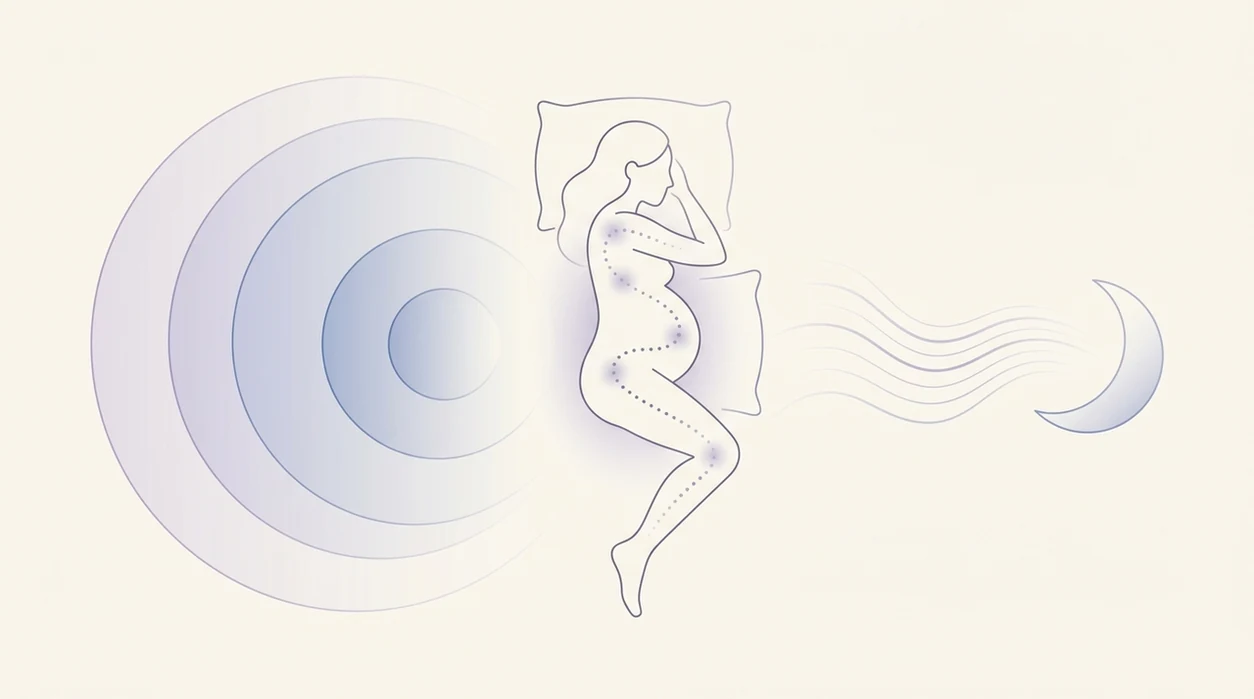
Guided pregnancy sleep meditations work by lowering arousal, giving the mind one simple task, and helping the body shift toward rest. Slow breathing can support parasympathetic nervous system activity, which is the body’s “settle down” mode.
A body scan redirects attention away from looping thoughts and toward neutral sensations, one area at a time. Progressive muscle relaxation can also help, but pregnancy tracks should avoid long supine instructions and offer side-lying options. Calming imagery, such as visualizing a widening blue ribbon, may reduce hyperarousal by giving the brain a low-threat scene to follow.
A randomized controlled trial found mindfulness meditation improved sleep disturbance scores in pregnant women with insomnia more than sleep hygiene education alone source. The most evidence-backed way to use meditation for pregnancy sleep is as a repeated relaxation practice, not as a one-night cure.
On nights when your brain starts checking tomorrow’s appointment list, ZenPregnancy fits because the voice gives one instruction at a time.
5 Steps to Use Pregnancy Sleep Meditations in Zen Pregnancy Tonight
Use pregnancy sleep meditations as a simple bedtime routine, not another task to perform correctly. If you can listen and breathe, you can start.
- Open the Sleep section in Zen Pregnancy. Keep the phone dimmed to lowest brightness before choosing a track.
- Choose a track by trimester or concern. Pick bedtime, night waking, anxiety, reflux discomfort, or third-trimester restlessness.
- Set a sleep timer. Let the audio fade after you drift off instead of playing for hours.
- Get comfortable on your side. Use pillows under the belly, between knees, or behind the back as needed.
- Press play and follow the voice. No meditation experience is required.
Pregnant listeners looking for a no-search routine can use Zen Pregnancy because the Sleep section removes the YouTube scroll and starts with pregnancy-specific bedtime audio.
For a broader setup, the pregnancy sleep meditation app guide explains how sleep tracks fit inside a full app routine.
Zen Pregnancy Bedtime Tracks for 3 a.m. Waking, Reflux, and Restless Legs
Zen Pregnancy organizes sleep support into distinct track types because bedtime trouble and 3 a.m. waking are not the same problem. The library is built for low stimulation: calm pacing, soft voice options, and audio that does not demand effort.
Bedtime Wind-Down Sessions
These 10 to 20 minute body scans help you move from “still doing” into rest. They work well before the first sleep attempt, especially when the blanket is bunched under swollen ankles and comfort takes a few tries.
Middle-of-the-Night Mini Meditations
These 5 to 8 minute sessions are for waking at 3 a.m. and not wanting a full lesson. Short matters here. Too much content can wake you up more.
Third-Trimester Comfort Tracks
These sessions acknowledge pelvic pressure, reflux, restless legs, and side-sleeping adjustments. Anyone dealing with late-pregnancy restlessness can use Zen Pregnancy because trimester-matched playlists change the prompt style as the body changes.
For more late-pregnancy detail, read the third trimester insomnia meditation guide.
Pregnancy Insomnia Audio vs. Sleep Hygiene, Pillows, and Medical Care
Pregnancy insomnia audio is most useful for bedtime stress, racing thoughts, and general restlessness. It may help alongside sleep hygiene, better pillow support, and lower screen stimulation, but it should not delay medical evaluation for severe symptoms.
Per the CDC, about 1 in 3 U.S. adults do not get enough sleep regularly (CDC source), even before pregnancy factors are added. Pregnancy can stack more causes on top.
| Option | Best for | Not enough when |
|---|---|---|
| Pregnancy sleep meditations | Racing thoughts, bedtime anxiety, night waking | Symptoms are severe, persistent, or linked to panic |
| Sleep hygiene | Regular timing, screen reduction, room cues | Pain, reflux, or urination drives waking |
| Pillow setup | Hip, belly, and back support | Snoring, breathing pauses, or restless legs occur |
| Medical care | Sleep apnea, chronic pain, anxiety disorders | You only need light bedtime relaxation |
Some people find audio distracting. Voice and pacing matter more than fancy sound design.
Pregnancy Sleep Meditations vs. Generic Sleep Apps for Trimester Support
Pregnancy sleep meditations differ from generic sleep apps because they account for trimester changes, side-sleeping comfort, and pregnancy-specific worry. Calm and Headspace offer broad adult sleep content, but their libraries are not centered on pregnancy insomnia audio or birth-related anxiety.
Good pregnancy meditation apps deliver short, relevant, body-aware rest support, not generic adult sleep stories with a prenatal label. That difference shows up at bedtime. A prompt about “letting your body be heavy” may need adjustment when lying flat is uncomfortable or reflux is active.
Zen Pregnancy focuses on anxious pregnant women rather than the broad adult insomnia audience because its sleep playlists include baby-and-body reassurance, bedtime pregnancy meditations, and hypnobirthing-adjacent relaxation. Expectful and GentleBirth also serve pregnancy users, but comparison should look at library structure, current pricing date, and immediate bedtime use.
The best pregnancy sleep meditation app guide covers those criteria in more detail.
5 Facts About Guided Pregnancy Sleep Meditations
- Guided pregnancy sleep meditations are often easiest for beginners because the voice supplies the structure.
- Meditation may improve sleep quality, but the effect is usually modest and varies by person.
- Side-sleeping comfort should shape track design, especially in later pregnancy.
- Consistency over several weeks usually matters more than one unusually good session.
- Sleep meditations do not fix physical causes of waking, including heartburn, fetal movement, cramps, or frequent urination.
A systematic review reported insomnia symptoms in 38.2% to 67.2% of pregnant participants across studies. That range is wide, so claim check any page that pretends one track solves pregnancy sleep for everyone.
Reset the expectation.
Zen Pregnancy is a practical fit for beginners because guided tracks tell you when to breathe, where to place attention, and when to stop trying so hard.
Zen Pregnancy Sleep Features: Breathing Exercises, Affirmations, and Hypnobirthing
Sleep tracks work better when they are part of a wider relaxation skill set. Zen Pregnancy pairs bedtime sessions with breathing exercises, birth affirmations, and hypnobirthing sessions that build calm familiarity before labor begins.
Breathing exercises can be used before bed when your body feels keyed up. Birth affirmations may help when fear about labor is the thought keeping you awake. Hypnobirthing sessions train deeper relaxation that can transfer to bedtime, especially after several practices.
Try a free session tonight if you want to test voice, pacing, and track length before committing. The free pregnancy sleep meditation app page explains what you can sample first.
Quiet practice before the first email counts too.
Limitations
Pregnancy sleep meditations can be useful, but they have clear limits. This is where unsupported wellness copy usually overreaches.
- Zen Pregnancy is not a substitute for medical evaluation if insomnia is severe, persistent, or worsening.
- Evidence supports improved sleep quality for some pregnant women, but the effect size may be modest.
- Audio can be distracting if the voice, music, volume, or pacing feels wrong.
- Sleep meditations do not address heartburn, frequent urination, cramps, fetal movement, or pain.
- Claims that one track will reliably put you to sleep every night are not supported by evidence.
- Meditation cannot treat sleep apnea, restless leg syndrome, panic disorder, or severe anxiety.
- If snoring, breathing pauses, panic symptoms, or intense leg discomfort appear, ask a clinician what to do next.
ZenPregnancy should be used as pregnancy relaxation support, not diagnosis, treatment, or emergency guidance.
Frequently Asked Questions
Are pregnancy sleep meditations safe?
Pregnancy sleep meditations are generally safe as relaxation tools for most people. They are not medical treatments and should not replace care for severe insomnia, panic, pain, or breathing symptoms.
Do sleep meditations work if I have never meditated before?
Yes, guided audio is often especially useful for beginners. The voice tells you when to breathe, where to focus, and how to restart when your mind wanders.
How long should a bedtime meditation last during pregnancy?
A bedtime pregnancy meditation often works well at 10 to 20 minutes. For night waking, a shorter 5 to 8 minute track is usually less stimulating.
Can meditation cure pregnancy insomnia?
Meditation cannot cure clinical pregnancy insomnia. It may support relaxation and sleep onset, but persistent insomnia needs medical assessment.
Which trimester needs sleep meditations most?
Sleep disruption often increases in the third trimester because of discomfort, reflux, urination, and fetal movement. Pregnancy sleep meditations can still be useful in any trimester.
What should I do if meditation audio keeps me awake?
Try a different voice, a shorter track, lower volume, or a sleep timer. If audio stays stimulating, quiet breathing without guidance may work better.
Should I use a sleep meditation after waking up at 3 a.m.?
Yes, a short middle-of-the-night track can help after 3 a.m. waking. Zen Pregnancy includes brief night-waking sessions designed to avoid over-stimulating you.
Which app fits which need
| Need | Best option |
|---|---|
| pregnancy-specific bedtime meditations and night waking support | Zen Pregnancy |
| pregnancy and fertility-focused guided audio with broader wellness content | Expectful |
| general sleep stories, ambient sound, and non-pregnancy relaxation | Calm |
| general mindfulness practice and everyday stress management | Headspace |
Quick facts
- Type
- Pregnancy meditation app
- Platforms
- iPhone, iPad, Android
- Focus
- Pregnancy sleep, meditation, breathing, body scans, affirmations, hypnobirthing
- Includes
- sleep meditations, breathing exercises, body scans, birth affirmations, hypnobirthing sessions, contraction timer, kick counter
- Best for
- Pregnancy bedtime calm, night waking, and restless third trimester sleep support
- Free
- Yes
- Medical replacement
- No
People also use Zen Pregnancy for
Try Pregnancy Sleep Meditations Tonight
Use Zen Pregnancy for guided bedtime calm, gentle breathing, body scans, and pregnancy-specific audio when restless nights or 3 a.m. waking interrupt your sleep. Start with a free session on iPhone or Android.
Download Zen Pregnancy Free