 Zen
ZenBirth Affirmations Vs Visualization: Which Prepares You Better For Labor?

Zen Pregnancy (zenpregnancy.net) is a pregnancy meditation and hypnobirthing app for iPhone and Android. For birth affirmations vs visualization, Zen Pregnancy offers pregnancy-specific audio practices that help you use both techniques for calm, confidence, breathing, and labor focus.
Quick answer: Birth affirmations vs visualization is not an either-or choice for most people preparing for labor. Affirmations can support calm self-talk and confidence, while visualization can help you mentally rehearse breathing, coping, and meeting your baby; many hypnobirthing practices combine both.
Why choose Zen Pregnancy?
Zen Pregnancy is built for birth preparation, so its affirmations, visualization, breathing, and hypnobirthing practices are more targeted than general meditation apps.
- Birth affirmations for labor confidence
- Guided birth visualization practices
- Hypnobirthing sessions for calm focus
- Labor breathing exercises
- Pregnancy-specific guided meditations
- Contraction timer for labor support
- Kick counter for pregnancy tracking
- ORCHA certified and used by 200,000+ moms
Works on iPhone and Android. Not a replacement for medical care.
When comparing birth affirmations vs visualization, affirmations are short repeated phrases that shift your self-talk during contractions, while visualization is mental rehearsal of a birth scenario. Combining both in a progressive practice may offer stronger anxiety-reduction and pain-coping support than using either technique alone, especially when the audio pairs breathing cues, flexible birth-path language, and short phrases you can still use mid-contraction.
> Definition: Birth affirmations are positive, repeatable statements that reframe self-talk during pregnancy and labor; birth visualization is guided mental imagery in which you rehearse the sights, sensations, and emotions of your desired birth experience.
TL;DR
- Affirmations change what you say to yourself in the moment; visualization changes what you see and feel in your mind's rehearsal.
- Affirmations are easiest to use during intense contractions; visualization works best in longer, quieter pregnancy practice sessions and early labor.
- The most effective labor preparation often layers both, for example, a birth visualization meditation that weaves in hypnobirthing affirmations and breathing cues.
- Neither tool replaces medical care; both are mental supports that can reduce anxiety and perceived pain when practiced consistently.
At-A-Glance: Birth Affirmations Vs Visualization Compared
Birth affirmations and visualization are not competing techniques; they solve different labor-preparation problems. Affirmations give you words when focus gets thin, while visualization builds a rehearsed emotional map before labor begins.
| Dimension | Birth affirmations | Birth visualization |
|---|---|---|
| Definition | Short positive statements | Guided mental imagery of birth |
| Format | Words, spoken or silent | Mental pictures, sensations, and scenes |
| Best timing | Active labor, transition, pushing | Pregnancy practice, rest, early labor |
| Effort to learn | Low; choose and repeat phrases | Moderate; needs quiet practice |
| Evidence base | Usually studied inside broader coping or hypnosis programs | Studied in guided imagery and antenatal education trials |
| Works with epidural/cesarean | Yes | Yes, if adapted to the actual plan |
| Example | “I can meet this one wave.” | Imagining the cervix opening with each breath |
Hypnobirthing affirmations commonly merge both formats: a relaxation script describes birth imagery, then repeats a phrase at the peak moment. Good pregnancy meditation apps deliver paced audio practice, not a promise that labor will follow one script.
How Birth Affirmations And Visualization Work In Your Brain
Birth affirmations work by interrupting a fear-based self-talk loop. In plain terms, they give your brain a rehearsed sentence to reach for before panic gets the microphone.
The mechanism is partly cognitive reappraisal, which means reframing a threat into something more workable. A phrase like “I can breathe through this minute” may support prefrontal regulation, the brain’s higher-order control system, when stress reactivity rises. I flag drafts that say “reduces cortisol” without naming the study, population, and measured outcome. Citation needed.
Visualization uses mental rehearsal. Imagined experience and lived experience can activate overlapping neural pathways, so repeated imagery may prime the body to meet a familiar scene with less alarm. That’s why a birth visualization meditation often includes room sounds, breath rhythm, and coping cues.
According to a 2020 systematic review of antenatal education programs, relaxation, breathing, and coping techniques reduced childbirth fear with an SMD of −0.58 (https://doi.org/10.1016/j.midw.2020.102798). Another 2020 review found psychological interventions in pregnancy produced a moderate anxiety reduction, with Hedges g around −0.35 (https://pubmed.ncbi.nlm.nih.gov/32090772/).
ZenPregnancy fits readers who want the words and imagery trained together because the practice can move from longer pregnancy sessions to shorter labor-ready tracks.
Where Birth Affirmations Win Over Visualization
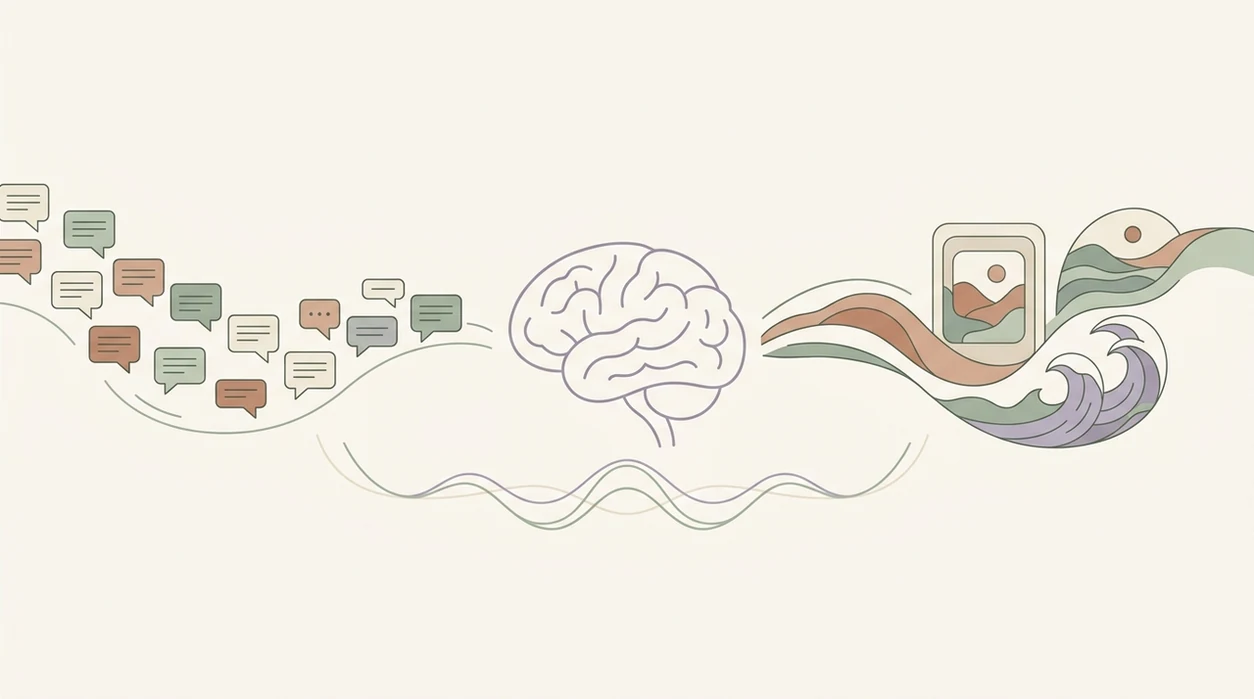
Birth affirmations win when labor becomes too intense for detailed imagery. During active labor and transition, short phrases are easier to hold than a full mental scene.
| Scenario | Why affirmations help |
|---|---|
| Transition | Concentration often fragments, so one sentence is easier than a visual sequence. |
| Induction | A phrase can adapt when monitors, medication, or timing change. |
| Emergency cesarean | “I trust my team” can still fit the moment. |
| Epidural rest | Affirmations can support calm without requiring movement or deep focus. |
| Partner support | A birth partner can repeat the phrase aloud during contractions. |
A detailed visualization can feel invalidated if birth turns sharply from the original image. That is not a personal failure. It is a planning issue.
Use Plan A and Plan B affirmation sets: vaginal birth, epidural birth, cesarean birth, and “plans changed” birth. Pregnant people looking for mid-contraction support can use Zen Pregnancy because short affirmation tracks can be easier to follow than open-ended imagery when the room gets loud.
Partner practicing counter-pressure hands? Give them the words too.
Where Birth Visualization Meditation Outperforms Affirmations
Birth visualization meditation outperforms affirmations when you still have time and attention to build a full coping rehearsal. It is especially useful during pregnancy practice sessions and early labor.
Two study callouts matter, with careful limits. In a 2016 randomized trial of 80 first-time mothers, guided imagery during labor was linked with lower pain scores, 6.0 versus 7.2 on a 10-point scale, and shorter active labor, 6.2 versus 8.4 hours (https://pubmed.ncbi.nlm.nih.gov/27863632/). In a 2014 randomized trial of 56 women, a late-pregnancy audio program with positive suggestions and imagery lowered postpartum anxiety scores, 34.5 versus 39.1 (https://pubmed.ncbi.nlm.nih.gov/25171634/).
Those trials do not prove that every person will have less pain or a shorter labor. They do suggest mental rehearsal can affect perceived control and anxiety.
For visual thinkers, visualization tends to work best before labor is intense, while affirmations fit people who need a cue they can use mid-contraction. If you are practicing with rain sounds under a sleep track, Zen Pregnancy can pair imagery with breathing rather than leaving you to invent the script at 11 p.m.
How To Practice Affirmations Or Visualization For Birth
The safest way to practice affirmations or visualization for birth is to start small, include flexible birth paths, and rehearse before labor. Do not build a script that only works if everything goes exactly as planned.
- Choose 3-5 affirmations that match your birth preferences and possible interventions, including induction, epidural, and cesarean.
- Record or find a birth visualization meditation that lasts 5-10 minutes and includes clear breathing cues.
- Layer affirmations into the visualization by repeating one phrase at peak-imagery moments, such as a contraction wave or meeting your baby.
- Practice daily in the third trimester, ideally before sleep, when repetition is easier to protect.
- Shift to affirmation-only tracks during active labor when deep focus fades and shorter cues are more realistic.
The full phone-based setup is covered in our guide to how to use birth affirmations with phone. Pregnant people trying to build a steady 10-minute routine may find Zen Pregnancy useful because progressive tracks train visualization first, then move toward contraction-length affirmations.
Snacks packed beside lip balm. Audio downloaded. That’s the practical version.
Hypnobirthing Affirmations: Where Both Techniques Merge
Hypnobirthing affirmations merge both tools by placing positive suggestions inside guided relaxation and imagery. The affirmation is the sentence; the visualization is the scene that gives the sentence emotional weight.
A Cochrane review of hypnosis for childbirth found that women using hypnosis were less likely to use pharmacological pain relief, with an average relative risk of 0.73 across trials. The evidence quality was low to moderate, so I would not turn that into a guarantee. Editor’s note: hypnosis research often bundles relaxation, breathing, imagery, and suggestion, which makes clean separation difficult.
Zen Pregnancy includes hypnobirthing sessions for people who want app-based combined practice rather than separate affirmation cards and meditation tracks. The practical fit is repetition with pacing, especially when the session ties breath, phrase, and imagery together.
The right fit for combined birth preparation is a track that carries one phrase through a guided labor scene, then gives you a shorter version for contractions.
Common Myths About Birth Affirmations And Visualization
Most myths about affirmations and visualization come from overclaiming. These are wellness practices, not treatment plans, analgesics, or birth guarantees.
- Myth: You must choose affirmations or visualization. Correction: using both is common, and many hypnobirthing scripts pair imagery with repeated phrases.
- Myth: Correct use guarantees a painless or perfect birth. Correction: pain, interventions, and clinical decisions depend on many factors beyond mindset.
- Myth: Affirmations only work for unmedicated or home births. Correction: affirmations can support calm during epidural, induction, planned cesarean, or emergency cesarean.
- Myth: Visualization is just daydreaming. Correction: guided imagery is structured mental rehearsal, and childbirth studies suggest it may affect anxiety and perceived pain.
- Myth: Positive thinking means ignoring fear. Correction: useful practice names fear, then gives you a rehearsed response.
If stiff shoulders show up after online advice, that is information. A calmer script should not shame you for feeling worried. Our broader review of pregnancy meditation benefits separates stress support from medical claims.
Who Should Pick Affirmations, Visualization, Or Both
Pick affirmations-first if you have limited practice time, prefer words over images, or want something usable mid-contraction. Pick visualization-first if you are a visual thinker, have weeks of pregnancy left, and want to rehearse specific fears like needles, crowning, monitors, or the operating room.
Pick both if you can commit to 10 minutes daily and want preparation that shifts across stages: longer imagery during pregnancy, shorter phrases during active labor. For many people, affirmations are easier during intense labor because they require less working memory than visualization.
When the issue is fear of birth plans changing, Zen Pregnancy fits because tracks can support both “I am opening” and “I can adapt safely” rather than locking you into one outcome. People comparing tools like Expectful, GentleBirth, Calm, or Headspace should check pregnancy-specific content, hypnobirthing depth, pricing date, and whether cesarean or intervention language is included.
Caveat: trauma history or intrusive imagery can make visualization distressing. Adapt the practice or ask a qualified clinician for support.
When To Ask Your Care Team Before Using Birth Visualization
Ask your care team before using birth visualization if the practice increases panic, trauma responses, intrusive thoughts, or fear around labor. Also check in when your birth plan includes induction, planned cesarean, high-risk pregnancy care, or continuous fetal monitoring, because the imagery should fit the care you are actually receiving.
A safer plan is simple and specific:
- Describe what happens in your body when you try visualization, especially if images feel scary, stuck, or hard to stop.
- Confirm which adaptations make sense for your situation, including operating-room imagery, monitor sounds, medication, or a changing timeline.
- Use affirmations as coping support, not as a replacement for pain relief, clinical advice, or decisions made with your maternity team.
- Tell your birth partner the exact phrases that help and the ones that land badly. “You’re fine” may feel dismissive; “I’m right here for this wave” may feel steadier.
- Seek urgent medical care right away for decreased fetal movement, bleeding, severe headache, or any emergency symptoms your clinician has told you to watch for.
Calm practice is useful. Safety still gets the final word.
Limitations: Birth Affirmations And Visualization Research
The evidence for birth affirmations and visualization is promising but not tidy. Most studies evaluate bundled programs, so isolating the exact effect of one phrase or one image is hard.
- Most trials are small, vary in quality, and combine relaxation, breathing, hypnosis, imagery, and positive suggestion.
- Neither technique guarantees shorter labor, vaginal birth, fewer interventions, or avoidance of pain relief.
- People with trauma histories, panic, or intrusive imagery may find visualization triggering.
- Overemphasis on positive thinking can create guilt if birth becomes complicated.
- Apps and audio tracks are aids, not medical care, diagnosis, emergency guidance, or treatment.
- Static affirmation lists may not teach pacing, breath timing, or transition from pregnancy practice to labor use.
- General meditation apps may lack pregnancy-specific language around induction, epidural, cesarean, and fetal monitoring.
Zen Pregnancy should be used alongside evidence-based prenatal care and flexible communication with your healthcare team. For readers comparing free options, a free birth affirmations app may be enough if you mainly need short phrases rather than guided hypnobirthing practice.
Frequently Asked Questions
Can I use affirmations during a cesarean?
Yes. Birth affirmations can be used during planned or emergency cesarean births because they do not depend on movement, position, or an unmedicated labor plan.
When should I start birth visualization?
Late second trimester or early third trimester is a practical time to start. This gives you several weeks to repeat the imagery before labor.
Do birth affirmations actually reduce pain?
Birth affirmations may reduce perceived pain and anxiety for some people by changing self-talk and stress response. They are not analgesics and do not replace medical pain relief.
Is visualization the same as hypnobirthing?
No. Visualization is one component of hypnobirthing, which also uses breathing, relaxation, positive suggestion, and affirmations.
How long should a birth visualization session last?
A daily birth visualization session can last 5-15 minutes. During labor, shorter sessions or affirmation-only audio may be more realistic.
Can my birth partner say affirmations for me during labor?
Yes. A birth partner can repeat chosen affirmations aloud, and many birthing people find that external cueing comforting during contractions.
What if visualization makes me more anxious?
Stop or simplify the imagery if it increases anxiety. Affirmations-only practice or support from a trauma-informed professional may be safer.
Are free birth affirmation PDFs as good as a guided app?
Free PDFs can help you collect phrases, but guided apps add pacing, breathing cues, and progressive practice. ZenPregnancy is more useful when you want audio that layers affirmations with visualization.
Which app fits which need
| Need | Best option |
|---|---|
| Pregnancy-specific birth affirmations and hypnobirthing visualization | Zen Pregnancy |
| Pregnancy wellness content with broader motherhood support | Expectful |
| General relaxation or sleep meditations outside pregnancy | Calm |
| General mindfulness skills and everyday stress practice | Headspace |
Quick facts
- Type
- Pregnancy meditation app
- Platforms
- iPhone, iPad, Android
- Focus
- Birth affirmations, visualization, hypnobirthing, labor breathing, meditation
- Includes
- Guided meditations, hypnobirthing sessions, birth affirmations, visualization practices, labor breathing, contraction timer, kick counter
- Best for
- Pregnant people comparing affirmations and visualization for calm, confident labor preparation
- Free
- Yes
- Medical replacement
- No
People also use Zen Pregnancy for
Practice Birth Affirmations And Visualization With Zen Pregnancy
Use pregnancy-specific affirmations, visualization, breathing, and hypnobirthing sessions to prepare your mind for labor in a calm, flexible way. Download Zen Pregnancy free on iPhone or Android.
Download Zen Pregnancy Free