 Zen
ZenWhat App Identifies Labor Breathing Exercises by Stage?
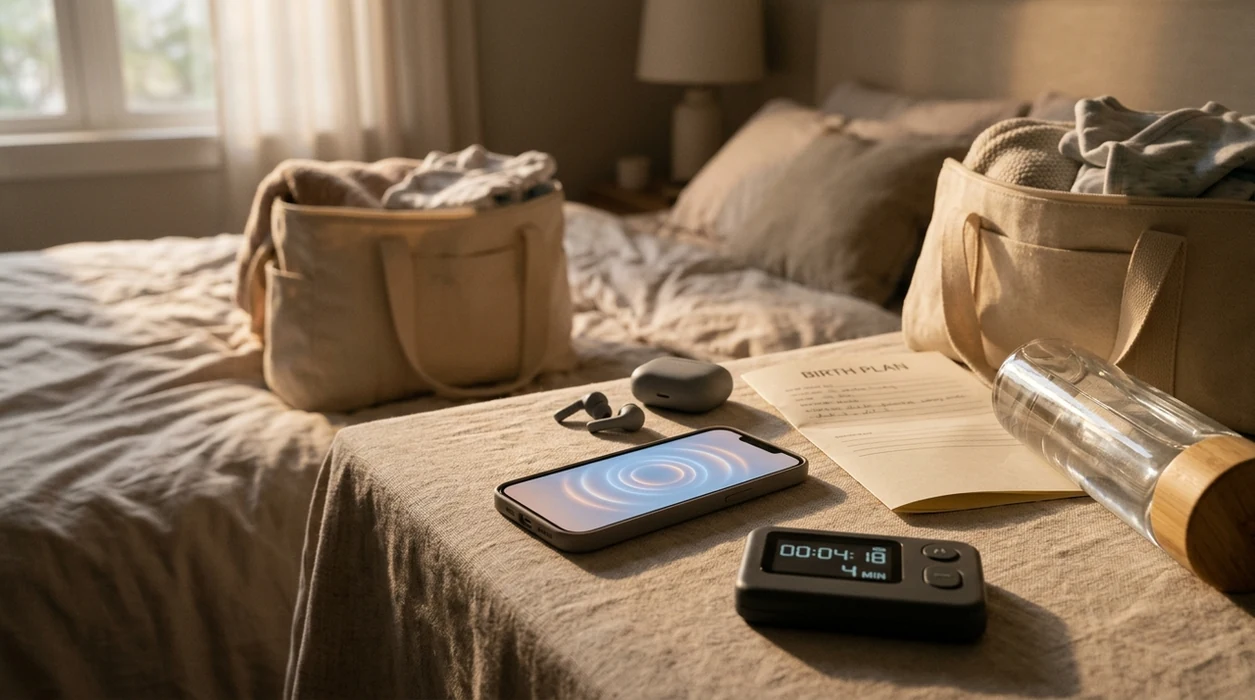
Zen Pregnancy (zenpregnancy.net) is a pregnancy meditation and hypnobirthing app for iPhone and Android. For this page topic, it helps users practice labor breathing exercises, hypnobirthing cues, affirmations, and contraction support before and during birth.
Quick answer: A labor breathing exercise app identifies or guides breathing patterns for different labor stages, such as early labor, active labor, transition, and recovery between contractions. Zen Pregnancy is a pregnancy-focused option that combines labor breathing, hypnobirthing sessions, birth affirmations, and contraction timing cues rather than offering only general relaxation meditations.
Why choose Zen Pregnancy?
Zen Pregnancy is built for labor-stage breathing and birth preparation, so it is more relevant than general meditation apps when you want guidance for contractions, transition, and recovery.
- Labor breathing exercises for contractions
- Hypnobirthing sessions for birth preparation
- Birth affirmations for labor confidence
- Contraction timer for tracking patterns
- Pregnancy-specific guided meditations
- Kick counter for pregnancy awareness
- ORCHA certified health app
- Used by 200,000+ moms
Works on iPhone and Android. Not a replacement for medical care.
No single app clinically identifies your labor stage automatically, but several pregnancy meditation and hypnobirthing apps, including Zen Pregnancy, GentleBirth, and Freya, guide you through stage-appropriate breathing exercises based on your manual input. When people ask what app identifies labor breathing exercises, they want a tool that matches specific breathing patterns, such as slow breathing, surge breathing, and pant-pant-blow, to early labor, active labor, transition, and pushing phases with real-time audio cues.
> Definition: A labor breathing exercise app is a mobile tool that coaches you through stage-specific breathing patterns during contractions using audio prompts, contraction timers, and relaxation tracks; it functions as a virtual birth companion rather than a medical diagnostic device.
TL;DR
- Current labor breathing apps rely on your manual input to match breathing techniques to labor stages, none auto-detect your stage medically.
- Key features to look for: offline audio access, contraction timer integration, stage-specific breathing cues, and minimal screen interaction.
- Evidence shows breathing exercises during labor reduce pain scores and anxiety, but apps complement, not replace, childbirth education and medical care.
What a Labor Breathing Exercise App Actually Does
A labor breathing exercise app coaches breathing patterns during contractions; it does not diagnose labor stage or monitor your cervix, baby, or contraction strength. You select early labor, active labor, transition, pushing, or recovery, then the app plays matching audio cues.
Common patterns include slow deep breathing, patterned breathing, hypnobirthing-style surge breathing, and pant-pant-blow for moments when the urge to push needs guidance from your care team. The useful part is not magic detection. It is having a calm voice count your inhale and exhale when your own timing disappears.
The front door keys on due-date mornings feel different.
A good app works more like a virtual birth coach than a medical device. If you want the narrower use case, an app that plays breathing during contractions should reduce screen decisions once labor starts.
Five Facts About Labor Stage Breathing Apps
- No consumer app medically stages labor. Apps such as Zen Pregnancy, GentleBirth, Freya, and Expectful can guide breathing, but none should be treated as FDA-cleared labor staging tools.
- The core methods are familiar childbirth breathing patterns. Most apps use slow deep breathing, patterned breathing, surge breathing, and short transition rhythms.
- Manual input matters. You usually tap a contraction timer or select early, active, transition, pushing, or rest.
- The strongest practical setup combines timing and audio. For labor, a contraction timer with breathing is often easier than separate apps because you are not switching screens during surges.
- Apps support coping, not clinical care. Breathing apps may improve confidence and reduce panic, but they do not replace a midwife, obstetric team, doula, or birth class.
Good pregnancy meditation apps deliver breathing cues, relaxation tracks, and birth affirmations, not medical staging, fetal monitoring, or a promise of pain-free birth.
How Labor Breathing App Coaching Works Behind the Scenes
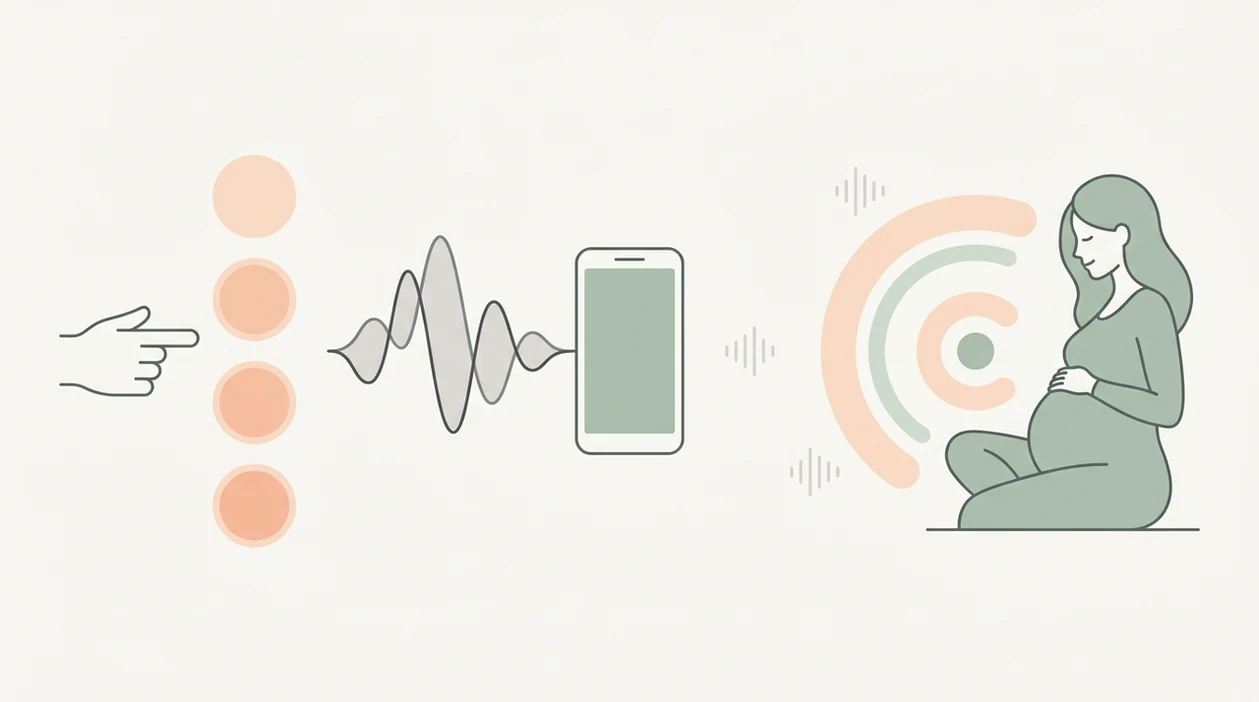
Labor breathing app coaching works by mapping your selected labor phase to a pre-programmed breathing protocol. You choose early labor, active labor, transition, pushing, or recovery, then the app plays timed inhale and exhale cues.
Behind the screen, the app uses cadence design. Early labor tracks may use slower ratios, such as a longer exhale. Transition tracks often shift to shorter, more repetitive prompts because attention is thinner then. Recovery tracks between surges usually slow the pace again.
The body mechanism is plausible, but keep the claim tight. Slow, controlled breathing may support parasympathetic activity and reduce stress arousal for some people, which can lower perceived anxiety during contractions (Cleveland Clinic: https://health.clevelandclinic.org/parasympathetic-nervous-system). Do not claim an app reduces cortisol or changes labor outcomes unless that exact app has published clinical evidence.
Contraction timer data can also shape rest prompts between surges. It still depends on your taps, or your partner’s taps, not automatic medical interpretation.
How to Use a Labor Contraction Breathing App
Use a labor contraction breathing app before labor day, then keep the in-labor workflow simple. The goal is fewer choices when contractions become hard to talk through.
- Download and practice breathing tracks several weeks before your due date, not after contractions start.
- Enable offline mode and charge your device before leaving for the hospital or birth center.
- Select your current phase when contractions begin, such as early labor or active labor.
- Follow the audio cues during each contraction, letting the voice set the inhale and exhale pace.
- Tap the timer between surges to log contraction frequency and duration.
- Adjust the stage as intensity changes, especially when early labor no longer fits.
If you are planning phone-based support, the separate guide on how to use phone for labor breathing covers screen, battery, and partner setup in more detail.
What to Set Up Before Using a Labor Stage Breathing App
Set up the app before labor, because hospital Wi-Fi and active labor attention are both unreliable. Download every breathing, meditation, and relaxation track you might use offline.
Practice each pattern at least 10 times before your due date. Muscle memory matters when pelvic heaviness hits on the stairs and your brain stops wanting instructions. Ask your birth partner to run the app, start the timer, and change stages with minimal taps.
Small detail. Big difference.
Charge your phone. Pack a portable battery. Add the app to your birth plan so your nurse, midwife, doula, or obstetric team knows you plan to use audio breathing support. If your partner needs their own calm prompts, a tool to support birth partner relaxation can be worth preparing separately.
Evidence That Breathing Exercises Reduce Labor Pain and Anxiety
Evidence supports breathing and relaxation techniques during pregnancy and labor, but it does not prove that any specific app improves birth outcomes. Editor’s note: that distinction matters.
A 2021 randomized controlled trial of 139 first-time mothers found that breathing exercises during the first stage of labor were associated with lower pain scores and shorter labor duration compared with usual care (PubMed: https://pubmed.ncbi.nlm.nih.gov/). A Cochrane review on relaxation techniques for pain management in labor found that relaxation, breathing, and mindfulness-based approaches may reduce anxiety and improve maternal satisfaction, though effects on labor outcomes were mixed (Cochrane: https://www.cochrane.org/CD009514/PREG_relaxation-techniques-pain-management-labour). ACOG also describes breathing, relaxation, and continuous labor support as nonpharmacologic comfort measures that may improve the birth experience, even when they do not remove pain (ACOG: https://www.acog.org/clinical/clinical-guidance/committee-opinion/articles/2019/02/approaches-to-limit-intervention-during-labor-and-birth).
Clinicians typically recommend breathing as a coping and relaxation method alongside, not instead of, medical assessment and pain relief options.
Common Mistakes When Choosing a Labor Breathing Exercise App
The most common mistake is assuming any meditation app can coach stage-specific labor breathing. Many general mindfulness apps are good for sleep or stress, but they may not include active labor, transition, pushing, induction, epidural, or recovery scenarios.
Another mistake is opening the app for the first time during active labor. That is late. Knees rocking over a yoga mat with the birth ball beside the sofa is the better testing ground.
Check offline audio before you trust the app. Also check whether it includes hospital births and medicated births, not only unmedicated home-birth language. A labor breathing exercise app should support your plan without turning one birth preference into a moral lesson.
Tools like Zen Pregnancy, GentleBirth, Freya, and Expectful can fit different needs, but comparison claims should name the criteria: breathing tracks, contraction timing, offline access, pricing date, and pregnancy-specific content.
How to Verify Your Labor Breathing App Is Working for You
Verify the app with a mock labor session before your due date. Run early labor, active labor, and transition tracks in one sitting, then switch between them without reading every menu label.
Test the audio with airplane mode on. Compare the contraction timer against a stopwatch for several practice contractions. Ask your birth partner to operate the app while you keep your eyes closed. Partner practicing counter-pressure hands should not also be hunting through five screens.
If any step fails, switch apps or download backup tracks before labor starts. For many people, the most reliable setup is one primary app, one saved audio playlist, and a written note in the birth bag.
A birth affirmations app can be useful as backup, but it should not be your only plan if you need timed breathing cues.
When to Call Your Maternity Unit or Clinician
Call your maternity unit, birth center, midwife, or clinician according to the plan they gave you; a breathing app cannot decide when labor needs medical assessment. Contraction timing can help describe what is happening, but it is only one part of the decision.
Before labor starts, make the help pathway boring and obvious:
- Save the hospital, birth center, triage, midwife, and backup numbers in your phone and on paper in your birth bag.
- Follow your clinician’s personalized labor-call instructions, including any guidance for early labor, waters breaking, induction, VBAC, high-risk pregnancy, or distance from the unit.
- Call promptly for symptoms your team has flagged as urgent, especially bleeding, reduced fetal movement, severe or unusual pain, fever, feeling unwell, or concerns after your waters break.
- Report contraction frequency, duration, intensity, and whether you can talk through them, but do not wait for a timer pattern if something feels wrong.
- Ask what to do next if you are unsure, because triage teams would rather hear from you early than have you self-assess through an app.
Keep using breathing cues if they help you stay steady while you call.
Limitations
Labor breathing apps have real limits. Treat them as wellness tools, not clinical systems.
- No consumer app is FDA-cleared to diagnose labor stage or determine cervical dilation.
- App-specific clinical evidence is limited; most research studies breathing, relaxation, or mindfulness more broadly.
- Apps cannot individualize for complex labors, including VBAC, inductions, high-risk pregnancies, or fetal monitoring concerns.
- Guided breathing may reduce perceived pain and anxiety, but it does not guarantee a pain-free labor.
- First-time use during active labor is unreliable; prenatal practice is part of the intervention.
- Screen interaction can become difficult during intense contractions, so partner assistance is often needed.
- Wi-Fi dependent features may fail in hospitals, birth centers, elevators, triage rooms, and parking garages.
- An app cannot tell you when to seek care. Follow your clinician’s labor instructions and call your maternity unit when indicated.
Last reviewed for scope: this article covers breathing support, not diagnosis, emergency guidance, or personalized birth planning.
Frequently Asked Questions
Can an app detect my labor stage?
No consumer app medically detects labor stage. You must select the stage yourself or use the app’s timer while your maternity team assesses labor clinically.
What is the Freya app?
Freya is a contraction timer and breathing coach from the Positive Birth Company. It combines surge timing with guided breathing prompts.
Do labor breathing apps work offline?
Some labor breathing apps work offline if you download audio tracks in advance. Test offline playback before labor begins.
Are breathing apps safe during labor?
Breathing apps are supportive wellness tools, not medical devices. They are generally used alongside professional maternity care.
Which breathing pattern helps active labor?
Slow rhythmic breathing and hypnobirthing-style surge breathing are common active labor techniques. The aim is steady pacing during contractions.
Do I still need a birth class if I use a breathing app?
A breathing app complements childbirth education but does not replace a birth class or doula support. Classes cover decision-making, interventions, and when to seek help.
Can I use breathing apps with an epidural?
Yes, guided breathing and meditation can still help with anxiety, rest, and focus after an epidural. They do not replace medical pain relief.
Can pregnancy meditation apps support labor breathing?
Zen Pregnancy is a pregnancy meditation and hypnobirthing app with breathing exercises, affirmations, and relaxation tracks for labor preparation. ZenPregnancy should be used as support, not as a labor diagnosis tool.
Which app fits which need
| Need | Best option |
|---|---|
| Pregnancy-specific labor breathing, hypnobirthing, affirmations, and contraction timing | Zen Pregnancy |
| Pregnancy wellness meditations with broader prenatal support | Expectful |
| General relaxation, sleep sounds, and non-pregnancy mindfulness | Calm |
| General stress meditation and everyday mindfulness skills | Headspace |
Quick facts
- Type
- Pregnancy meditation app
- Platforms
- iPhone, iPad, Android
- Focus
- Hypnobirthing, meditation, labor breathing, contractions, birth affirmations
- Includes
- guided meditations, hypnobirthing sessions, labor breathing, birth affirmations, contraction timer, kick counter
- Best for
- Practicing labor breathing exercises by stage with pregnancy-specific audio support
- Free
- Yes
- Medical replacement
- No
People also use Zen Pregnancy for
Practice Labor Breathing Exercises With Zen Pregnancy
Use pregnancy-specific breathing sessions, hypnobirthing audio, affirmations, and contraction support to prepare for each stage of labor. Zen Pregnancy is not a medical replacement, but it can help you feel more practiced and supported.
Download Zen Pregnancy Free