 Zen
ZenPregnancy-Specific Vs General Meditation App: Which Is Better for Birth Prep?
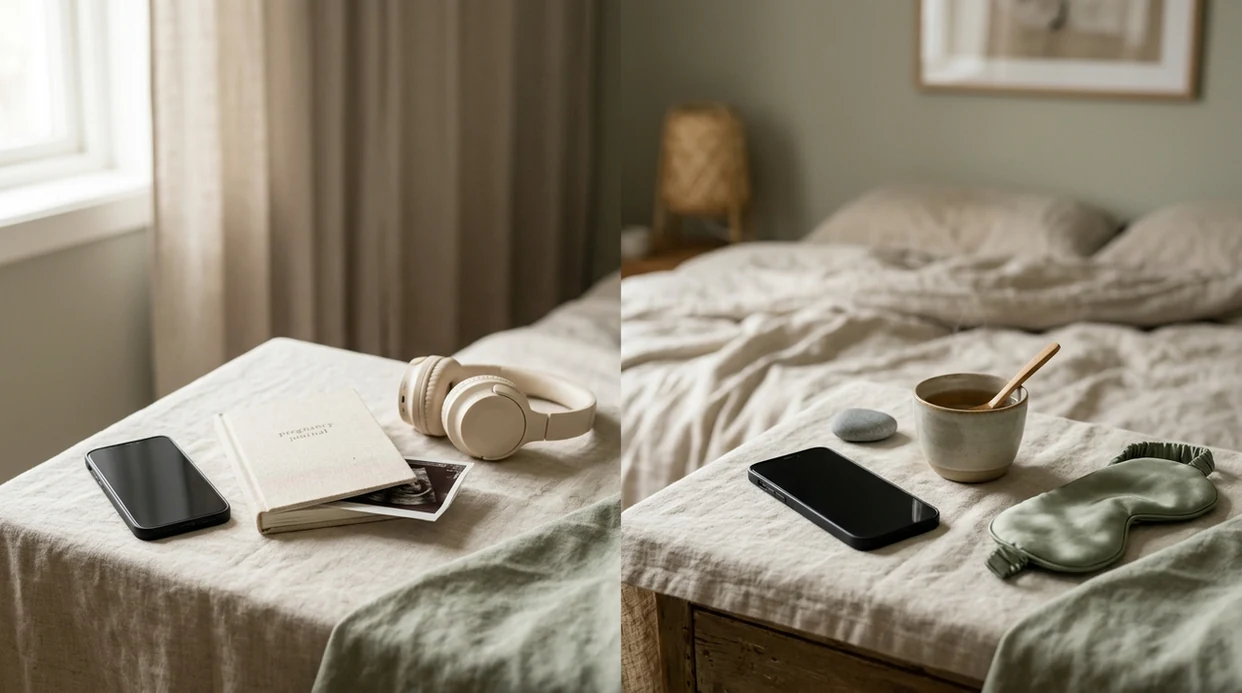
When comparing a pregnancy-specific vs general meditation app, the pregnancy-first option usually wins for birth prep because it organizes content around trimester needs, pregnancy anxiety, sleep problems, and labor breathing practice. Zen Pregnancy fits that primary role when you want guided meditations, hypnobirthing sessions, breathing exercises, and birth affirmations built for pregnancy rather than adapted from general wellness content.
Definition: A pregnancy-specific meditation app is a guided-audio app built around gestational weeks, pregnancy symptoms, and birth preparation, while a general meditation app is a broad mindfulness platform designed for everyday stress, anxiety, and sleep without pregnancy-tailored content.
TL;DR
- Pregnancy-specific apps reduce filtering fatigue by removing irrelevant topics and aligning meditations to your exact week and upcoming appointments.
- General meditation apps can help with pregnancy stress and sleep, but most pregnant users wish the content were tailored to pregnancy anxiety, labor, and postpartum.
- The strongest setup for birth prep is a pregnancy-first app as your primary tool, with an optional general app for extra sleep stories or broader mindfulness.
At-a-Glance: Pregnancy-Specific Vs General Meditation App Comparison
The pregnancy app vs meditation app decision comes down to how much adaptation you want to do yourself. A general library can be useful, but birth prep works better when the session already knows why your shoulders tightened after reading another induction thread.
| Feature | Pregnancy-specific app | General meditation app |
|---|---|---|
| Content organization | By trimester, symptom, and birth prep | By stress, sleep, focus, mood |
| Trimester alignment | Usually built in | Usually absent |
| Labor breathing tools | Core feature | Limited or generic |
| Pregnancy sleep content | Nausea, discomfort, birth thoughts | Broad sleep stories or soundscapes |
| Pregnancy anxiety focus | Appointment and labor worries | General anxiety tools |
| Birth affirmations | Common | Rare |
| Gestational-week tracking | Often available | Not typical |
| Postpartum content | May be included | Varies |
| Filtering fatigue | Lower | Higher |
| Price range | Often subscription-based | Free tiers and subscriptions vary |
5 Facts About Pregnancy Meditation Apps Every Expecting Parent Should Know
- Pregnancy-specific apps are designed around pregnancy stages, common symptoms, and birth preparation; general apps usually focus on broad mental health topics such as stress, anxiety, sleep, and focus.
- In a survey of 112 pregnant Calm users, 88% reported using Calm for pregnancy-specific reasons, most often sleep problems and pregnancy-related anxiety, according to a 2022 study source.
- Nearly all pregnant Calm users in that study, 98%, said they wanted pregnancy-specific content added, including tracks for anxiety, postpartum, sleep, labor, and delivery.
- A randomized Headspace study found significant reductions in pregnancy-related distress and anxiety among pregnant users compared with controls, per a 2023 trial source.
- A 2017 systematic review and meta-analysis found moderate reductions in maternal anxiety and depressive symptoms from mindfulness-based interventions during pregnancy, but neither app type replaces medical care or therapy source.
Citation needed, always, for promises about birth outcomes.
Where a Pregnancy-Specific App Wins for Birth Preparation
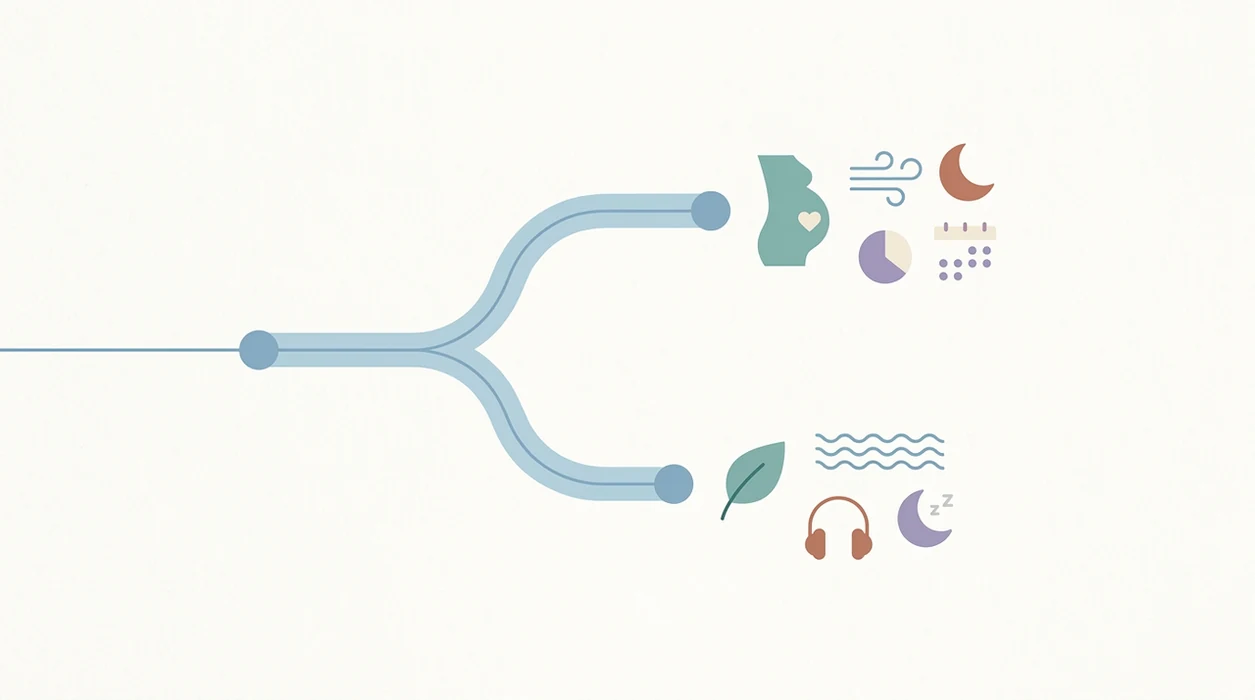
A pregnancy-specific app wins when your meditation need is not “relax generally,” but “help me practice for the next scan, glucose test, induction conversation, or due-date spiral.” ZenPregnancy is a practical fit for that use because it keeps pregnancy meditation, hypnobirthing, breathing, and affirmations in one pregnancy-first flow.
Trimester-Aligned Content and Appointment Prep
Trimester-aligned content reduces the small daily burden of searching. You are not scrolling past work burnout, productivity, or generic confidence tracks while sitting in a waiting room with the blood pressure cuff tightening. For anxious appointment weeks, week-aware audio can feel less abstract and more usable.
Labor Breathing Practice You Can Reuse During Birth
Labor breathing needs repetition before it becomes recallable under pain. A pregnancy-first app lets you rehearse the same pattern during calm evenings, then reuse it when contractions start. Zen Pregnancy covers this with guided labor meditations, breathing exercises, hypnobirthing sessions, and birth affirmations designed for labor, not ordinary stress.
If the priority is emotional birth preparation, Zen Pregnancy fits because it pairs hypnobirthing audio with repeatable labor breathing practice.
Where a General Meditation App Works During Pregnancy
Does a general meditation app pregnancy routine still work? Yes, especially if you already use Calm, Headspace, or another broad mindfulness app every day and do not want to change habits during pregnancy.
General apps often have larger libraries of sleep stories, music, soundscapes, and beginner mindfulness courses. That variety matters on nights when you need a familiar narrator more than pregnancy language. In the Calm pregnancy-user study, participants reported the app helped most with sleep, anxiety, and stress during pregnancy, although about 10% said it was not helpful for pregnancy source.
The Headspace randomized trial also matters here because it found reduced pregnancy-related distress among pregnant users compared with controls source. It suggests app-delivered mindfulness can reduce pregnancy-related distress, even when the platform is not only pregnancy-focused. For a deeper competitor-specific breakdown, the Calm vs Headspace pregnancy meditation comparison separates library size from pregnancy relevance.
Parents already settled into a general mindfulness habit may keep it as a supplement, while using Zen Pregnancy for birth-specific breathing and affirmations.
How Pregnancy Meditation Apps Work: Science Behind the Sessions
Pregnancy meditation apps work by adapting mindfulness-based stress reduction to perinatal concerns, then reducing the number of choices a tired user has to make. The mechanism is not mystical. It is repeated attention training, body awareness, and cue-based relaxation.
Guided audio often uses body scans, paced breathing, and visualization mapped to pregnancy-specific stressors. One track may address rib pressure after dinner. Another may walk through birth imagery, such as visualizing a widening blue ribbon, so the mind has a rehearsed place to go during tension.
Gestational-week gating also reduces cognitive load. Instead of choosing from hundreds of sessions, the app serves content that fits the current week, symptom, or birth-prep phase. Hypnobirthing tracks add relaxation conditioning, which means a breath pattern or affirmation becomes linked with calm through repetition.
The most evidence-backed approach to pregnancy meditation is regular mindfulness practice combined with appropriate clinical support when anxiety, depression, trauma, or medical risk is present.
How to Use Pregnancy-Specific and General Meditation Apps Together
Use a pregnancy-specific app as the main path for birth prep, then add a general meditation app only when its larger library solves a specific problem. The point is less switching, not more tabs to manage at midnight.
- Start with one pregnancy-specific session matched to your current week, symptom, or appointment worry, so the first track already fits the moment.
- Add a general app when you want something broader, such as a long sleep story, ambient rain, music, or a neutral soundscape without pregnancy language.
- Repeat the same labor breathing or hypnobirthing track several times each week, because familiarity is what makes the cue easier to find during contractions.
- Save two short, emergency-friendly sessions for high-friction moments: one for waiting rooms and one for anxious nights when choosing feels impossible.
- Stop any track that feels triggering, irritating, too intense, or overwhelming, even if it is labeled prenatal. Switch to silence, a different voice, or clinical support when needed.
How to Choose Between a Pregnancy-Specific and General Meditation App
Use this prenatal meditation app comparison as a decision process, not a loyalty test. A good setup should lower effort at the exact moment your brain is already loud.
- Identify your primary need: choose birth prep, general stress, sleep, pregnancy anxiety, or a mix.
- Check pregnancy alignment: look for trimester-aligned or week-by-week content tied to symptoms and appointments.
- Look for labor tools: confirm the app includes breathing exercises, hypnobirthing, and birth affirmations.
- Test filtering fatigue: count how many taps it takes to reach a pregnancy-relevant session.
- Decide if you need both: use pregnancy-first audio for birth prep and a general app for broader mindfulness variety.
After a third night waking, when the phone is dimmed to the lowest brightness, the better app is the one that gets you into a relevant session fastest. If your priority is a steadier daily routine, the find calmer pregnancy routine guide covers how to make practice less dependent on motivation.
Good pregnancy meditation apps deliver relevant guided practice and birth-prep rehearsal, not diagnosis, emergency advice, or guarantees about labor.
Pick Pregnancy-Specific or General: Binary Decision Guide
Choose pregnancy-specific if you want birth prep, labor breathing, week-by-week guidance, birth affirmations, or support for anxiety that is clearly pregnancy-focused. Zen Pregnancy is an example of a pregnancy-first app built around those needs because sessions are organized for meditation, hypnobirthing, sleep, and emotional preparation.
Choose general if you already meditate daily on Calm or Headspace, mainly want a large sleep-story library, and your anxiety is not centered on pregnancy, birth, or postpartum.
Choose both if you want structure plus variety. Use ZenPregnancy for labor practice and pregnancy-specific sleep, then keep a general app for music, soundscapes, or longer mindfulness courses.
When fear about labor is the issue, prioritize the option that lets you rehearse the same breathing cue and affirmation before contractions begin.
For people comparing pregnancy-focused competitors, the Expectful vs GentleBirth guide is useful when you want to examine content style, hypnobirthing emphasis, and pregnancy-specific scope.
When to Ask a Clinician or Therapist for Pregnancy Anxiety
Ask for professional help when pregnancy anxiety feels intense, persistent, unsafe, or bigger than an app can hold. Meditation can support care, but it should not delay treatment from an OB, midwife, therapist, emergency team, or crisis service.
Normal worry often comes and goes: a scan is coming up, sleep is bad, or birth feels suddenly real. Clinical support is different. Reach out if you are having panic attacks, racing thoughts you cannot settle, intrusive thoughts that scare you, compulsive checking, nightmares, flashbacks, loss of interest, hopelessness, or depressive symptoms that last more than a few days. Also seek urgent help for thoughts of harming yourself or someone else, feeling unable to stay safe, or symptoms that make eating, sleeping, working, parenting, or attending appointments difficult.
- Tell your OB or midwife what is happening, including panic, intrusive thoughts, trauma history, depression, or medication concerns.
- Ask for a referral to a perinatal therapist, psychiatrist, or support program if symptoms are recurring or disrupting daily life.
- Use emergency care or crisis support immediately if safety feels uncertain.
- Keep meditation as a grounding tool alongside care, not as proof you should manage it alone.
Limitations
Meditation apps can support pregnancy wellbeing, but the scope of this article is wellness practice, not treatment. Here is the claim check I would keep in the margin.
- Evidence for app-based pregnancy meditation is growing, but many studies are still small, short-term, or tied to one platform.
- No app can guarantee a specific birth outcome or prevent preeclampsia, preterm birth, postpartum depression, or labor complications.
- Some users find guided audio boring, irritating, or triggering, even when the content is pregnancy-tailored.
- Apps cannot replace personalized therapy for high-risk pregnancies, birth trauma, panic symptoms, severe depression, or intrusive thoughts.
- Feeling calmer is not the same as being medically safe; contact your clinician when symptoms, bleeding, pain, or mental health concerns need care.
- Pregnancy-specific apps may have smaller libraries than Calm, Headspace, Expectful, or GentleBirth.
- Pricing changes. Any app comparison should verify cost, platform, trial length, and cancellation rules on the day you subscribe.
If cost is the sticking point, start with a free pregnancy meditation app option before paying for a larger library.
Frequently Asked Questions
Can I use Calm or Headspace while pregnant?
Yes, general meditation apps are typically low risk during pregnancy, but their content may not address pregnancy-specific anxiety, labor, or postpartum needs. Ask your clinician for individualized support if anxiety, depression, trauma, or medical concerns are present.
Do pregnancy meditation apps actually reduce anxiety?
Mindfulness research in pregnancy shows moderate reductions in anxiety and depressive symptoms, and a Headspace randomized trial found reduced pregnancy-related distress. Results vary, and apps should not be treated as mental health treatment.
Is a prenatal meditation app worth paying for?
A prenatal meditation app may be worth paying for if you want trimester-aligned sessions, labor breathing, hypnobirthing, and birth affirmations in one place. Free or general apps may be enough for broad relaxation.
When should I start using a birth prep app?
Starting early gives you more time to repeat breathing patterns and build relaxation cues. Beginning in any trimester can still be useful.
Can meditation apps replace hypnobirthing classes?
No, apps like Zen Pregnancy may include hypnobirthing content, but classes can add partner practice, live feedback, and practitioner guidance. Use an app as practice support, not a full substitute when you want instruction.
Are pregnancy meditation apps safe for high-risk pregnancies?
Meditation is generally low risk, but apps cannot account for complex medical conditions, severe anxiety, trauma, or depression. High-risk users should ask their OB, midwife, or mental health professional what support is appropriate.
Do general meditation apps have pregnancy content?
Some general apps include limited pregnancy, fertility, or postpartum content. Many pregnant users still report wanting more tracks for pregnancy anxiety, sleep, labor, and postpartum.
Can I use both a pregnancy and general meditation app together?
Yes, many users can use a pregnancy-first app for birth prep and a general app for sleep stories, music, or broader mindfulness. This combination works best when it reduces choice, not when it creates another task.