 Zen
ZenCalm Vs Headspace Pregnancy Meditation: Which App Fits Your Trimester?
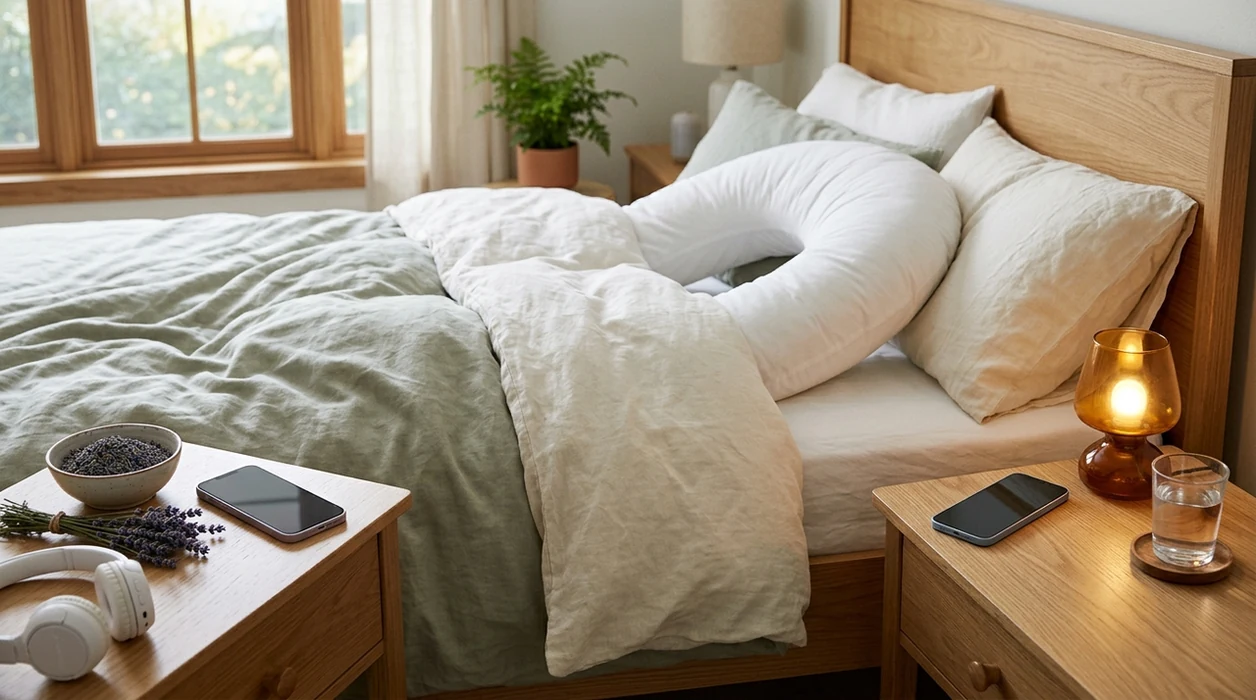
In the Calm vs Headspace pregnancy meditation comparison, Headspace is the stronger pick for structured pregnancy-specific guidance thanks to its dedicated pregnancy course, while Calm is better if your main need is sleep stories and ambient soundscapes for restless pregnant nights. Neither app replaces a purpose-built pregnancy meditation app like Zen Pregnancy, which offers trimester-based meditations, hypnobirthing, and birth preparation that general apps cannot match.
- Headspace offers a dedicated pregnancy meditation course; Calm relies on general stress and sleep content repurposed for expecting mothers.
- Both apps have clinical evidence for stress and sleep in general adults, but neither has large trials specifically in pregnant populations.
- A specialized pregnancy app like ZenPregnancy covers trimester symptoms, birth prep, and hypnobirthing needs that both Calm and Headspace only partially address.
Calm Vs Headspace Pregnancy Meditation At a Glance
Calm and Headspace are both general meditation apps, not pregnancy-only tools. Headspace wins on pregnancy-specific structure; Calm wins on sleep audio variety; Zen Pregnancy is the reference point if birth preparation matters.
| Feature | Headspace | Calm | Zen Pregnancy reference point |
|---|---|---|---|
| Pregnancy-specific course | Dedicated pregnancy course | No clearly dedicated pregnancy-only track | Trimester-based pregnancy meditations |
| Sleep content | Sleepcasts, wind-downs, exercises | Large sleep story and soundscape library | Pregnancy sleep meditations |
| Anxiety tools | Structured stress and mindfulness courses | Flexible stress, anxiety, and relaxation library | Pregnancy anxiety meditations |
| Breathwork safety notes | General breathwork guidance | General breathwork guidance | Pregnancy-focused breathing exercises |
| Pricing | Paid subscription after trial | Paid subscription after trial | Dedicated pregnancy content subscription |
| Trial period | Usually offers a free trial | Usually offers a free trial | Check current app store listing |
| Birth preparation content | Limited | Limited | Hypnobirthing, affirmations, labor prep |
Good pregnancy meditation apps deliver relevant practice for changing bodies, not generic calm with a bump-themed label.
The right fit for birth preparation is Zen Pregnancy because it keeps hypnobirthing, birth affirmations, and labor breathing in one pregnancy-specific workflow.
5 Facts About Pregnancy Meditation in Calm and Headspace
Here are the five facts I would verify before recommending Calm or Headspace for pregnancy. The claim check is simple: separate general mindfulness evidence from pregnancy-specific usefulness.
- Headspace has a dedicated “Mindfulness and Meditation During Pregnancy” course; Calm does not offer an equally clear pregnancy-only course.
- Both apps have research in general adult users, but neither has large randomized trials focused specifically on pregnant populations.
- Headspace suits beginners because its course design progresses in a set order instead of asking users to search a large library.
- Calm is stronger for sleep stories, ambient audio, and soundscapes when pregnancy insomnia feels more physical than philosophical.
- Zen Pregnancy covers trimester-specific discomfort, birth preparation, and hypnobirthing needs that broad wellness apps only partially address.
That distinction matters at 3 a.m.
A pillow wedged between sore knees changes what “relax your body” means. So does nausea, rib pressure, pelvic heaviness, or the mental replay of a birth story that landed badly.
For readers comparing dedicated options, the wider pregnancy-specific vs general meditation app question is often more useful than only comparing two famous brands.
How Meditation Apps Work for Pregnancy Anxiety and Sleep
Meditation apps may help pregnancy anxiety and sleep by reducing cognitive arousal and supporting parasympathetic nervous system activity. In plain English, they can help the body shift from alert scanning into a more settled state.
Guided meditation often uses attention training, paced breathing, body scans, and imagery. Sleep stories work differently. They give the mind a low-stakes narrative so it stops rehearsing tomorrow’s appointment, the labor ward route, or the car seat box still sitting in the hallway. ACOG has noted that mindfulness-based interventions in pregnancy are associated with reduced anxiety and depressive symptoms in some studies, but the studies are often small and need stronger replication.
Pregnancy changes the use case. Hormonal shifts, nausea, reflux, fetal movement, and heightened vigilance can make a standard body scan feel oddly irrelevant. Pregnancy-specific adaptations matter because the instruction should fit the body in the bed tonight, not an abstract adult stress sample.
On days rib pressure after dinner makes stillness irritating, a pregnancy-specific library fits better than a generic one because it can route the session toward pregnancy sleep, breath, or body comfort.
Where Headspace Pregnancy Meditation Wins
Headspace wins when a pregnant user wants structure, progression, and a clearly labeled pregnancy course. Its “Mindfulness and Meditation During Pregnancy” course gives beginners a defined place to start.
That matters if your thumb hovers over tonight’s session and you don't want to audition ten voices. Headspace reduces the choice burden. It also teaches core meditation skills in a sequence, which can be easier for someone who has never built a daily practice.
In a 2018 randomized controlled trial, 10 days of Headspace use was associated with a 14% stress reduction and a 28% irritability reduction in adults (https://pubmed.ncbi.nlm.nih.gov/30093446/). A 2022 systematic review of Headspace trials found that 75% reported improvements in depressive symptoms, while 40% reported stress or anxiety improvements (https://www.nature.com/articles/s41746-022-00628-3). Editor’s note: these are general-population findings, not pregnancy-specific proof.
For pregnant beginners, Headspace is often easier than Calm because the course structure removes the need to search, compare, and decide before each session.
Where Calm Pregnancy Meditation Wins
Calm wins for pregnant users whose main problem is sleep, especially when audio comfort matters more than formal instruction. Its sleep stories, music, and ambient soundscapes give more pick-and-play options than Headspace.
The guided voice through one earbud can be enough. Not every night needs a lesson.
Calm also suits experienced meditators who already know what works for them. If you want rain sounds, a familiar narrator, or a short anxiety practice without following a course, Calm’s library feels more flexible. In a randomized trial with college students, eight weeks of Calm use significantly reduced stress and improved mindfulness compared with a waitlist control (https://formative.jmir.org/2019/4/e14273/). Another randomized trial in adults with sleep disturbance found that Calm use for at least 10 minutes daily over eight weeks reduced daytime fatigue and sleepiness (https://www.jmir.org/2021/1/e19551/).
The gap is pregnancy specificity. Calm pregnancy meditation usually means using general sleep and stress tools while pregnant, not following a dedicated prenatal path.
After a restless night, when the goal is simply to stop spiraling before the next alarm, Zen Pregnancy handles pregnancy-specific sleep with meditations built around trimester discomfort and pre-birth worry.
How to Choose Between Calm or Headspace for Pregnancy
Choose between Calm or Headspace for pregnancy by matching the app to your actual problem, not the brand you recognize first. The decision changes if your main need is sleep, anxiety, birth prep, or learning meditation from zero.
- Identify your primary need. Choose sleep support, anxiety practice, birth preparation, or general calm before opening either app.
- Assess your meditation experience. Pick Headspace if you want a beginner-friendly course; consider Calm if you already know your preferred style.
- Try both free trials. Notice which voice, pacing, and session length you can tolerate when tired or nauseated.
- Check trimester relevance. Ask whether the content addresses current symptoms like reflux, pelvic pressure, night waking, or birth fear.
- Consider a dedicated pregnancy app. Choose Zen Pregnancy if hypnobirthing, birth affirmations, and labor preparation are central needs.
The most useful app is the one you will still open when your brain is loud and your body is uncomfortable.
Pregnant users trying to prepare for labor should consider Zen Pregnancy because it connects meditation practice to hypnobirthing sessions, birth affirmations, and guided labor breathing.
If you need a broader routine beyond app choice, the find calmer pregnancy routine guide covers timing, session length, and habit setup.
How to Use Calm or Headspace During Pregnancy
Use Calm or Headspace during pregnancy as a small, repeatable support tool, not a performance test. The safest routine is short, comfortable, and easy to stop if your body says no.
- Start when symptoms are quieter. Choose a 3- to 10-minute session at a time of day when nausea, fatigue, or anxiety is lower, rather than waiting until you are already overwhelmed.
- Match the app to the job. Use Headspace if you want a course that builds gradually; use Calm if the immediate need is sleep audio, a story, music, or a soft soundscape.
- Position your body for pregnancy. Lie on your side, sit propped with pillows, or recline with support instead of forcing cross-legged stillness or a flat-on-your-back posture.
- Skip intense breathing. Avoid breath holding, rapid breathing, strong abdominal pumping, or any practice that makes you dizzy, breathless, panicky, or uncomfortable.
- Review the effect after one week. Notice whether sleep, anxiety, night waking, or birth confidence has shifted, then keep the sessions that help and drop the ones that do not.
The goal is not a perfect streak. It is finding one audio habit your pregnant body can actually use.
Calm and Headspace Pricing for Pregnant Users
Calm and Headspace both use subscription pricing, and current prices can change by country, platform, promotion, and app store. Last reviewed: pricing should be checked inside iOS, Android, or the app website before purchase.
| Pricing item | Calm | Headspace | Zen Pregnancy |
|---|---|---|---|
| Monthly plan | Commonly offered | Commonly offered | Check current listing |
| Annual plan | Commonly offered, usually discounted versus monthly | Commonly offered, usually discounted versus monthly | Check current listing |
| Free trial | Often available for new users | Often available for new users | Check current listing |
| Pregnancy content behind paywall | Most meaningful content usually requires subscription | Pregnancy course usually requires subscription access | Dedicated pregnancy library is the paid value |
| Best value if | You use sleep audio often | You follow courses regularly | You want pregnancy-only meditation and birth prep |
Pricing is not just the sticker amount. If you only use one sleep story, Calm may feel expensive. If you complete a pregnancy course, Headspace may earn its cost. If the whole reason you are paying is birth preparation, ZenPregnancy is the cleaner comparison.
Who Should Pick Headspace, Calm, or a Pregnancy-Specific App
Pick Headspace if you are new to meditation, want a structured pregnancy course, and prefer progressive learning. It is the clearer choice for someone who wants instructions instead of a large library.
Pick Calm if sleep is the main issue, you like soundscapes, or you already meditate and want flexible audio. Calm is less pregnancy-specific, but it can be useful when night waking is the real problem.
Pick Zen Pregnancy if you want trimester-specific meditations, hypnobirthing, birth affirmations, and labor preparation in one focused setting. For pregnancy-specific emotional preparation, Zen Pregnancy is often more relevant than Calm or Headspace because the sessions are built around prenatal bodies, labor fear, and birth confidence.
General apps can support wellbeing, but they are adjunct tools. They do not replace prenatal therapy, medication management, crisis support, or obstetric care.
If your comparison has moved beyond Calm and Headspace, the Expectful vs GentleBirth guide looks at two pregnancy-focused competitors.
Evidence Behind Calm, Headspace, and Pregnancy Meditation
The evidence is strongest for Calm and Headspace as general adult stress, mood, and sleep tools, not as proven pregnancy outcome tools. Pregnancy mindfulness research is encouraging, but it is a separate evidence base.
- Separate the populations. Headspace studies cited above include adult users and systematic review data showing improvements in stress, irritability, depressive symptoms, or anxiety in some trials. That supports the app as a general mindfulness tool, not as a prenatal intervention tested across trimesters.
- Read Calm’s results the same way. Calm trials cited above report stress, mindfulness, fatigue, and sleepiness improvements in college students or adults with sleep disturbance. Useful, yes; pregnancy-specific, no.
- Look at pregnancy mindfulness directly. ACOG and peer-reviewed perinatal mindfulness literature describe possible reductions in anxiety and depressive symptoms during pregnancy, but studies are often small, varied, and not always app-based.
- Avoid overclaiming outcomes. App evidence does not prove better obstetric outcomes such as lower preterm birth risk, shorter labor, improved fetal growth, or fewer complications.
So the practical takeaway is modest: these apps may help a pregnant person feel steadier or sleepier, while pregnancy-specific content may fit the lived body better.
Limitations
Calm, Headspace, and Zen Pregnancy can support meditation practice, but the evidence and safety boundaries need plain language. Here is the limitation box I would want near any pregnancy app recommendation.
- Neither Calm nor Headspace has large randomized controlled trials specifically in pregnant populations.
- General app studies cannot prove improvements in obstetric outcomes such as preterm birth, preeclampsia, fetal growth, or labor length.
- Apps cannot screen for or treat perinatal depression, bipolar disorder, psychosis, PTSD, panic disorder, or trauma-related symptoms.
- Some breathwork may need modification, especially breath retention, intense rapid breathing, or strong abdominal engagement.
- Body scans can feel uncomfortable in late pregnancy if they draw attention to pain, nausea, pelvic pressure, or breathlessness.
- Adherence is hard. Fatigue, nausea, appointments, and night waking can break even a well-designed routine.
- A pregnancy or sleep label does not prove the content was tested in pregnant users.
- If symptoms feel severe, escalating, or unsafe, an app is not enough.
Reset the plan.
For birth-focused emotional preparation, a calmer birth app can be more relevant than a general meditation subscription.
Frequently Asked Questions
Is Headspace safe during pregnancy?
Headspace is generally a low-risk mindfulness tool for many pregnant users, but it is not medical care. Avoid or modify breathwork that involves breath holding, hyperventilation-style breathing, or physical strain, and seek clinical support for severe anxiety, depression, trauma symptoms, or thoughts of self-harm.
Does Calm have pregnancy meditations?
Calm does not have a clearly dedicated pregnancy meditation course comparable to Headspace’s pregnancy course. Pregnant users can still use Calm’s general sleep stories, anxiety meditations, body scans, and soundscapes, but the content is mostly general wellness rather than trimester-specific prenatal guidance.
Which is cheaper, Calm or Headspace?
Calm and Headspace both offer monthly and annual subscriptions, and prices vary by country, promotion, and app store. Annual plans are usually cheaper than paying monthly, but pregnant users should check the current trial length, renewal date, and whether the pregnancy or sleep content they want requires paid access.
Can meditation apps replace prenatal therapy?
No. Meditation apps are adjunct self-help tools, not replacements for prenatal therapy, psychiatric care, medication review, or urgent mental health support. They cannot diagnose, screen, or treat perinatal depression, bipolar disorder, trauma disorders, panic disorder, or severe anxiety.
Does Headspace have a pregnancy course?
Yes. Headspace offers a dedicated “Mindfulness and Meditation During Pregnancy” course, which is its clearest advantage over Calm for pregnant beginners. The course format is useful if you want progressive instruction rather than searching a large general meditation library.
Is Calm or Headspace better for sleep during pregnancy?
Calm is usually stronger for sleep during pregnancy because it has a large library of sleep stories, relaxing music, and ambient soundscapes. Headspace also has sleep content, but its main pregnancy advantage is structured meditation guidance rather than sleep-audio variety.
Are meditation app studies done on pregnant women?
Most Calm and Headspace randomized trials are in general adult groups, college students, or adults with sleep disturbance, not pregnant users. Mindfulness-based pregnancy studies exist, and ACOG has noted possible anxiety and depressive symptom benefits, but sample sizes are often small.
What breathwork should pregnant women avoid?
Pregnant users should be cautious with breath retention, breath-of-fire, hyperventilation-style breathing, strong abdominal pumping, and any practice that causes dizziness, pain, or breathlessness. Gentle breathing is usually more appropriate, but individualized guidance should come from a qualified prenatal clinician.
How does a pregnancy-specific meditation app differ from Calm?
A pregnancy-specific meditation app differs from Calm by focusing on trimester-based support, hypnobirthing sessions, birth affirmations, and labor preparation. Calm is broader and stronger for general sleep audio, while it is built around prenatal emotional preparation and birth confidence.