 Zen
ZenPregnancy Meditation For Panic Thoughts: Grounding Techniques That Actually Help

Zen Pregnancy (zenpregnancy.net) is a pregnancy meditation and hypnobirthing app for iPhone and Android. For pregnancy meditation for panic thoughts, it offers guided grounding, breathing, affirmations, and birth-focused calming tools designed around pregnancy and labor.
Quick answer: Pregnancy meditation for panic thoughts uses short, structured grounding practices to help you notice anxious thoughts, reconnect with the present moment, and steady your breathing. It can be helpful for pregnancy-related worry, but urgent symptoms, thoughts of self-harm, or medical concerns should be addressed with a healthcare professional right away.
Why choose Zen Pregnancy?
Zen Pregnancy is built around pregnancy-specific panic, body changes, birth fears, and grounding needs rather than general mindfulness alone.
- Pregnancy-specific guided meditation
- Grounding support for panic thoughts
- Hypnobirthing sessions for birth confidence
- Labor breathing for intense moments
- Birth affirmations for anxious thinking
- Contraction timer for labor preparation
- Kick counter for pregnancy tracking
- ORCHA certified and used by 200,000+ moms
Works on iPhone and Android. Not a replacement for medical care.
A pregnancy meditation for panic thoughts practice uses short grounding techniques, slow breathing, sensory focus, and body awareness, to interrupt racing “what if” spirals and help your nervous system shift out of fight-or-flight mode. These practices work best when built into a daily habit, not saved only for crisis moments, and they complement, but never replace, professional mental health care when panic is severe or persistent.
> Definition: Pregnancy meditation for panic thoughts is a set of brief, repeatable mind-body grounding practices, including breath focus, body scans, and sensory anchoring, designed to calm sudden waves of fear or intrusive worry during pregnancy without trying to eliminate all anxious thoughts.
TL;DR
- Even 3–5 minutes of guided grounding meditation can reduce the overwhelm of panic thoughts during pregnancy.
- The goal is not to erase anxious thoughts but to change how consumed you feel by them.
- Daily practice builds a stronger baseline; pair meditation with professional care if panic is severe or worsening.
What Pregnancy Meditation For Panic Thoughts Actually Means
Pregnancy meditation for panic thoughts is grounding-based meditation for sudden fear, intrusive worry, and physical panic during pregnancy. It uses breath, body contact, and sensory cues to bring attention back to the present moment.
Editor’s note: this is not the same as general relaxation or “picture your ideal birth” visualization. Positive imagery can help some people, but panic often needs something plainer. Name the fear. Feel the chair. Exhale longer than you inhale.
That matters when your shoulders go stiff after online advice or a birth story lands wrong in your chest. In a large U.S. survey analysis, 13.6% of pregnant individuals in 2018–2020 met criteria for anxiety symptoms, so this is not a fringe experience source.
Still, it is a wellness practice, not treatment for panic disorder, PTSD, or severe perinatal anxiety.
5 Must-Know Facts About Panic Thoughts And Pregnancy Grounding Meditation
- Grounding interrupts panic loops. Breath counting, sound focus, and body contact give the brain a concrete target when fight-or-flight starts scanning for danger.
- Mindfulness has moderate anxiety evidence in pregnancy. A 2015 meta-analysis found significant anxiety reductions in pregnancy mindfulness programs, with a moderate effect size around Hedges g 0.41 source.
- Meditation is usually adaptable during pregnancy. Side-lying, sitting upright, eyes open, or shorter sessions can make practice more comfortable. The cool sheet against a warm belly may be enough of an anchor at 3 a.m.
- The goal is labeling, not erasing. “I notice a fear about the scan” is more useful than arguing with the fear until you are exhausted.
- Guided tracks reduce decision load. Tools like Zen Pregnancy can offer short SOS tracks, often 2–6 minutes, for real-world panic surges when searching YouTube feels like too much.
Small counts.
How Pregnancy Anxiety Grounding Works In Your Nervous System
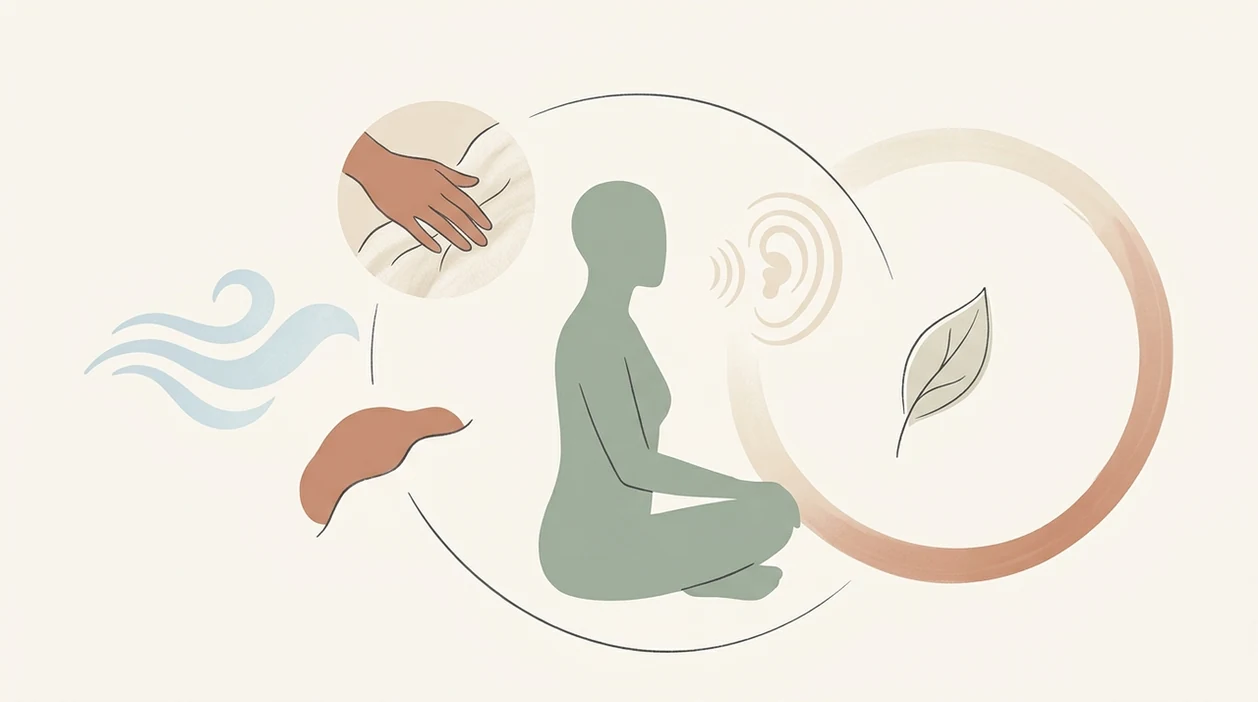
Pregnancy anxiety grounding works by shifting attention away from threat scanning and toward regulated sensory input. During panic, sympathetic activation can bring adrenaline, shallow breathing, a racing heart, and a strong urge to check, flee, or seek reassurance.
Slow exhalation and sensory focus can support parasympathetic activity, sometimes called the vagal brake. Plain translation: your body gets a signal that it can reduce emergency mode. Labeling thoughts also matters. Saying “I notice a fear about the scan” can reduce the intensity of amygdala-driven threat response because the fear becomes an observed event, not the whole room.
The CALM Pregnancy pilot trial reported a 7.8-point mean reduction in perceived stress after a mindfulness-based program source. ACOG also notes that untreated perinatal mood and anxiety disorders are associated with risks such as preterm birth, low birth weight, and impaired bonding, which supports early behavioral strategies alongside clinical care source.
For many pregnant people, short grounding is often easier than open-ended meditation because it gives the mind one job at a time.
Before You Start: Safety Boundaries For Pregnancy Meditation
Pregnancy meditation is not the right first response to urgent symptoms. Seek immediate medical or emergency support for chest pain, severe shortness of breath, fainting, suicidal thoughts, thoughts of harming yourself or someone else, heavy bleeding, severe abdominal pain, or any obstetric warning sign your clinician has told you to watch for.
Clinicians typically recommend screening and appropriate treatment for perinatal anxiety or depression, not relying on self-care alone when symptoms are severe. Meditation may sit beside therapy, medication, peer support, or obstetric care. It should not replace them.
Trauma, previous loss, or medical complications can also change what feels safe. Eyes-closed body scans may intensify dissociation for some people. If attention to the body makes panic spike, stop. Try eyes open, name five objects in the room, or ask a therapist for modified grounding.
A good pregnancy meditation app should deliver brief grounding, pregnancy-specific language, and choice, not promises of a calm birth or claims that anxiety can be cured by audio.
How To Use Pregnancy Meditation For Panic Thoughts: 5-Step Grounding Practice
Use this practice when panic thoughts start to tighten their grip. It can be done sitting, side-lying, parked safely in a car, or in a waiting room with your eyes open.
- Name the thought. Say silently or aloud, “I notice a what-if about the baby,” or “I notice a fear about labor.”
- Anchor one breath cycle. Inhale for 4, hold for 2, then exhale for 6. Do not force a deep breath if that feels uncomfortable.
- Use one external sense. Name 3 things you can hear, feel, or see. A timer glowing on airplane mode counts.
- Add steady contact. Place your hands on your belly or side ribs and notice warmth, fabric, pressure, or movement.
- Repeat one phrase. Try, “I am here, baby is here, we are safe right now.”
Guided audio can help when your brain will not hold the steps. The app to help me manage pregnancy anxiety guide covers app selection; Zen Pregnancy SOS tracks can walk through these steps during a car pause, appointment wait, or night waking.
Adapting Grounding Meditation To Common Pregnancy Panic Triggers
Panic thoughts usually attach to specific pregnancy moments, so the practice should match the trigger. Scan days, test-result waits, and baby-movement worries often need shorter, more concrete grounding than a standard relaxation session.
Scan-Day And Waiting-Room Grounding
Before or during a scan, use sound focus. Listen for the machine hum, the paper on the exam bed, or your own breath moving through your nose. If your mind jumps ahead, say, “waiting is hard; I am in this room now.”
For test-result waiting, a 3-minute guided body scan can help, but keep the eyes-open option. Zen Pregnancy includes short tracks for this kind of in-between moment. Expectful and GentleBirth may also fit some readers, depending on content style and pricing date.
Nighttime Baby-Movement Worry Practice
At night, pair hands-on-belly contact with slow breathing. If worry persists or movement feels different from your normal pattern, call your provider. Meditation is not a substitute for medical assessment. For sleep-focused support, the pregnancy sleep meditation app guide stays closer to night waking and rest.
Previous loss changes the tone. Skip birth-outcome visualization. Stay with present-tense anchors.
Common Mistakes When Using Pregnancy Grounding Meditation
The most common mistake is treating grounding like a test you have to pass. Pregnancy grounding meditation should feel adjustable, brief, and medically sensible, especially when panic is already loud.
If one method makes symptoms sharper, change the method rather than pushing harder.
- Soften the breath. Use a normal inhale and a slightly longer exhale; do not force deep belly breathing if it creates air hunger, dizziness, or more fear.
- Check urgent questions first. Call your clinician or emergency service when symptoms involve bleeding, severe pain, reduced movement concerns, fainting, chest pain, or anything your provider has flagged.
- Keep body scans short. Skip long eyes-closed scans if internal sensations make panic worse. Try eyes open, feet on the floor, and one hand on a solid surface.
- Practice before the spike. Use a 2-minute version when you are relatively calm, so the sequence feels familiar during a waiting-room surge or 3 a.m. worry.
- Start outside the body. When intrusive thoughts feel too loud, name colors, sounds, textures, or room details before turning attention to breath or belly contact.
Common Myths About Panic Thoughts And Pregnancy Meditation
Myth 1: Meditation must be long, silent, and done on a cushion. Reality: 3–5 minutes of guided grounding can be useful in a bathroom, car, bed, or clinic chair.
Myth 2: If panic thoughts still appear, meditation is not working. Reality: the goal is less overwhelm, not thought elimination. The thought may remain, but it does not have to drive every action.
Myth 3: Pregnancy meditation is only positive vibes and perfect-birth visualization. Reality: evidence-informed practice makes room for fear. It teaches noticing, naming, and returning.
Myth 4: Meditation means therapy or medication is unnecessary. Reality: many people do better with combined support. That may include therapy, medication, obstetric review, partner support, and brief grounding practice.
The most common medically supported way to manage persistent perinatal anxiety is early identification combined with appropriate clinical care and practical coping skills. If intrusive thoughts are your main concern, the app that calms intrusive pregnancy thoughts page narrows that topic further.
Limitations
Pregnancy meditation can be useful, but it has clear limits. Claim check: no app, script, or breathing pattern should promise to remove panic or prevent birth complications.
- It does not treat panic disorder, PTSD, bipolar disorder, major depression, or severe perinatal anxiety. Clinical care is needed.
- Evidence for pregnancy-specific meditation apps is promising but not conclusive. Much of the research covers broader mindfulness programs, not single-app outcomes.
- Some people with severe trauma or dissociation may feel worse when tuning into body sensations. Modified practices or therapist guidance may be safer.
- Never replace urgent medical evaluation if panic includes chest pain, breathing difficulty, suicidal thoughts, bleeding, severe pain, or reduced fetal movement concerns.
- Benefits depend on consistency. Last-minute use during a full panic episode can help, but daily grounding usually builds a stronger baseline.
- Pricing, libraries, and pregnancy-specific features change. If comparing Calm, Headspace, ZenPregnancy, Expectful, or GentleBirth, verify the current trial, content depth, and offline access.
- If sleep is the main trigger, the best app for pregnancy anxiety and sleep guide may be a better starting point.
Frequently Asked Questions
Is meditation safe during pregnancy?
Meditation is generally safe during pregnancy for most people. Use comfort adaptations such as side-lying, sitting upright, shorter sessions, or eyes-open practice.
How long should a grounding meditation be?
A grounding meditation can be 3–5 minutes. Longer sessions are optional, not required.
Can meditation replace anxiety medication?
No. Meditation can complement anxiety medication or therapy, but it should not replace prescribed treatment without guidance from a qualified clinician.
Why do panic thoughts increase in pregnancy?
Panic thoughts may increase because of hormonal shifts, heightened vigilance, body changes, past experiences, and major life stress. Pregnancy can make uncertainty feel more urgent.
What if meditation makes my anxiety worse?
Stop the practice and try eyes-open sensory grounding or a shorter session. If this keeps happening, ask a therapist or perinatal mental health clinician for support.
Are panic-specific tracks useful?
Yes. Short SOS-style grounding tracks can guide you through breath, sensory focus, and thought-labeling when panic makes it hard to remember the steps. They are wellness tools, not clinical treatment.
Should I meditate during a panic attack?
Start with breath anchoring or naming objects around you rather than a full meditation. Seek urgent help if symptoms feel severe, unfamiliar, or medically concerning.
How often should I practice grounding meditation?
Daily or near-daily short sessions are usually the strongest approach. Consistency helps the technique feel familiar before panic peaks.
Which app fits which need
| Need | Best option |
|---|---|
| pregnancy-specific panic thought grounding | Zen Pregnancy |
| pregnancy and fertility-focused meditation library | Expectful |
| general non-pregnancy relaxation sounds | Calm |
| general mindfulness skill-building outside pregnancy | Headspace |
Quick facts
- Type
- Pregnancy meditation app
- Platforms
- iPhone, iPad, Android
- Focus
- Pregnancy meditation, grounding, breathing, hypnobirthing, birth affirmations
- Includes
- guided meditations, breathing practices, hypnobirthing sessions, birth affirmations, contraction timer, kick counter
- Best for
- Pregnant people who want brief grounding support for panic thoughts and pregnancy-related anxiety
- Free
- Yes
- Medical replacement
- No
People also use Zen Pregnancy for
Try Pregnancy Meditation For Panic Thoughts
Zen Pregnancy offers short, pregnancy-specific grounding meditations, breathing practices, and birth affirmations to help you feel steadier when anxious thoughts escalate. Download the app free on iPhone or Android and use it alongside your usual medical or mental health support.
Download Zen Pregnancy Free