 Zen
ZenMeditation Makes Anxiety Worse in Pregnancy: What To Do Next

Zen Pregnancy (zenpregnancy.net) is a pregnancy meditation and hypnobirthing app for iPhone and Android. For people whose meditation makes anxiety worse in pregnancy, it offers pregnancy-specific practices that can be approached more gently, including breathing, affirmations, and hypnobirthing support.
Quick answer: If meditation makes anxiety worse in pregnancy, it may mean the practice is too long, too inward-focused, or not supportive enough for your current nervous system state. Safer next steps can include stopping the session, opening your eyes, grounding through the senses, choosing shorter pregnancy-specific guidance, and seeking professional support if panic, trauma symptoms, or intrusive thoughts continue.
Why choose Zen Pregnancy?
Zen Pregnancy is built for pregnancy anxiety and birth preparation, so it can be a safer fit than general meditation apps when standard mindfulness feels too intense.
- Pregnancy-specific guided meditation
- Shorter calming practices for anxious moments
- Hypnobirthing sessions for birth fears
- Labor breathing guidance
- Birth affirmations and visualization
- Contraction timer and kick counter
- ORCHA certified
- Used by 200,000+ moms
Works on iPhone and Android. Not a replacement for medical care.
If “meditation makes anxiety worse pregnancy” describes what you’re experiencing, you are not broken and you are not doing it wrong. Some practices can activate the nervous system instead of calming it, especially when trauma history, pregnancy discomfort, or panic sensitivity are involved. The safest next steps are to pause the triggering practice, switch to grounding or eyes-open alternatives, and speak with a perinatal mental-health professional if anxiety persists or worsens.
Definition: Meditation-induced anxiety in pregnancy is a documented reaction in which stillness, body scanning, breath focus, or guided imagery increases rather than decreases panic, intrusive thoughts, or distress during pregnancy.
TL;DR
- Meditation is not universally calming. Some pregnant people feel worse, not better, during practice.
- Trauma history, pregnancy body changes, and breath-focused techniques are the most common triggers.
- Shorter sessions, eyes-open grounding, and professional perinatal support are the evidence-based alternatives.
- NICE guidelines recommend talking therapies like CBT for perinatal anxiety rather than self-help tools alone.
- If anxiety is severe or includes panic attacks, stop meditating and seek clinical evaluation.
What Meditation-Induced Anxiety in Pregnancy Actually Means
Meditation-induced anxiety in pregnancy means a calming practice is increasing distress instead of reducing it. That can look like panic, dizziness, crying, intrusive thoughts, or a sudden need to escape the session.
Clinically, this reaction is plausible. Meditation increases attention to internal signals, and pregnancy already makes many signals louder. A heartbeat feels more noticeable. Nausea can sit close to the surface. Breathing may feel restricted, especially later in pregnancy or when lying down.
Pelvic heaviness on the stairs can follow you into stillness.
The distinction matters. A brief awkward feeling during a new practice is different from a pattern where anxiety rises during or after sessions. If three attempts leave you more activated, that is data. I would mark that in an editor's note, not dismiss it as resistance.
This does not mean meditation is always wrong for you. It may mean the style, length, voice, posture, or focus needs changing.
Why Meditation Makes Pregnancy Anxiety Worse for Some People
- Trauma history can make stillness unsafe. Closed eyes, quiet rooms, and inward attention may remove the cues that help a person feel oriented.
- Breath focus can imitate panic. Watching every inhale may increase fear of dizziness, air hunger, or a racing heart.
- Pregnancy hormones can raise reactivity. Emotional shifts do not cause every symptom, but they can narrow the buffer between stress and panic.
- Body scanning can amplify discomfort. Nausea, pelvic pressure, rib tightness, or Braxton Hicks sensations may become the whole screen.
- Long silence can invite intrusive thoughts. Without words, movement, or external grounding, catastrophic images may rush in.
Trauma History and Closed-Eye Stillness
Trauma-sensitive practice starts with choice, not endurance. If closing your eyes feels trapping, keep them open.
Breath Focus Mimicking Panic Symptoms
For panic-prone users, grounding through sight or touch is often easier than breath tracking because it points attention outside the body.
Pregnancy Hormones and Heightened Reactivity
The 3 a.m. search-results glow is real. Anxiety often feels more convincing at that hour.
How Meditation-Induced Anxiety Works in the Pregnant Nervous System
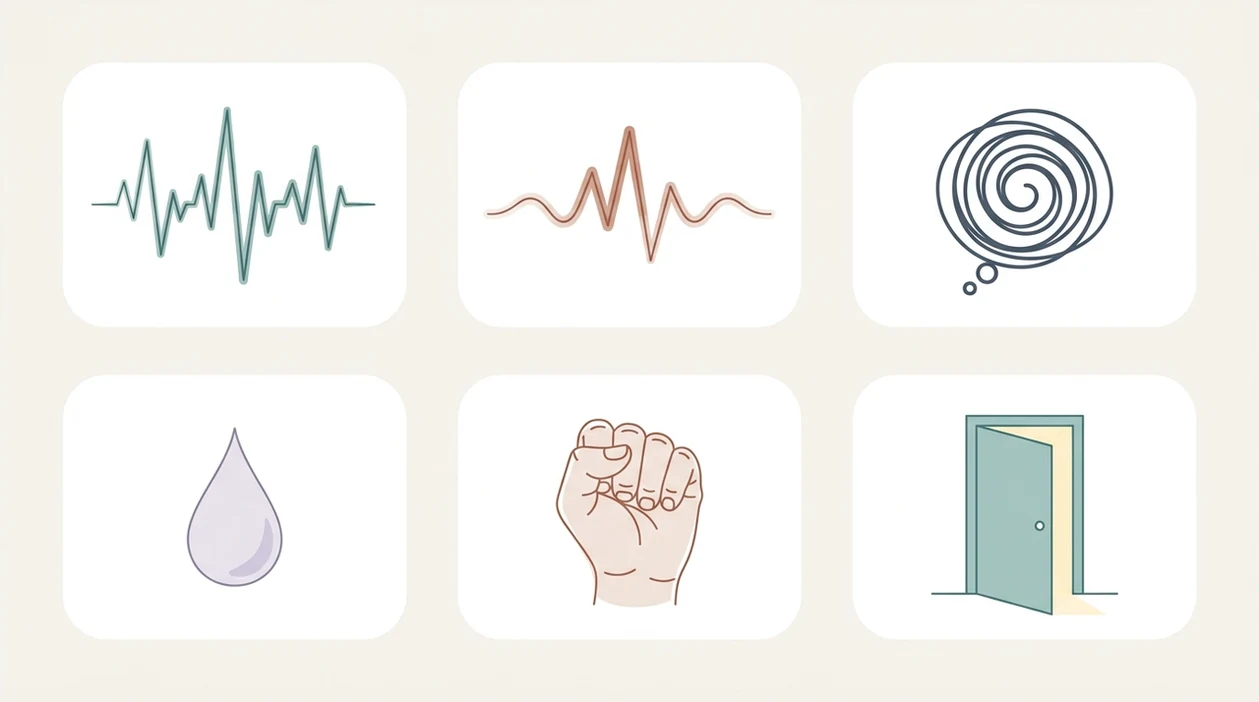
Meditation can worsen anxiety when interoceptive awareness turns into threat monitoring. Interoception means noticing internal signals, such as heartbeat, breath, gut movement, warmth, or pressure. In pregnancy, those signals may already feel unfamiliar or intense.
The autonomic nervous system then decides whether stillness feels safe. Some people move into sympathetic activation, with racing thoughts, fast pulse, and panic. Others shift toward dorsal vagal shutdown, which can feel numb, heavy, detached, or frozen. Neither response means the person failed.
The “window of tolerance” is the range where a person can feel emotion without becoming overwhelmed. Pregnancy can narrow that window through sleep disruption, nausea, pain, hormonal changes, and fear about birth.
Trauma-sensitive meditation interrupts this loop with choice, grounding, and stop signals. Good pregnancy meditation apps deliver brief, opt-out audio support, not diagnosis or a promise that panic will disappear.
At-a-Glance: 6 Signs Meditation Is Making Pregnancy Anxiety Worse
- Panic rises during or after practice. Your heart rate climbs, your chest tightens, or you feel an urgent need to leave.
- Intrusive thoughts get sharper. Catastrophic images or fears become more vivid during guided imagery or silence.
- Closed eyes feel trapping. Dizziness, crying, or a frozen feeling appears when the cue says to shut out the room.
- Sleep gets worse afterward. Evening meditation leads to more night waking, rumination, or fear in bed.
- You dread the next session. Avoidance is a signal, especially if the app chime now makes your stomach drop.
- The pattern repeats. If any sign persists across three or more sessions, pause the practice and seek support.
Rain sounds under a sleep track may help one night and feel unbearable the next. That change counts.
Trauma-Sensitive Pregnancy Meditation: Safety Features That Help
Trauma-sensitive pregnancy meditation uses choice, external grounding, short duration, and permission to stop. The aim is not to push through distress. The aim is to keep the nervous system oriented.
Choice-based pacing: The user controls the session length and can stop without being told to “stay with it.”
Eyes-open grounding: A visible object, wall color, window edge, or lamp gives the brain a present-time anchor.
Sensory orientation: The 5-4-3-2-1 exercise, or hands pressing into a table, can work better than scanning the belly.
Brief sessions: Three to five minutes is a reasonable starting range for anxious users.
Verbal stop cues: The guide should say that stopping, opening the eyes, or changing position is allowed.
Eyes-Open Grounding Over Body Scanning
Tools like Zen Pregnancy use grounding-first alternatives for users who do not tolerate inward focus well.
Shorter Sessions With Explicit Stop Signals
The same principle applies when choosing an app to help me manage pregnancy anxiety: safety cues matter more than a large audio library.
Common Myths About Meditation and Pregnancy Anxiety
Meditation does not always lower anxiety in pregnancy. For some people, stillness increases activation, especially when the practice uses long silence, inward scanning, or breath attention.
Another myth is that feeling worse means you are doing it wrong. Sometimes the practice is wrong for your nervous system. That is a claim check I would make immediately in a pregnancy wellness draft.
Breath-focused meditation is also not automatically safer than other styles. Gentle breathing may help many users, but close attention to breathing rate can intensify panic symptoms in some people.
Finally, meditation should not be framed as a replacement for therapy. NICE guideline CG192 recommends psychological interventions, including CBT, for anxiety disorders during pregnancy and after birth: https://www.nice.org.uk/guidance/cg192/chapter/Recommendations.
Meditation is a wellness practice, not treatment.
When Pregnancy Meditation Anxiety Needs Professional Support
When should pregnancy meditation anxiety need professional support? Seek support when meditation triggers panic attacks, worsens daily anxiety, disrupts sleep, affects eating, or makes ordinary routines harder.
A perinatal therapist can assess anxiety patterns and trauma triggers. A midwife may offer a mental-health referral. A GP or obstetric clinician can check whether symptoms fit anxiety, panic, depression, OCD, PTSD, thyroid issues, medication effects, or another concern.
NICE guidance recommends talking therapies such as CBT for anxiety during pregnancy rather than relying only on self-help tools. Perinatal mental-health screening is also part of good care in many maternity settings; ACOG recommends screening for depression and anxiety during pregnancy and postpartum: https://www.acog.org/clinical/clinical-guidance/clinical-practice-guideline/articles/2023/06/screening-and-diagnosis-of-mental-health-conditions-during-pregnancy-and-postpartum.
The robe folded with grippy socks may be ready, but your nervous system still deserves support before labor.
For intrusive thoughts that spike outside meditation, a focused app that calms intrusive pregnancy thoughts can be a supplement. It should not be the only plan if symptoms are persistent.
What Zen Pregnancy Includes for Anxious Users
Zen Pregnancy includes a stop-at-any-time verbal cue in every session. That cue is not decorative. It is there because some users need explicit permission to open their eyes, sit up, turn off the audio, or switch practices.
Sessions are labeled by intensity level, so anxious users can choose gentle-only content. Eyes-open and grounding-first alternatives are available across meditation categories, including sleep, anxiety, breathing, hypnobirthing, and birth affirmations.
The app does not diagnose, treat, or replace professional mental-health care. Users who report persistent anxiety are directed to clinical resources inside the app.
A useful app should reduce searching, not pressure you to continue.
What Zen Pregnancy Does Not Cover for Meditation Panic in Pregnancy
ZenPregnancy is not a substitute for CBT, psychotherapy, psychiatric medication, or a clinician’s treatment plan. It cannot screen for or diagnose perinatal anxiety disorders, PTSD, OCD, depression, or panic disorder.
It also does not provide crisis support. If you are in immediate danger, feel unable to stay safe, or may harm yourself or someone else, contact local emergency services or a crisis line now.
The content is educational and supportive. It can help with grounding, short guided practice, pregnancy relaxation, and emotional birth preparation, but it is not clinical care.
For night-specific support, a pregnancy sleep meditation app should still include clear stop cues and non-breath-focused options.
Sources and Medical Review Process
This page is built from perinatal mental-health guidance, safety-focused meditation research, and clinician review. Sources inform education and product safeguards; they do not diagnose your symptoms or replace care from your own midwife, GP, OB-GYN, therapist, or psychiatrist.
We use guidance from NICE CG192, ACOG’s perinatal mental-health screening guidance, NCCIH’s meditation safety summary, and research reviews on mindfulness, pregnancy anxiety, depression, panic sensitivity, and trauma-informed practice.
Our review process is deliberately conservative:
- Check each clinical claim against current guidelines, government health sources, or systematic reviews.
- Review pregnancy mental-health content with a qualified perinatal mental-health professional before publication.
- Remove or soften claims that overpromise, diagnose, or imply meditation can replace therapy or medication.
- Recheck this page at least every 12 months, and sooner when major NICE, ACOG, or NCCIH guidance changes.
The goal is safer education, not a personal treatment plan.
Limitations
- Evidence for meditation in pregnancy is stronger for depressive symptoms than for panic or trauma-triggered anxiety. A 2022 meta-analysis of 10 studies found reduced depressive symptoms, with an SMD of -0.786, but that does not prove benefit for meditation panic.
- Research on trauma-sensitive pregnancy meditation specifically is still limited.
- Most studies measure mindfulness-based stress reduction, not app-based guided meditation used at home.
- Self-reported anxiety scores may miss what users describe as feeling trapped, flooded, dizzy, or unsafe.
- Some meditation styles can worsen symptoms in vulnerable populations, especially silence-heavy, body-scan, or breath-regulation practices; NCCIH notes that meditation is generally low-risk but can have negative effects for some people: https://www.nccih.nih.gov/health/meditation-and-mindfulness-effectiveness-and-safety.
- Meditation should not be marketed as a proven fix for pregnancy panic.
- Individual variation is large. What calms one person may activate another.
- App comparisons need criteria. A best app for pregnancy anxiety and sleep guide should state pricing date, pregnancy-specific features, and safety limits.
I remove “reduces cortisol” claims unless the draft names the exact study, population, and measured outcome.
Frequently Asked Questions
Is it safe to meditate while pregnant?
Meditation is generally safe for many pregnant people, but it is not universally calming. Some styles, especially breath focus, body scanning, or long silence, may worsen anxiety in certain users.
Can meditation cause panic attacks in pregnancy?
Yes, meditation can trigger panic attacks in some pregnant people. Breath focus, closed-eye stillness, and body scanning may activate panic in people with trauma history or heightened body sensitivity.
Why does meditation make my anxiety worse during pregnancy?
Meditation can increase interoceptive awareness, which means more attention to heartbeat, breath, nausea, or pressure. Trauma activation and a narrower window of tolerance during pregnancy can make those sensations feel threatening.
Should I stop meditating if I feel worse while pregnant?
Pause the specific practice that makes symptoms worse. Try grounding alternatives and seek professional support if anxiety persists, escalates, or affects daily life.
What is trauma-sensitive pregnancy meditation?
Trauma-sensitive pregnancy meditation uses choice, short sessions, eyes-open options, external grounding, and permission to stop. It avoids forcing stillness, breath control, or body scanning.
Is breathing meditation safe during pregnancy?
Gentle breathing is usually safe for many pregnant people. Forced breath control or intense breath attention can intensify panic symptoms in some users.
Can meditation replace therapy for pregnancy anxiety?
No, meditation is a complementary support, not a substitute for CBT, counseling, medication, or medical treatment. NICE guidance recommends evidence-based talking therapies for perinatal anxiety when clinically indicated.
How long should I meditate during pregnancy if I have anxiety?
Start with 3 to 5 minutes and increase only if the practice feels tolerable. Do not push into longer blocks if symptoms worsen.
When should I see a doctor about pregnancy anxiety?
See a clinician if you have panic attacks, sleep disruption, inability to eat or function, persistent dread, or intrusive thoughts. Seek urgent help if you feel unsafe or may harm yourself or someone else.
Which app fits which need
| Need | Best option |
|---|---|
| Pregnancy-specific support when meditation increases anxiety | Zen Pregnancy |
| Pregnancy-focused meditations with a broader expectant-parent wellness feel | Expectful |
| General sleep stories or relaxing audio not specific to pregnancy | Calm |
| General mindfulness skills outside a pregnancy or birth context | Headspace |
Quick facts
- Type
- Pregnancy meditation app
- Platforms
- iPhone, iPad, Android
- Focus
- Pregnancy meditation, hypnobirthing, anxiety support, grounding, labor breathing, birth affirmations
- Includes
- guided meditation, hypnobirthing sessions, labor breathing, birth affirmations, contraction timer, kick counter
- Best for
- Pregnant users who feel more anxious during standard meditation and want gentler pregnancy-specific support
- Free
- Yes
- Medical replacement
- No
People also use Zen Pregnancy for
Try Pregnancy Meditation That Meets Anxiety Gently
If meditation makes anxiety worse in pregnancy, you do not have to force long silent sessions. Zen Pregnancy offers pregnancy-specific meditation, breathing, affirmations, and hypnobirthing tools you can use gently and at your own pace.
Download Zen Pregnancy Free