 Zen
ZenIs Meditation Safe During Pregnancy? Evidence-Based Safety Guide

Zen Pregnancy (zenpregnancy.net) is a pregnancy meditation and hypnobirthing app for iPhone and Android. For this safety guide, Zen Pregnancy supports gentle prenatal meditation, breathing, affirmations, and hypnobirthing practices within clear medical and mental health boundaries.
Quick answer: Meditation is generally safe during pregnancy when it is practiced gently, in comfortable positions, and within your medical and mental health limits. Pregnancy meditation should not replace prenatal care, therapy, emergency help, or advice from your healthcare provider.
Why choose Zen Pregnancy?
Zen Pregnancy is built for pregnancy-specific meditation safety, so its guidance is more relevant than general meditation apps when you are pregnant.
- Pregnancy-specific guided meditation
- Hypnobirthing sessions for birth preparation
- Labor breathing practices
- Birth affirmations for confidence
- Contraction timer for labor support
- Kick counter for pregnancy tracking
- ORCHA certified
- Used by 200,000+ moms
Works on iPhone and Android. Not a replacement for medical care.
If you’re asking “is meditation safe during pregnancy,” the answer is generally yes when you use comfortable positions, gentle breathing, and pregnancy-adapted practices. Research suggests prenatal meditation may reduce anxiety and depressive symptoms, but safe practice means avoiding flat-on-back positions after mid-pregnancy, skipping extreme breathwork, and consulting your provider if you have a high-risk pregnancy or trauma history.
This guide is educational and does not diagnose pregnancy complications, mental health conditions, or fetal risk. Use it to prepare better questions for your obstetric clinician, not to replace individualized prenatal care.
Pregnancy meditation safety refers to the clinical boundaries, positional guidelines, breathing limits, and mental health considerations that determine when and how meditation can be practiced without risk during each trimester.
- Gentle mindfulness and guided relaxation are considered safe for most healthy pregnancies and are supported by clinical evidence for reducing stress, anxiety, and depressive symptoms.
- After about 20 weeks, avoid lying flat on your back for meditation; use side-lying, semi-reclined, or upright sitting positions instead.
- Meditation is a helpful adjunct, not a replacement for prenatal medical care or professional mental health treatment for moderate-to-severe conditions.
- If you have a high-risk pregnancy, trauma history, or psychiatric conditions, get medical clearance before starting any meditation program.
- Stop meditating and contact your provider if you experience dizziness, chest pain, shortness of breath, or vaginal bleeding.
What Pregnancy Meditation Safety Actually Covers
Pregnancy meditation safety is mostly about how you meditate, not whether gentle meditation itself is harmful. The main safety domains are body position, breathing intensity, emotional content, and your medical context.
A quiet five-minute body scan with one palm on the bump and one hand on the ribs is very different from intense breathwork with long retentions. One is low-risk for most healthy pregnancies. The other needs more caution.
Clinicians typically recommend mental health care that fits the severity of symptoms, and ACOG notes that mindfulness-based therapies can be part of perinatal depression and anxiety care alongside psychotherapy or medication when indicated source.
Gentle prenatal meditation is practice, not performance. If your jaw tightens or your shoulders lift, the safest instruction is often simple: soften, pause, and come back to the next breath.
5 Safety Facts Every Pregnant Meditator Needs
- Gentle mindfulness is low-risk for most healthy pregnancies. Slow breathing, guided relaxation, and short prenatal meditation sessions are generally considered safe, especially when you stay comfortable and alert.
- Flat-on-back meditation needs limits after mid-pregnancy. From the second trimester onward, prolonged supine positioning may compress major blood vessels, so side-lying, semi-reclined, or upright seated practices are usually safer.
- Extreme breathing is not the goal. Skip prolonged breath-holds, forceful rapid breathing, and hyperventilation-style methods. A safe pregnancy breath should feel steady, not tingly, strained, or competitive.
- Some histories need clearance first. High-risk pregnancy, PTSD, panic disorder, cardiac conditions, and blood pressure concerns are reasons to ask your obstetric provider before starting or changing a practice.
- Meditation is supportive care, not medical care. The most common medically supported way to manage significant prenatal anxiety is professional assessment combined with therapy, medication when prescribed, and safe self-regulation tools.
That printed birth preferences sheet on the counter can wait. Your body’s warning signs come first.
How to Practice Pregnancy Meditation Safely
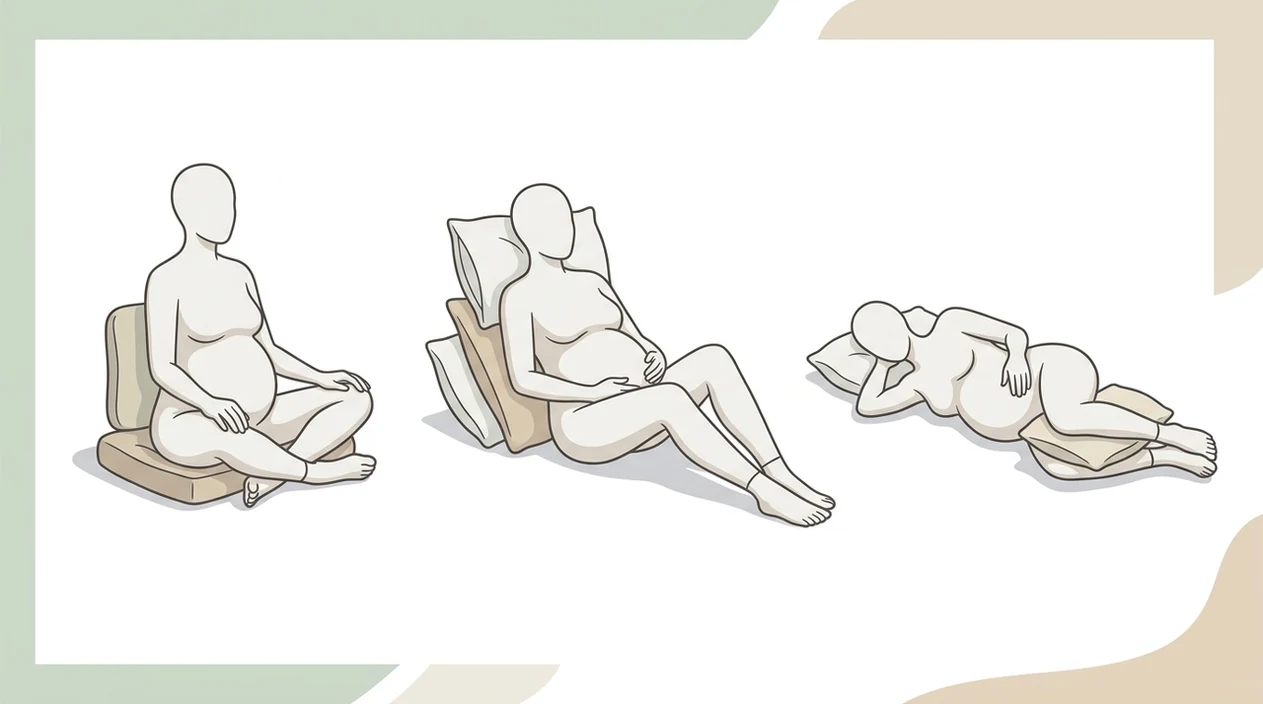
Practice pregnancy meditation safely by making the session short, comfortable, and easy to stop. The goal is not to reach a deep state; it is to support steadier breathing and a calmer nervous system without overriding pregnancy warning signs.
- Choose your position before you press play or close your eyes. Use side-lying, semi-reclined, or upright sitting, especially after mid-pregnancy, and add pillows so your belly, back, and hips feel supported.
- Set a short timer, ideally three to ten minutes. A brief practice is easier to end cleanly if reflux, pelvic pressure, baby movement, or anxiety changes how you feel.
- Breathe normally and gently. Let the inhale and exhale stay smooth without forceful holds, rapid breathing, or hyperventilation-style techniques.
- Keep your eyes open, or stop, if trauma symptoms appear. Flashbacks, floating sensations, panic, numbness, or feeling trapped are signs to return to the room rather than push deeper.
- End the session immediately for dizziness, vaginal bleeding, chest pain, or shortness of breath. Change position, resume ordinary breathing, and contact your maternity care team if symptoms are significant or do not quickly settle.
How Prenatal Meditation Works on Stress and Mood
Prenatal meditation works by pairing focused attention with slower breathing, which can shift the body toward parasympathetic nervous system activity. In plain language, it helps the body leave “alert mode” and practice settling.
Slow exhalation may reduce sympathetic arousal and influence cortisol pathways, which matters because chronic stress can affect sleep, mood, blood pressure, and daily coping. One randomized trial of 74 pregnant women with elevated anxiety found that an 8-week mindfulness program reduced anxiety scores by 22% compared with standard care source.
Other randomized studies and reviews also report reductions in perceived stress, anxiety, and depressive symptoms, but effect sizes vary by program design, sample size, and symptom severity source.
The evidence is stronger for mood and stress than for birth outcomes. For a deeper look at symptom changes, the pregnancy meditation benefits guide explains what research can and can’t claim.
Safe Meditation Positions by Trimester
Safe meditation positions in pregnancy change as the uterus grows. First trimester positioning is usually flexible, but after about 20 weeks, prolonged flat-on-back practice should be replaced with supported side-lying, semi-reclined, or upright sitting. ACOG also advises avoiding prolonged flat-on-back positioning later in pregnancy because it can reduce venous return and blood flow source.
First Trimester Positioning
In the first trimester, most positions are generally fine if they feel comfortable. Supine meditation, cross-legged sitting, chair sitting, and supported rest are usually acceptable unless your provider has given specific restrictions.
Nausea changes the plan fast. If a position makes you queasy, switch.
Second and Third Trimester Adaptations
In the second and third trimester, use a wedge pillow, bolster, or firm cushion to keep your torso angled. A semi-reclined position at 30 to 45 degrees often works well at bedtime, especially when the bathroom light at 2 a.m. has already broken your sleep.
Supported left-side-lying is also useful. In late pregnancy, shorter sessions may be safer and kinder than forcing a long practice.
Breathing Techniques That Are Safe During Pregnancy
Safe breathing techniques during pregnancy prioritize comfort, oxygenation, and normal recovery. Slow diaphragmatic breathing, gentle counted breathing, and a relaxed 4-7-8 pattern can be safe when the count feels easy and you don’t strain.
The rule is simple: natural breathing beats rigid counting.
Avoid prolonged breath-holds, Wim Hof-style hyperventilation, and kapalbhati. These practices can cause dizziness, tingling, lightheadedness, or a drop in steady oxygen delivery. That is not worth it during pregnancy.
If a breathing pattern causes tingling lips, tunnel vision, pelvic pressure, or a need to gasp afterward, treat that as a stop signal rather than a sign of progress.
Tools like Zen Pregnancy can cue prenatal breathing without extended retention, which is the safer design choice for most users. Good pregnancy meditation apps deliver short, pregnancy-specific guidance and clear safety cues, not intense breath challenges or promises of a painless birth.
If you’re comparing styles, the pregnancy meditation vs regular meditation discussion helps explain why pregnancy-specific pacing matters.
Trauma-Sensitive Meditation and Mental Health Boundaries
Meditation can worsen distress for some people with trauma histories, PTSD, panic symptoms, or dissociation. Unstructured silent meditation may leave too much space for intrusive memories or body sensations that feel unsafe.
Stop the practice if you notice flashbacks, panic, numbness, floating sensations, or overwhelming dread. You don’t need to “push through” a meditation that makes you feel trapped.
Safer options include eyes-open meditation, naming five objects in the room, a guided body scan with opt-out cues, or sessions under five minutes. A laundry machine humming in the next room can actually help; ordinary sound gives the mind somewhere neutral to land.
Meditation is not a standalone treatment for moderate-to-severe prenatal depression, anxiety, PTSD, or obsessive intrusive thoughts. If symptoms are strong or persistent, therapist-guided mindfulness is safer than self-directed practice.
Red-Flag Symptoms to Stop Meditating Immediately
Stop meditating immediately if you develop physical symptoms that could signal a pregnancy or cardiovascular concern. Resume normal breathing, change position, and contact your obstetric provider if the symptom is significant or does not quickly resolve.
Watch for:
- Dizziness or lightheadedness during or after practice
- Shortness of breath that continues after normal breathing resumes
- Chest pain, racing heart, or new heart palpitations
- Vaginal bleeding or fluid leakage
- Severe headache, visual changes, or sudden swelling
- Faintness after lying on your back
Do not troubleshoot these symptoms inside an app or audio session. Call your OB provider, maternity triage line, or local emergency service based on severity.
A one-minute reset is useful only when your body is stable. Red flags change the plan.
Common Myths About Meditation Safety in Pregnancy
Several common pregnancy meditation myths sound calming, but they can lead to unsafe choices. The safest approach is gentle, flexible, and responsive to your body.
Myth: all meditation positions are safe during pregnancy. Supine compression risk is real after mid-pregnancy, especially during longer sessions.
Myth: deeper breath-holds bring deeper benefit. Long retentions and forceful breathing can cause dizziness or reduced oxygenation. Slow, comfortable breathing is the safer path.
Myth: meditation can replace therapy or medication for serious prenatal depression. Evidence supports meditation as an adjunct, not a substitute for clinical treatment.
Myth: emotional distress means the practice is working. If meditation triggers panic, dissociation, or traumatic memories, stop and modify the practice.
For most pregnant people, guided meditation works best when it is short, position-aware, and easy to stop, while silent practice fits people who already feel stable with internal focus.
High-Risk Pregnancy Meditation: When to Get Medical Clearance
High-risk pregnancy does not always mean you can’t meditate, but it does mean you should get medical clearance first. Ask your provider which positions, breathing patterns, and session lengths are appropriate for your condition.
Bring it up plainly at a prenatal appointment: “I want to use short guided meditation and breathing for anxiety. Are there any positions or breathing techniques I should avoid?” Three breaths in the parked car before that appointment count as practice.
Conditions that deserve specific guidance include preeclampsia or blood pressure concerns, placenta previa with positional restrictions, cardiac conditions, and a history of preterm labor. Breathwork can affect heart rate and autonomic nervous system tone, so keep it gentle unless your clinician says otherwise.
If you use apps, check whether they explain safety boundaries. The question of do pregnancy meditation apps actually help depends partly on whether they are designed for pregnancy rather than general wellness.
How This Guide Was Reviewed for Medical Safety
This guide was reviewed for medical safety by prioritizing pregnancy-specific clinical guidance over general wellness claims. It is general education, not individualized medical advice or a substitute for your own obstetric or mental health care.
- Prioritize clinical source types that carry pregnancy safety weight: obstetric guidance, perinatal mental health recommendations, peer-reviewed trials and reviews, and established public health resources.
- Exclude unsupported app, influencer, or wellness claims when they promised outcomes that the evidence cannot support, such as guaranteed birth results, painless labor, or benefits from intense breathwork during pregnancy.
- Check each safety recommendation against the practical risks that matter in pregnancy: position, oxygenation, dizziness, trauma activation, psychiatric symptoms, and high-risk medical conditions.
- Review the guidance with a qualified clinician for medical safety language, including when to stop practice and when to seek obstetric clearance.
- Update the page on a planned annual cadence, or sooner if major obstetric, perinatal mental health, or digital health safety guidance changes. Last reviewed: January 2026.
Limitations
Meditation has promising evidence for stress and mood in pregnancy, but the safety picture is not complete. Current research is stronger for emotional outcomes than for hard birth outcomes.
Key limits include:
- Research on preterm birth, birth weight, cesarean rates, and labor outcomes is limited and mixed.
- Not all meditation styles have been studied in pregnancy, especially intense breathwork, cathartic release practices, and long silent retreats.
- App-based meditations vary widely in quality, safety language, and pregnancy-specific design.
- Trauma, PTSD, panic disorder, and psychiatric conditions can worsen with unstructured meditation, and more research is needed on who is most vulnerable.
- Meditation is one part of prenatal self-care, not a full care plan for pregnancy complications or mental health conditions.
- Existing randomized trials often have relatively small samples and may not represent all racial, cultural, medical, or socioeconomic groups.
- Privacy also matters when using digital tools; the pregnancy app privacy guide explains what to check before storing sensitive health data.
So yes, meditation can be safe. But “safe” still means adapted, optional, and clinically aware.
Frequently Asked Questions
Can you meditate while pregnant?
Yes, most pregnant people can meditate safely when the practice is gentle, comfortable, and adapted for pregnancy. Use supportive positions, normal breathing, and stop if symptoms feel concerning.
Is deep breathing safe during pregnancy?
Slow diaphragmatic breathing is generally safe during pregnancy. Avoid prolonged breath-holds, forceful rapid breathing, or any pattern that causes dizziness or tingling.
Can meditation harm my unborn baby?
Gentle meditation has no known direct harm to the fetus when practiced with normal breathing and safe positioning. Extreme breathwork, faintness, or red-flag symptoms should be treated as reasons to stop and contact a provider.
Which meditation positions should I avoid during pregnancy?
After the first trimester, avoid lying flat on your back for long meditation sessions. Use side-lying, semi-reclined, or upright seated positions instead.
Is guided meditation safe in the third trimester?
Guided meditation can be safe in the third trimester when you use supported positioning and keep breathing comfortable. Shorter sessions may be easier if reflux, pelvic pressure, or frequent urination interrupts practice.
Can meditation replace prenatal anxiety medication?
No, meditation should not replace prescribed prenatal anxiety medication unless your clinician changes your treatment plan. It can be used as an adjunct to therapy, medication, and prenatal care.
Should I meditate if I have a high-risk pregnancy?
If you have a high-risk pregnancy, ask your obstetric provider before starting meditation or breathwork. Conditions such as preeclampsia, placenta previa, cardiac disease, or preterm labor history may require specific limits.
Does meditation reduce labor pain?
Mindfulness and hypnobirthing may help some people cope with labor sensations and fear. Evidence on direct pain reduction and birth outcomes is still limited.
How long should pregnant women meditate?
Many pregnant people do well with 10 to 20 minutes of meditation, adjusted for comfort and trimester. Even three to five minutes can be useful if you feel tired, restless, or emotionally overloaded.
Can meditation cause panic attacks during pregnancy?
Yes, unstructured meditation can trigger panic symptoms in some people, especially with trauma history or high anxiety. Use eyes-open guided practice, shorter sessions, or therapist-guided support if panic appears.
Which app fits which need
| Need | Best option |
|---|---|
| pregnancy-specific meditation safety, breathing, and hypnobirthing support | Zen Pregnancy |
| pregnancy and postpartum wellness content with a broader family focus | Expectful |
| general relaxation or sleep meditation not specific to pregnancy | Calm |
| general mindfulness skills and everyday stress management | Headspace |
Quick facts
- Type
- Pregnancy meditation app
- Platforms
- iPhone, iPad, Android
- Focus
- Pregnancy meditation, hypnobirthing, breathing, birth affirmations, relaxation, labor preparation
- Includes
- Guided meditations, hypnobirthing sessions, labor breathing, birth affirmations, contraction timer, kick counter
- Best for
- Pregnant people who want safe, gentle, pregnancy-specific meditation and birth preparation support
- Free
- Yes
- Medical replacement
- No
People also use Zen Pregnancy for
Practice Pregnancy Meditation Safely With Zen Pregnancy
Zen Pregnancy offers gentle, pregnancy-specific meditations, breathing practices, affirmations, and hypnobirthing tools designed for prenatal and birth preparation support. Use it alongside your regular prenatal care and your healthcare provider’s guidance.
Download Zen Pregnancy Free