 Zen
ZenPregnancy App Privacy: How Meditation, Birth, and Reproductive Data Are Collected and Shared

Pregnancy app privacy refers to how pregnancy trackers, meditation apps, and birth-planning tools collect, store, share, and protect sensitive reproductive health data, including due dates, mood logs, sleep patterns, contractions, and journal entries. Most consumer pregnancy apps fall outside HIPAA protections, meaning your data may be shared with advertisers, analytics providers, or cloud vendors without the safeguards you'd expect from a medical provider. Understanding exactly what data a pregnancy app collects and who can access it is the first step toward protecting yourself.
> Definition: Pregnancy app privacy is the set of policies, technical controls, and legal frameworks that govern how pregnancy-related applications collect, use, share, and protect sensitive reproductive health information including due dates, mood check-ins, meditation habits, sleep data, and birth details.
TL;DR
- Most pregnancy apps are not covered by HIPAA, so your reproductive data lacks the legal protections you'd get from a doctor.
- Mood logs, meditation sessions, sleep tracking, and journal entries in a pregnancy app can reveal sensitive reproductive health status even without explicit cycle or fertility data.
- Reading privacy policies, limiting permissions, and choosing apps with strong encryption and data minimization are the most effective ways to protect your pregnancy data.
What Pregnancy App Privacy Covers: Definition and Scope
Pregnancy app privacy covers how an app collects, stores, shares, sells, protects, and deletes pregnancy-related data. It includes obvious reproductive data, but also quieter signals like sleep, mood, meditation habits, and birth preparation notes.
A due date is sensitive. So is a contraction log, a birth plan, a symptom note, or a journal entry written at 2:17 a.m. beside a water bottle and antacid chews. Even a pregnancy meditation app can create privacy risk if repeated sessions, anxiety check-ins, or sleep tracks reveal that someone is pregnant, newly postpartum, or worried about a possible complication.
HHS has warned that HIPAA usually does not apply to consumer health apps unless the app is run by a covered entity or business associate source. In plain terms, an app from your clinic may be treated differently from an app you download on your own.
That gap matters before you type anything in.
Privacy Scope and Safety Disclaimer
This page is educational. It can help you understand pregnancy app privacy risks and questions to ask, but it is not legal advice, medical advice, or a personalized safety plan.
Privacy laws vary by country, state, company type, data category, and your own circumstances. A right that exists in one place may not apply in another, and an app’s privacy settings cannot tell you what a court, employer, insurer, family member, or healthcare system may do. This page can help you decide what to review, what to limit, what to delete, and when an app may collect more than you expected. It cannot tell you whether a specific legal risk applies to you, whether a symptom is safe, or whether a monitored device is safe to use.
If the situation is urgent, treat privacy as only one part of care:
- Seek medical help immediately for severe pain, heavy bleeding, reduced fetal movement, fainting, fever, or anything that feels dangerous.
- Use a safer device if someone may be coercing you, stalking you, checking notifications, sharing accounts, or monitoring your phone.
- Contact qualified support such as a clinician, lawyer, domestic violence advocate, hotline, or emergency service when health, safety, or legal rights are at stake.
5 Pregnancy App Data Privacy Facts Every User Should Know
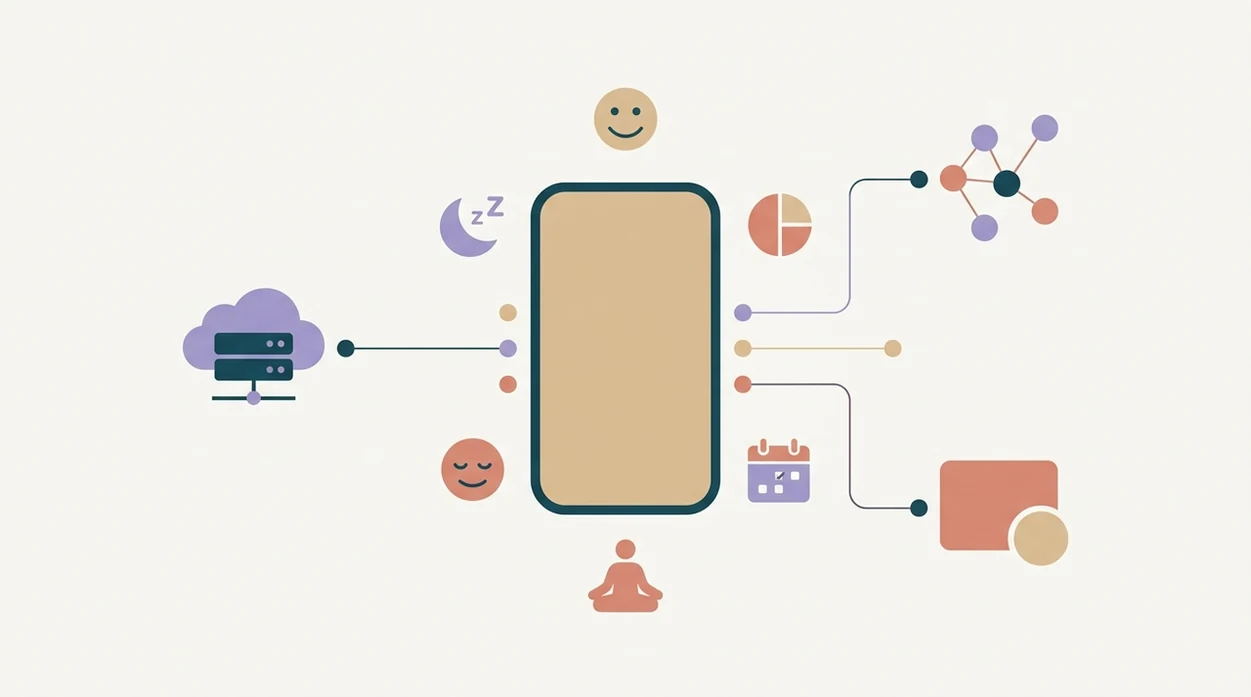
Pregnancy app data privacy is about more than keeping a due date private. The real risk is that small entries can combine into a detailed reproductive health profile.
- Pregnancy app data can reveal more than pregnancy status. Due dates, symptom notes, sex logs, cycle history, and loss history can describe deeply personal medical and family circumstances.
- Most consumer apps are not HIPAA-covered. HIPAA usually protects information held by covered healthcare entities, not every wellness or pregnancy app on your phone.
- Third parties may receive app data. Analytics SDKs, ad networks, crash-reporting tools, and cloud vendors can process data even when you never see their names in the app screen.
- “Anonymous” does not always mean safe. Health, location, device, and timing data can sometimes be re-identified when combined with other datasets.
- Meditation and mood logs can reveal reproductive status. A week of “birth anxiety” sessions, poor sleep logs, and contraction breathing practice can say more than the user intended.
Good privacy means fewer collected signals, not prettier privacy language.
Pregnancy App Data Collection: Servers, SDKs, and Advertisers
How pregnancy app privacy works: data usually moves from your phone to app servers, then may pass through analytics SDKs, cloud storage, crash tools, and advertising partners. An SDK is a software kit inside the app; you do not open it, but it can still process events.
Explicit Data vs. Inferred Reproductive Health Signals
Explicit data is what you type or tap, such as due date, symptoms, contraction timing, birth preferences, or mood scores. Inferred data is guessed from patterns, like frequent sleep meditations, late-night app use, skipped sessions, or repeated labor breathing practice. One hand on bump, one hand on ribs, you may feel like you are only practicing breath awareness. The app may see timing, category, device, and account activity.
Third-Party SDKs and Advertising Trackers in Pregnancy Apps
Advertising trackers and analytics SDKs can connect “anonymous” app events to device IDs, IP addresses, coarse location, or cross-device profiles. Data minimization means collecting only what a feature needs. Data maximization means collecting as much as possible because it may be useful later.
For sensitive categories, data minimization is usually safer than personalization because it leaves fewer reproductive signals to expose.
Pregnancy App Privacy Laws: HIPAA, FTC, Washington, and California
Pregnancy app privacy laws are uneven. HIPAA may not apply, but the FTC and some state privacy laws can still create duties around unfair, deceptive, or mishandled health data practices.
Why HIPAA Does Not Cover Most Pregnancy Apps
HIPAA applies to covered entities, like many healthcare providers and health plans, and to their business associates. Most standalone pregnancy, meditation, fertility, and birth apps are not automatically covered. That surprises people. It also explains why “doctor-level privacy” should never be assumed from a wellness app icon.
State Privacy Laws and FTC Enforcement
The FTC Act Section 5 can address deceptive privacy promises, and the Health Breach Notification Rule may apply to some health apps. See the FTC’s Health Breach Notification Rule guidance at ftc.gov. Washington’s My Health My Data Act and California’s CCPA/CPRA may add rights around access, deletion, consent, and sharing. Washington publishes My Health My Data Act materials at atg.wa.gov, and California explains CCPA rights at oag.ca.gov. Coverage depends on the user, company, and data type.
In a 2020 Pew Research Center survey, 60% of U.S. adults said they feel they have little or no control over company-collected data source. Privacy policies can also change, so one quiet update may alter what sharing is allowed.
4 Reproductive Health App Privacy Myths That Put Users at Risk
Reproductive health app privacy myths often come from reasonable assumptions. The problem is that app data flows do not work like a private conversation in an exam room.
- Myth: “Anonymized data means nobody can identify me.” Reality: re-identification risk is well documented, especially when health data combines with device, location, or demographic information.
- Myth: “A meditation or wellness app is inherently private.” Reality: mood logs, sleep sessions, affirmations, and journals can still suggest pregnancy status or reproductive concerns.
- Myth: “Deleting the app deletes all my data.” Reality: uninstalling removes the app from your phone, but server copies or partner-held data may remain.
- Myth: “Only doctors can access reproductive health data.” Reality: developers, SDK providers, cloud vendors, analytics tools, and advertisers may handle app data.
Peer-reviewed research has found that many mobile health app privacy policies are difficult for consumers to understand and often fail to clearly explain data sharing practices source.
6 Privacy Guarantees in a Pregnancy Meditation App
A trustworthy pregnancy meditation app should make privacy concrete, not vague. Look for specific controls that reduce collection, sharing, retention, and accidental exposure.
Encryption and Data Minimization Standards
Use this checklist when choosing a meditation, hypnobirthing, or birth preparation app:
- Check encryption. Look for encryption at rest for stored user data and secure transmission in transit.
- Choose data minimization. Prefer apps that collect only what the meditation or birth-prep feature needs.
- Avoid ad tracking. Look for no third-party advertising SDKs or cross-device behavioral tracking.
- Review deletion controls. Confirm whether you can request account deletion, data deletion, or export.
- Read retention terms. Check how long logs, journals, and account data are kept.
- Scan for plain language. A privacy policy should be readable before bedtime, not only by a lawyer.
Advertising Trackers and Third-Party Data Sharing
Tools like Zen Pregnancy are most useful when privacy choices are visible and restrained. ZenPregnancy approaches pregnancy meditation app privacy through data minimization and user control, but no app should claim absolute safety. Good pregnancy meditation apps deliver guided breathing, birth affirmations, and calmer practice routines, not a guarantee that every digital trace disappears.
Pregnancy App Privacy Gaps: Metadata, Subpoenas, and Shared Devices
Even careful pregnancy app privacy practices cannot remove every risk. Some exposure comes from systems around the app, not only from the app itself.
Network metadata can show when a device contacted a service. Device metadata may include IP address, device ID, operating system, language, and approximate location. Shared tablets, synced family accounts, cloud backups, screenshots, and notification previews can also reveal pregnancy-related activity. The phone charger coiled in the hospital bag is not the only thing worth checking.
Law enforcement subpoenas or court orders may compel a company to disclose stored data. Data already shared with SDKs, vendors, or ad partners may not be fully retrievable after you change settings. Future ownership changes can also change privacy posture.
For reproductive health data, less stored history usually means less data available for breach, misuse, or compelled disclosure.
When to Seek Legal, Medical, or Privacy Help
Seek outside help when pregnancy app data could affect your safety, health, legal rights, or access to care. An app support inbox is not a substitute for a lawyer, clinician, hotline, or regulator when the risk is urgent or personal.
- Contact a lawyer if app records, location history, messages, or reproductive health notes could matter in a custody dispute, workplace issue, criminal investigation, immigration concern, or court process.
- Call a clinician or emergency service for urgent pregnancy symptoms, severe pain, heavy bleeding, reduced fetal movement, fever, fainting, or anything that feels medically wrong. Do not wait for an app team to respond.
- Use a domestic violence hotline if a partner, family member, or caregiver monitors your phone, shares your account, checks notifications, or controls your device access.
- Report suspected misuse if you believe a company exposed data, hid tracking, ignored deletion rights, or made deceptive privacy promises. Regulators may accept complaints about breaches or unfair practices.
- Switch devices first before researching sensitive reproductive care if your phone, browser, Wi-Fi, cloud account, or family plan may be watched. A trusted device and safer network can reduce accidental exposure.
How to Contact Zen Pregnancy About Your Pregnancy Data Privacy
To ask about data export, deletion, or pregnancy app data privacy, contact Zen Pregnancy through the support or privacy contact listed inside the app and on the full privacy policy page. Include the email address tied to your account, the request type, and whether you want access, correction, export, or deletion.
You can also report a privacy concern if something looks wrong, such as unexpected tracking behavior, unclear consent, or trouble deleting account data. Expect a confirmation first, then identity verification if needed. Most privacy requests require a short review period, especially when deletion affects account access or subscription records.
Keep the request simple. Name what you want done.
Limitations
Pregnancy app privacy protections reduce risk, but they do not erase it. Any app that stores sensitive user inputs carries some exposure, even when the company is careful.
- No app can promise zero data risk because stored data can be breached, misconfigured, subpoenaed, or exposed through human error.
- Privacy policies can change when a company adds analytics tools, advertising partners, integrations, or new ownership.
- Anonymous data is not a guarantee of safety, especially when reproductive health patterns can be linked with device or location signals.
- Strong encryption and data minimization reduce risk, but they do not eliminate inference from account, network, or device metadata.
- A meditation app may collect less than a pregnancy tracker, but logs tied to email or device ID can still expose sensitive reproductive health information.
- State and federal privacy laws differ widely, and some protections may not apply outside specific jurisdictions.
- Uninstalling an app does not always delete server-side data, backups, analytics records, or data already shared with vendors.
If privacy is part of your app choice, compare it alongside usefulness. The question do pregnancy meditation apps actually help is separate from whether they collect more data than they need.
Frequently Asked Questions
Does HIPAA protect pregnancy app data?
Usually no. Most consumer pregnancy apps are not HIPAA-covered entities unless they are operated by a covered healthcare provider, health plan, or business associate.
Can pregnancy apps share data with advertisers?
Yes, some pregnancy apps use third-party SDKs, ad trackers, or analytics tools that may receive user data. The privacy policy should explain whether advertising partners receive app events, device identifiers, or profile data.
Is anonymized pregnancy data truly anonymous?
Not always. Anonymized health data can sometimes be re-identified when combined with location, device, demographic, or commercial datasets.
Does deleting a pregnancy app erase my data?
Uninstalling an app does not necessarily delete data from company servers. You usually need to request account deletion or data deletion through the app, support team, or privacy policy process.
Can meditation app data reveal pregnancy status?
Yes. Mood logs, pregnancy sleep meditations, birth affirmations, hypnobirthing sessions, and repeated labor breathing practice can indirectly reveal reproductive health status.
Is my pregnancy app sharing data with my employer?
Most pregnancy apps do not directly share data with employers, but corporate wellness programs, benefits platforms, and data brokers can create indirect risk. Review any employer-connected app terms before entering reproductive health information.
Which pregnancy apps have the best privacy?
Look for apps that use data minimization, encryption, no third-party advertising SDKs, clear deletion controls, and plain-language privacy policies. If you use Zen Pregnancy, review its current privacy policy before entering sensitive notes, because privacy practices can change over time.
Can law enforcement access my pregnancy app data?
Yes, app companies may be compelled to disclose stored data through subpoenas, warrants, or court orders. Data minimization reduces the amount of information available if a legal demand occurs.
What data do pregnancy apps actually collect?
Pregnancy apps may collect due dates, symptoms, mood, sleep, contractions, journal entries, location, IP address, device ID, email, subscription data, and app activity. Meditation-focused apps may collect fewer clinical details, but session history can still be sensitive.
How do I check a pregnancy app's privacy policy?
Find the privacy policy in the app store listing, inside account settings, or on the company website. Read the sections on data collected, sharing, advertising, retention, deletion, legal requests, and policy changes.