
Prenatal yoga: Safety, poses and a beginner routine
A practical guide to pregnancy yoga, with trimester modifications, poses to avoid and a gentle 15-minute sequence.


200,000+ parents • Rated 4.8 from 12,000+ ratings • Free, with optional premium
Quick answer. Modified prenatal yoga is generally safe for most people with an uncomplicated pregnancy, as long as their obstetric clinician has not advised against exercise. Choose pregnancy-specific movements, avoid hot yoga and fall-risk poses, and adjust your practice as your balance and comfort change.
How we wrote this. We are not doctors. This guide is based on published recommendations from ACOG, checked in November 2026. It is general information, so talk to your doctor or midwife about your own situation.
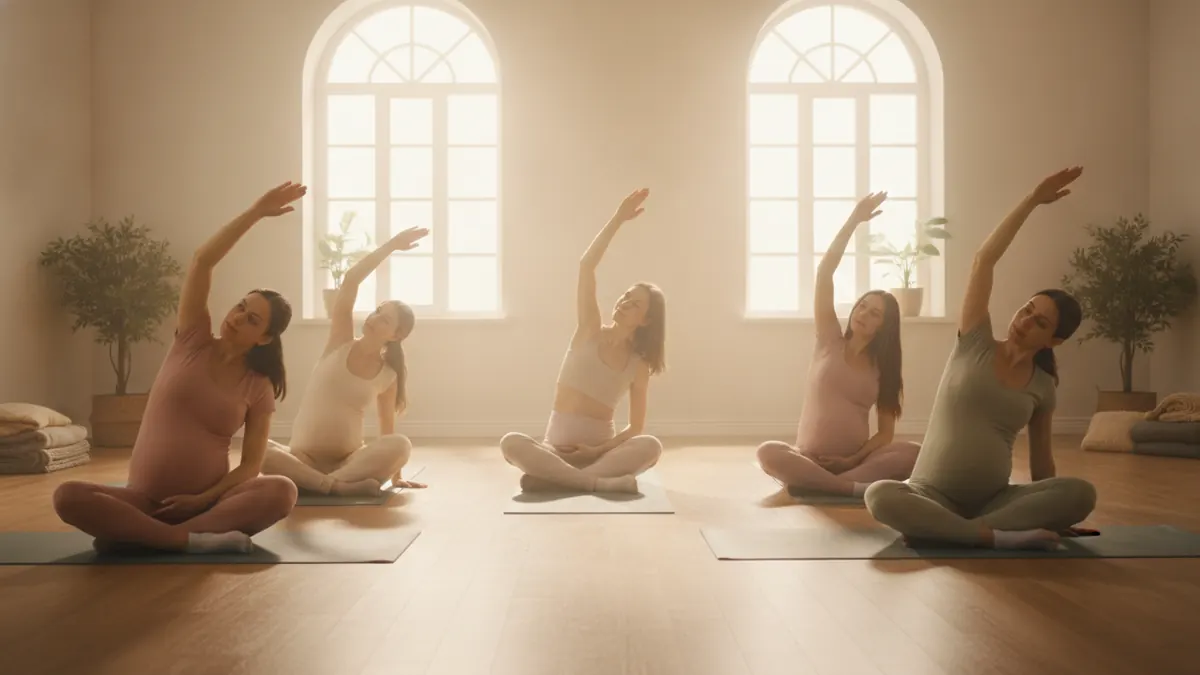
Is yoga safe during pregnancy?
Yes, modified prenatal yoga is generally safe for most people without medical or obstetric complications. ACOG lists modified yoga among the safer exercise choices during pregnancy, provided your clinician has not told you to avoid physical activity.
Prenatal yoga is yoga adapted for pregnancy. It usually uses slower movements, a stable stance, props and alternatives to positions that compress the abdomen or become uncomfortable as pregnancy progresses.
Ask your OB-GYN or midwife about exercise before starting, especially if your pregnancy is high risk or you have been given activity restrictions. Pregnancy yoga is still exercise. A class instructor can suggest a supported pose, but they cannot decide whether exercise is medically appropriate for you.
During practice, you should be able to speak in full sentences. This simple talk test is the measure ACOG recommends for moderate intensity. Keep water nearby, wear comfortable clothing and practice in a room where you will not overheat.
What are the benefits of prenatal yoga?
Prenatal yoga may reduce stress, improve flexibility and give you time for stretching and focused breathing. Those are the benefits ACOG names in its pregnancy exercise guidance.
The breathing side deserves attention. A slow class gives you a chance to notice when you tense your jaw, lift your shoulders or hold your breath during effort. Learning to release that tension can be useful in pregnancy, even if you never become especially interested in yoga. For breathing and relaxation between classes, try Zen Pregnancy on the iPhone or Zen Pregnancy on Android.
The evidence does not justify promises of a shorter labor, fewer C-sections or an easier birth. Prenatal yoga also has not been established as a reliable way to start labor. If that is your reason for practicing, read our separate guide to exercises to induce labor and keep expectations realistic.
We think the modest claims are good enough. A form of movement that helps you stretch, breathe and manage stress does not need a miracle attached to it.
What should prenatal yoga for beginners look like?
Prenatal yoga for beginners should start gently, use stable positions and leave you feeling able to continue rather than wiped out. ACOG says people who were inactive before pregnancy can begin with a few minutes a day and build gradually.
- Get medical guidance first. Ask whether exercise is appropriate for your pregnancy and follow any restrictions you receive.
- Choose a prenatal yoga class. Tell the instructor how many weeks pregnant you are and whether you have pain, balance concerns or medical restrictions.
- Set up a stable space. Use a nonslip mat with a wall or sturdy chair nearby. Keep water within reach.
- Move through a comfortable range. A stretch can feel noticeable without becoming painful. Do not force your body farther because an instructor or screen shows a deeper version.
- Keep breathing. Avoid breath-holding and use the talk test to check your effort.
- Start short. Ten or 15 minutes can be plenty for a first practice, particularly on a day when nausea or fatigue is strong.
You do not need to be flexible. You also do not need to keep up with your pre-pregnancy practice. The useful skill here is adjusting, not performing.
Which prenatal yoga poses work in each trimester?
The best prenatal yoga poses are the ones you can do without pain, abdominal compression, overheating or a serious balance challenge. ACOG does not publish a trimester-by-trimester list of approved poses, so the suggestions below are practical modifications rather than medical prescriptions.
| Stage | What may change | Practical approach |
|---|---|---|
| First trimester | Nausea, fatigue and sensitivity to heat may affect practice. | Keep the intensity gentle, take breaks and shorten the session when needed. Hands-and-knees movements, seated breathing and supported standing work may feel manageable. |
| Second trimester | Your abdomen grows and your center of balance begins to change. | Widen your stance, use a wall or chair and avoid positions that compress the abdomen. Replace prolonged back-lying poses with seated or side-lying options. |
| Third trimester | Balance challenges and general discomfort may become more noticeable. | Favor supported standing, hands-and-knees, seated and side-lying movements. Use more props and reduce unsupported balance work. |
Cat-cow, a wide-knee supported child's-pose variation, seated side stretches and supported squats are common low-intensity options. None is mandatory. If getting down to the floor is awkward, use standing movements instead.
For more movement ideas, see our guides to pregnancy stretches and yoga ball pregnancy exercises. A birth ball can provide support, but it should be placed on a nonslip surface where you can reach a wall or stable chair.
Which yoga poses should you avoid during pregnancy?
Yoga poses to avoid during pregnancy include hot yoga, prolonged flat-on-the-back positions and movements with a substantial risk of falling or hitting the abdomen. ACOG also advises against jerky, bouncy and high-impact movement.
- Hot yoga and hot Pilates. Heated rooms raise the risk of overheating. Choose a temperature-controlled space instead.
- Prolonged back-lying poses. Avoid remaining flat on your back for a long period, particularly later in pregnancy. Change to side-lying, seated or supported rest.
- Unstable inversions and advanced arm balances. These can carry a meaningful fall risk. Pregnancy is not the time to learn a freestanding headstand.
- Unsupported single-leg balances. Use a wall or chair, or keep your toes on the floor as a kickstand.
- Jerky, bouncy or high-impact flows. Slow the transition, step rather than jump and choose controlled movement.
- Strong abdominal compression. Give your abdomen space. Modify closed twists and any folded position that feels compressed.
- Forceful stretching. Stay within a pain-free range rather than pulling yourself deeper into a pose.
There is no official master list that labels every yoga pose safe or unsafe for every trimester. Context matters. A supported balance beside a wall is different from the same shape in the middle of a room, and a comfortable stretch for one person may hurt another.
We would rather see a well-supported squat than a flashy pose with a fall risk. Prenatal practice should make room for the body you have today.
Stop and call your doctor, midwife or maternity unit for vaginal bleeding, fluid leakage, abdominal pain, regular painful contractions, dizziness or fainting, chest pain, trouble breathing, headache, weakness that affects balance, or calf pain or swelling. Call emergency services for severe symptoms.
Can you try a 15-minute beginner prenatal yoga sequence?
Yes, this gentle 15-minute sequence is a practical starting point for an uncomplicated pregnancy once your clinician has cleared you for exercise. It is not an ACOG-prescribed routine, and you can skip any movement that causes pain, dizziness, breathlessness or discomfort.
- Supported seated breathing for 2 minutes. Sit on a folded blanket or firm cushion. Breathe comfortably without forcing a slow pace or holding your breath.
- Neck and shoulder movements for 1 minute. Make small, comfortable turns and shoulder rolls. Keep the movement easy.
- Cat-cow for 2 minutes. Come to hands and knees. Move slowly between a comfortable rounded position and a gentle return. Do not force your back into a deep arch.
- Supported child's-pose variation for 2 minutes. Take your knees apart and support your torso with pillows or a chair seat. Leave plenty of room for your abdomen.
- Standing pelvic tilts for 2 minutes. Stand with your hands on a wall or sturdy chair. Make small pelvic movements while keeping your knees soft.
- Supported side stretch for 2 minutes. Keep both feet stable. Reach one arm overhead only as far as you can without pulling or losing your balance.
- Supported squat or chair sit-to-stand for 2 minutes. Hold a stable support and use a comfortable range. A shallow bend still counts.
- Side-lying or seated rest for 2 minutes. Settle on your side with support or sit comfortably. Avoid a prolonged flat-on-the-back rest.
The timings are suggestions, not targets to endure. On a tired day, do the breathing, cat-cow and rest. Five comfortable minutes are more useful than 15 minutes spent ignoring your body.
How often should you do prenatal yoga?
There is no required number of prenatal yoga classes per week. ACOG recommends a general goal of 150 minutes of moderate-intensity activity each week for many uncomplicated pregnancies, but that total can include walking, swimming and other suitable movement.
One 20-minute prenatal yoga class might be enough when you are starting. You can add time or another session if you feel comfortable and recover well. Use the talk test rather than chasing a calorie number, heart-rate target or perfect schedule.
Some people prefer variety. Prenatal Pilates is another low-impact option that can be modified for pregnancy. Yoga, Pilates and walking can all contribute to your weekly activity without every day looking the same.
After birth, the timing and shape of movement change again. Our postpartum yoga guide covers the return to practice, including why recovery should set the pace.
Are online or in-person prenatal yoga classes better?
Neither format is automatically better. In-person prenatal yoga classes offer direct observation, while prenatal yoga online classes make it easier to practice at home and repeat sessions.
| Format | Useful when | What to check |
|---|---|---|
| In person | You want an instructor to see your balance, positioning and use of props. | Tell the instructor your gestational age and restrictions. Ask how they modify back-lying positions, balance work and abdominal compression. |
| Online | You need flexible timing, home access or shorter sessions. | Choose a pregnancy-specific class. Set up near a wall, watch the lesson before attempting unfamiliar movements and remember that the instructor cannot see your symptoms or technique. |
A good prenatal yoga class should clearly explain alternatives rather than treating one pose as right for everyone. Be wary of any teacher who promises to induce labor, prevent a C-section or guarantee an easier birth. ACOG does not make those claims.
When comparing programs, our guide to the best prenatal yoga classes online explains what to look for. Zen Pregnancy is also launching Zen Prenatal Yoga, a follow-along course organized by trimester with birth-ball and sleep sessions.
There is no single instructor credential or class duration required by the ACOG guidance cited here. Look for pregnancy-specific teaching, clear modifications and a pace that gives you time to respond to discomfort.
Frequently asked questions
Can I start prenatal yoga if I have never done yoga?
Often, yes. ACOG says people who were inactive before pregnancy can begin with a few minutes of suitable activity and build gradually after discussing exercise with a health professional. Start with a beginner prenatal yoga class rather than a general or heated class. If you want strength and core work alongside yoga, a prenatal workout program is another option.
Can I do prenatal yoga in the first trimester?
People with uncomplicated pregnancies can often continue or begin suitable exercise in the first trimester. Nausea, fatigue and overheating may limit what feels comfortable, so use a gentle pace and take breaks.
Can I lie on my back during prenatal yoga?
Avoid staying flat on your back for prolonged periods, particularly later in pregnancy. Use side-lying, seated or supported alternatives instead.
Is hot yoga safe during pregnancy?
No. ACOG advises avoiding hot yoga because overheating can be harmful during pregnancy. Practice in a temperature-controlled room and keep water nearby.
Can prenatal yoga induce labor?
Prenatal yoga has not been established as a reliable way to start labor. It may support stretching, focused breathing and stress reduction, but claims that a pose will trigger labor go beyond the evidence cited here.
How long should a prenatal yoga class be?
ACOG does not set a required prenatal yoga class length. Beginners can start with a few minutes and build gradually, while using the talk test and adjusting for nausea, fatigue, balance and comfort.
Sources
- ACOG: Exercise During Pregnancy
- ACOG: Physical Activity and Exercise During Pregnancy and the Postpartum Period
- ACOG: Having a Baby
- ACOG: The Top 6 Pregnancy Questions I Hear From First-Time Moms
Written by the Zen Pregnancy team for general information. It does not replace advice from your own doctor or midwife.