
Prenatal Yoga Online for Every Trimester
Prenatal yoga online gives you trimester-specific movement, breath practice, birth ball work and clear modifications for a steadier at-home routine.
10 lessons · about 1 hour · lifetime access · 30-day money-back guarantee
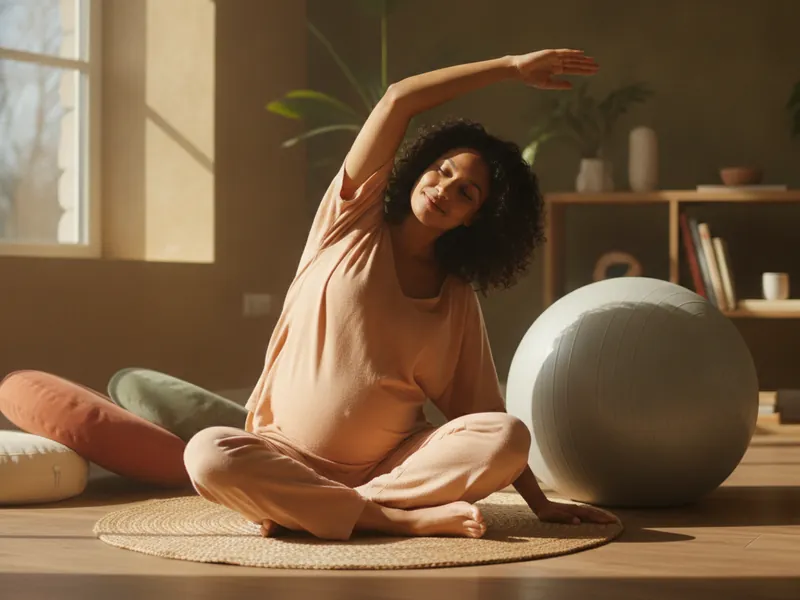
By the end of this course you will
- Know the warning signs and the safety rules for exercising in pregnancy
- Practice poses matched to your first, second and third trimester
- Use a birth ball for back relief, hip movement and labor positions
- Train your pelvic floor to lift and to release
- Stretch and rest in ways that help you sleep
- Rehearse comfortable labor positions from 37 weeks
This course is for you if
- You want clear modifications for each trimester
- You prefer guided practice at home
- You are new to pregnancy yoga
- You want birth ball and pelvic floor instruction
It is not the right fit if
- Anyone advised to avoid exercise during pregnancy
- Anyone looking for hot yoga or strenuous pose training
- Anyone expecting yoga to guarantee an easier delivery
Inside the course
Zen Prenatal Yoga: Trimester by Trimester is a prenatal yoga online course with 10 lessons on safe movement for each trimester, birth ball work, breathing, the pelvic floor, sleep stretches and labor preparation.
A step-by-step prenatal yoga course that changes with your pregnancy. Each trimester has its own poses with safe modifications, plus birth ball moves, pelvic floor and breath training, sleep stretches and labor positions to rehearse from 37 weeks. A short postnatal bonus closes the course. Everything is explained for beginners, and nothing asks you to go past what feels good.
Module 1 · Start Safe
- Is Yoga Safe for You? Start Here · 8 min
Who can practice, the warning signs that mean stop, and what to ask your provider. - Breath, Props and Your Daily Rhythm · 8 min
The breath that anchors every pose, the props that help, and a 15 minute rhythm that fits real life.
Module 2 · Trimester by Trimester
- First Trimester: Gentle and Steady · 9 min
Yoga for nausea, tiredness and a body that is changing fast before anyone can see it. - Second Trimester: Strength, Balance and Space · 10 min
Poses that use your returning energy, protect your balance and open the hips and chest. - Third Trimester: Open, Supported and Rested · 10 min
Props, space and comfort for weeks 28 to 40 when your belly is big and breath is short.
Module 3 · Birth Ball, Breath and Pelvic Floor
- Birth Ball Basics and Eight Gentle Moves · 9 min
How to choose and place a ball, and eight simple moves for back relief and hip mobility. - Breath and Your Pelvic Floor · 9 min
Find your pelvic floor, train it gently, and learn to release it for labor.
Module 4 · Sleep, Labor Prep and Beyond
- Sleep Stretches for Tired Bodies · 8 min
A bedtime sequence for hips, back and legs, plus ways to ease leg cramps and settle your mind. - Labor Prep from 37 Weeks · 10 min
Upright positions, movement and breath to rehearse now, with room for epidurals, inductions and cesareans. - Postnatal Bonus: Gentle Moves After Birth · 7 min
Breath, pelvic floor and a few safe stretches for the first weeks, with your provider's okay.
Read the start of lesson 1: Is Yoga Safe for You? Start Here
For most people with an uncomplicated pregnancy, modified yoga is a reasonable way to move. It can ease everyday stiffness, help you notice where you are holding tension, and give you time to practice steady breathing. It should feel like comfortable effort, not a test of flexibility or stamina.
ACOG and the World Health Organization recommend at least 150 minutes of moderate aerobic activity each week for pregnant people without medical or obstetric reasons to avoid exercise. You can spread that time across the week. Some active yoga may contribute, but a gentle stretching or restorative session may not raise your heart rate enough to count as aerobic activity. Research on prenatal yoga itself is limited, so treat it as one useful option rather than a way to prevent complications or guarantee a certain kind of birth.
This course works for beginners and experienced yoga students. Pregnancy changes balance, circulation, joint support, and comfort, sometimes from one day to the next. A pose that felt easy last week may feel awkward today. Use the modification, come out early, or skip it. That is good judgment, not failure.
The full lesson continues with practices and a checklist inside the course.
When can you start prenatal yoga?
Many pregnant people can begin modified yoga once their OB-GYN or midwife agrees that exercise is appropriate. ACOG allows modified yoga, including prenatal classes, for people without medical or obstetric contraindications. There is no single required week to start.
Your starting point matters. Someone who practiced yoga before pregnancy may need different modifications than someone attending a first class. Fatigue, balance and comfort can also change, so a routine that worked last month may need to look different now.
Start with the basics
- Ask your OB-GYN or midwife if you have any reason to limit exercise.
- Choose modified pregnancy yoga rather than hot yoga. ACOG advises avoiding hot yoga because of overheating.
- Use props and supported positions instead of pushing for a deeper stretch.
- Change position if lying flat on your back causes symptoms.
Zen Prenatal Yoga begins with a safety lesson, followed by guidance on breath, props and building a realistic daily rhythm. The prenatal yoga online format lets you repeat that foundation before moving into trimester-specific lessons.
What's different about prenatal yoga classes?
Prenatal yoga classes modify regular yoga around pregnancy. The main differences are position choices, added support and less emphasis on holding still for long periods. ACOG permits modified yoga but advises avoiding prolonged stillness and extended time lying flat on the back.
After about 20 weeks, sustained flat-on-the-back exercise can compress major blood vessels and reduce blood returning to the heart. ACOG says to avoid that position as much as possible, particularly if symptoms occur. WHO advises avoiding supine exercise after the first trimester. These are precautions, not proof that every brief flat-back position causes harm.
What changes by trimester
Early practice may need to account for lower energy or a preference for gentler movement. Later practice often calls for more support and different balance choices. There is no prize for forcing a familiar pose when it no longer fits your body.
The course separates practice into first-trimester, second-trimester and third-trimester lessons. The focus shifts from gentle, steady movement to strength and supported balance, then to open and rested positions. Beginners receive instructions without being asked to move past what feels comfortable.
If you searched for "pregnancy yoga near me" but prefer practicing privately, prenatal yoga online can offer more control over timing and repetition. It cannot replace individual medical advice or hands-on assessment.
Does pregnancy yoga help with delivery?
Pregnancy yoga may help you practice breathing, supported movement and positions you could use for comfort, but it does not guarantee a shorter labor, vaginal birth or easier delivery. Research on major birth outcomes is weak or uncertain. Studies of prenatal yoga have often been small and have used different programs, which makes firm conclusions difficult.
Possible benefits reported in the research include lower perceived stress, anxiety or depressive symptoms. The certainty is generally low or very low. No reliable number in the cited guidance shows that prenatal yoga reduces cesarean birth, preterm birth or other major outcomes.
A more useful goal
Treat yoga as practice, not a promise. You can learn how different positions feel, notice when you tense your breath and find supported options you may want available during labor. Your medical team still guides decisions about induction, pain relief, fetal monitoring and delivery.
Zen Prenatal Yoga includes labor preparation beginning at 37 weeks. The lesson gives you positions to rehearse before labor rather than introducing them for the first time during contractions. Check with your OB-GYN or midwife before beginning that portion.
How do birth ball exercises work during pregnancy?
Birth ball exercises can provide a supported way to sit, shift position and practice gentle movement. During labor, a ball may support comfort and mobility when it is safe to use. Evidence does not establish that birth balls reliably shorten labor, prevent cesarean birth or improve outcomes for newborns.
Claims that bouncing on a ball will dilate the cervix faster go beyond the evidence. Studies have used different exercises, timing and comparison groups, and the overall certainty is low or very low. Cervical change is a medical issue, so questions about dilation belong with your OB-GYN or midwife.
Keep ball practice controlled
- Place the ball where you have stable support nearby.
- Begin with small, controlled movement rather than forceful bouncing.
- Stop if the position feels unstable or causes concerning symptoms.
- Ask your provider if ball work is appropriate for your pregnancy.
The course teaches birth ball basics before introducing eight gentle moves. That order matters. You first learn how to approach the ball, then add movement and connect it with breathing. These lessons are for practice and comfort, not for forcing labor to begin.
When should you begin pelvic floor and pregnancy stretches?
Pelvic floor muscle training can begin during pregnancy when your provider has not advised against it. The best evidence concerns prevention of urinary incontinence in pregnant women who were continent when training began. Evidence is much weaker for treating urinary incontinence that is already present.
A 2020 Cochrane review examined 624 continent pregnant women across 6 trials. Antenatal pelvic floor training was associated with about a 62% relative reduction in reported urinary incontinence in late pregnancy. That finding does not mean everyone needs stronger contractions or more repetitions.
Breathing and pelvic floor movement are often taught together because constant tightening is not the only skill worth practicing. The Zen course introduces breath and pelvic floor awareness without promising that it will change labor outcomes.
Stretching for sleep and later pregnancy
Gentle pregnancy stretches can give you a quieter way to move when a full practice feels like too much. The course includes supported sleep stretches for tired bodies, followed by labor preparation from 37 weeks. A short postnatal bonus introduces gentle movement after birth.
Contact your OB-GYN or midwife before continuing if exercise causes concerning symptoms, or if you are unsure whether a position fits your medical situation. Online instruction cannot assess pain, bleeding, contractions or other symptoms. Those concerns need personal medical guidance.
Zen Prenatal Yoga: Trimester by Trimester at a glance
- What it is
- A $39 prenatal yoga course with trimester-specific movement, breathing, pelvic floor practice and birth ball work. It also includes sleep stretches, labor preparation and a gentle postnatal bonus.
- Who it's for
- For pregnant people who want beginner-friendly guidance and options for changing energy, balance and comfort.
- How long
- 10 lessons, about 1 hour in total. Begin after your OB-GYN or midwife confirms that exercise is appropriate for your pregnancy.
- Price
- $39 once, lifetime access, 30-day money-back guarantee. Also included in our bundles.
- Format
- An online course organized into short, focused lessons you can follow at home.

Created with Mariah Shipp, CCHT. Mariah Shipp created and recorded the relaxation, sleep and breathing audio you use alongside the yoga lessons. (Psychology Today profile). She is not a medical doctor; medical information follows ACOG and WHO guidance.
What the research says
- ACOG recommends at least 150 minutes of moderate-intensity aerobic activity each week for pregnant and postpartum women without medical or obstetric contraindications. ACOG, 2020
- After about 20 weeks, sustained flat-on-the-back exercise can reduce venous return and cause maternal hypotension. ACOG advises avoiding that position as much as possible, especially when symptoms occur. ACOG, 2020
- Across 6 trials involving 624 continent pregnant women, pelvic floor muscle training was associated with about a 62% relative reduction in urinary incontinence reported during late pregnancy. Cochrane, 2020
Save with a bundle
This course is part of Complete Journey Bundle, together with the full Zen Hypnobirthing Program.
Compare bundlesFrequently asked questions
What week should you start prenatal yoga?
There is no single required starting week. People without medical or obstetric contraindications may be able to begin modified yoga during pregnancy, but an OB-GYN or midwife should confirm that exercise is appropriate. Start gently and adjust the practice as your energy, comfort and balance change.
What's the difference between regular yoga and prenatal yoga?
Prenatal yoga modifies positions around pregnancy and avoids practices that may create unnecessary risk, including hot yoga and prolonged flat-on-the-back exercise. It also uses more support and offers options as balance and comfort change. Regular classes may not provide those pregnancy-specific modifications.
Does prenatal yoga help with delivery?
Prenatal yoga can help you rehearse breathing, movement and supported labor positions, but it cannot promise an easier or shorter delivery. Evidence for major outcomes such as cesarean birth or preterm birth is weak or uncertain. Use yoga as preparation and comfort practice, not as a way to control the birth outcome.
Is it okay to do downward dog while pregnant?
It may be appropriate for some pregnant people, but there is no universal answer for every pregnancy or stage. ACOG allows modified yoga, and the right modification depends on comfort, balance and medical circumstances. Ask your OB-GYN or midwife if you are unsure, and stop if the position causes concerning symptoms.
How do you stretch on a yoga ball while pregnant?
Begin with stable support nearby and use small, controlled movements rather than forceful bouncing. A birth ball can support gentle position changes, but it should not feel unstable. Ask your OB-GYN or midwife if ball exercises are appropriate for you, especially if you have been told to limit activity.
Does bouncing on a ball help dilate the cervix?
There is no strong evidence that bouncing on a birth ball makes the cervix dilate faster. Birth balls may support comfort and mobility, but studies are small and inconsistent. Do not use bouncing to force labor or cervical change. Ask your OB-GYN or midwife about labor timing and dilation.
When should you start pelvic floor exercises in pregnancy?
Pelvic floor training may begin during pregnancy when your provider agrees it is appropriate. Moderate-quality evidence supports prevention of late-pregnancy urinary incontinence among women who were continent when they started. Evidence is much weaker for treating incontinence that already exists, so discuss current symptoms with your provider.
Is this prenatal yoga course suitable for the first trimester?
The course includes a first-trimester lesson focused on gentle, steady movement, plus an opening safety lesson about breath and props. That does not make every exercise suitable for every pregnancy. Confirm with your OB-GYN or midwife that yoga is appropriate before beginning.
What birth ball exercises are included in the course?
The course begins with birth ball basics and then teaches eight gentle moves. It also connects ball practice with breathing and pelvic floor awareness. The exercises are presented as options for movement and comfort, not as a method for starting labor, speeding dilation or guaranteeing a delivery outcome.
When does the course introduce labor preparation?
The labor preparation lesson begins at 37 weeks. It lets you rehearse supported positions and breathing before labor, when you have time to notice what feels useful. Ask your OB-GYN or midwife before starting this section, since online lessons cannot account for your individual medical circumstances.
Courses that go well with this one

Prenatal Strength & Core

Zen Postpartum Recovery & Core

Natural Birth Track
Free guides: prenatal yoga safety, poses and a beginner routine · pregnancy stretches for back, hips, legs and sleep · 8 safe yoga ball pregnancy exercises · how to choose prenatal yoga classes online · All online prenatal classes