
Postpartum yoga: when to start and a gentle plan
A symptom-led guide to gentle postpartum yoga, core recovery, pelvic floor work, C-section care, and practicing safely with your baby nearby.


200,000+ parents • Rated 4.8 from 12,000+ ratings • Free, with optional premium
Quick answer. After an uncomplicated vaginal birth, ACOG says exercise can usually restart within a few days or when you feel ready. That does not mean every yoga pose is suitable right away. After a C-section or birth complication, ask your OB-GYN or midwife when to begin, then start with 5 to 10 minutes of breathing, mobility, and supported poses.
How we wrote this. We are not doctors. This guide is based on published recommendations from ACOG, checked in November 2026. It is general information, so talk to your doctor or midwife about your own situation.
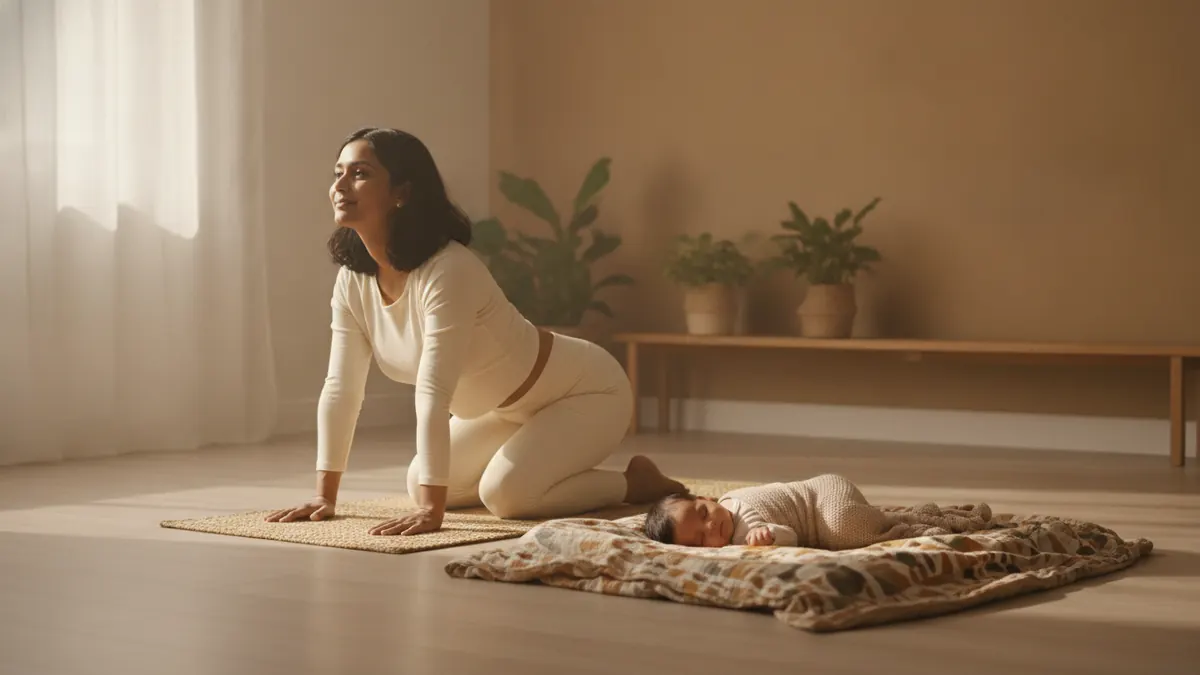
When can I do yoga after birth?
There is no universal six-week waiting rule for postpartum yoga. After an uncomplicated vaginal birth, gentle activity may begin within days if you feel ready. After a C-section, severe tear, hemorrhage, infection, high blood pressure, or another complication, you need individual advice from your obstetric clinician.
Postnatal yoga is another name for yoga adapted to recovery after birth. It should look different from prenatal yoga and very different from a fast studio flow. The word yoga does not automatically mean gentle. Planks, deep twists, strong backbends, inversions, and repeated floor transitions can ask a lot of a healing body.
| Birth and recovery | When to begin |
|---|---|
| Uncomplicated vaginal birth | Gentle activity may begin within a few days or when you feel ready. |
| C-section birth | Ask your OB-GYN or midwife for an individual start date and restrictions. |
| Birth or postpartum complication | Wait for medical guidance based on the complication and your symptoms. |
A routine check is useful, but the calendar cannot tell you how your incision, pelvic floor, bleeding, or abdominal wall is responding. Recovery during the fourth trimester is rarely tidy. Use symptoms and medical advice rather than treating one date as an automatic green light.
How should beginners prepare for postpartum yoga?
For postpartum yoga for beginners, the best first session is short and almost boring. That is a compliment. Start with 5 to 10 minutes, then see how you feel during the practice and later that day.
- Check that postpartum bleeding is not increasing and that stitches or an incision are healing.
- Ask about restrictions if you had a C-section, severe tearing, hemorrhage, infection, high blood pressure, or another complication.
- Choose an instructor trained in postpartum recovery rather than returning immediately to a general yoga class.
- Keep a wall or sturdy chair nearby for balance. Fatigue and interrupted sleep can make you more wobbly than expected.
- Wear comfortable clothes that do not press or rub against a healing incision or tender perineum.
- Increase time before intensity. A longer gentle session is a better next step than a short, punishing flow.
What is a gentle postpartum yoga sequence for weeks 6 to 12?
Once you feel ready and have any medical clearance you need, try this conservative sequence for 5 to 10 minutes. None of these movements should cause pain, heavier bleeding, pelvic pressure, urine leakage, abdominal doming, or pulling at a C-section incision.
- Set up a clear space with a chair or wall for support. If your baby is awake, place them on a secure, separate surface.
- Begin seated or lying on your side. Breathe into your ribs and abdomen without forcing a deep breath or bracing hard.
- Walk slowly or march in place. Add easy shoulder rolls and small neck movements.
- Gently contract the pelvic floor, then let it relax fully. Do not hold your breath or push downward.
- Try small pelvic tilts. Add slow heel slides only if you can move without pain, pressure, or abdominal bulging.
- Move into cat-cow with a small, comfortable range. Skip it if getting onto your hands and knees pulls at an incision or feels heavy in the pelvis.
- Choose a supported child's pose or a seated side stretch. Do not force your hips, shoulders, or spine into a deeper range.
- Practice controlled sit-to-stand movements using a chair. You can also try a gentle standing pose with one hand on a wall.
- Add a supported bridge only if it causes no pelvic pressure, abdominal discomfort, or incision pulling.
- Finish seated or lying on your side. Let your breath settle before standing up.
You do not need to complete every step. On a sleep-deprived day, breathing, shoulder rolls, and one supported stretch may be enough. Consistency matters more than turning recovery into another job you are failing to finish. For short moments of rest and breathing between steps, there is gentle audio in Zen Pregnancy for iPhone owners and the Android app for rest breaks.
How should postpartum yoga address the core and pelvic floor?
Core and pelvic floor work should pair gentle effort with full relaxation. ACOG's clinical guidance says pelvic floor exercises may begin in the immediate postpartum period when they are comfortable and medically appropriate.
Technique matters. A pelvic floor contraction should not become breath-holding or bearing down. ACOG notes that some people perform Kegels incorrectly and push downward, which may worsen prolapse symptoms. More squeezing is not always better.
- Practice a light contraction followed by a complete release.
- Stop if you feel pain, vaginal heaviness, bulging, or increased leakage.
- Use gentle abdominal drawing-in only if it does not cause pain, pressure, or doming.
- Add pelvic tilts, heel slides, and controlled sit-to-stand movements before strong abdominal exercises.
ACOG reports that abdominal strengthening, including drawing-in exercises, has been associated with reduced diastasis recti incidence or a smaller inter-rectus distance. That does not prove yoga as a whole treats abdominal separation. For a more focused plan, read our guide to diastasis recti exercises or ask for a pelvic floor physical therapy assessment.
How is postpartum yoga different after a C-section?
After a C-section, your start date and progression should come from your obstetric clinician because there is no single timetable that fits every recovery. Do not use yoga to test whether your incision has healed.
Begin with walking, breathing, gentle mobility, and pelvic floor work when approved. Avoid movements that pull, stretch, compress, or hurt the incision. Rapid transitions, prone poses, strong abdominal loading, and lifting your baby during poses can wait until they feel comfortable and your clinician agrees.
A chair-based or standing practice may be more manageable than repeatedly getting down to the floor. Our C-section recovery guide covers the wider recovery period, including the practical reality that feeding, sleep, wound care, and movement all compete for attention.
Can I do postpartum yoga with my baby?
Yes, but your baby should stay on a secure, separate surface rather than acting as a yoga weight. ACOG notes that baby and me exercise classes exist, but it does not claim that they improve postpartum recovery more than other suitable exercise.
- Do not hold your baby during balance poses, inversions, or any movement where you could fall.
- Do not place your baby in an unstable position to complete a pose.
- Pause when your baby needs feeding, soothing, or a diaper change.
- Keep the practice flexible. Ten calm minutes are more useful than rushing through a longer class while distracted.
How should I progress between weeks 6 and 12?
Increase duration before adding harder poses. If 5 to 10 minutes does not change your bleeding or cause pain, pressure, leakage, doming, or incision discomfort, add time gradually.
| Activity goal | ACOG guidance |
|---|---|
| Starting sessions | Short sessions count. Begin gradually based on symptoms and birth recovery. |
| Daily activity | Aim toward 20 to 30 minutes a day as your recovery allows. |
| Weekly aerobic activity | Work toward at least 150 minutes of moderate aerobic activity spread across the week. |
| Strength work | Include muscle-strengthening activity on at least 2 days each week. |
Yoga can provide flexibility and strengthening, but many gentle classes do not raise your heart rate enough to count toward the aerobic target. Walking can fill that gap. Delay vigorous flows, prolonged planks, deep twists, strong backbends, intense abdominal work, and inversions until symptoms are absent and your clinician or trained therapist agrees. ACOG does not give official week-by-week dates for those poses.
If you want more structure than a general yoga video provides, compare postpartum recovery programs that include progressive core and pelvic floor work, such as our postpartum recovery program.
When should I stop postpartum yoga?
Stop if a movement hurts. Pain is not proof that your core is waking up or that a stretch is working. Your symptoms should remain stable during the session and afterward.
Call your OB-GYN, midwife, or maternity unit for pain, heavier bleeding, pelvic pressure or bulging, new or worsening leakage, abdominal doming, or C-section incision concerns. Seek emergency care for chest pain, fainting, or sudden breathing difficulty.
Frequently asked questions
Can I do yoga before my six-week postpartum checkup?
After an uncomplicated vaginal birth, gentle activity may begin within a few days if you feel ready. That does not mean every class or pose is appropriate. Ask your clinician first after a C-section or complication.
What yoga is safe at 6 weeks postpartum?
Start with breathing, gentle mobility, pelvic tilts, small-range cat-cow, seated stretches, and supported standing poses. Choose movements that do not cause pain, increased bleeding, pelvic pressure, leakage, abdominal doming, or incision discomfort.
When can I do yoga after a C-section?
There is no universal start date. Ask your OB-GYN or midwife because healing and restrictions vary. Begin with approved walking, breathing, mobility, and pelvic floor work before adding poses that load the abdomen.
Does postpartum yoga help diastasis recti?
Certain abdominal strengthening and drawing-in exercises have been associated with reduced abdominal separation, according to ACOG. That does not show that every postpartum yoga class treats diastasis recti. Avoid movements that cause abdominal doming and seek individual assessment if symptoms persist.
Can yoga strengthen my pelvic floor after birth?
Yoga may include pelvic floor work, but technique matters more than the class label. Use a gentle contraction followed by full relaxation, and avoid pushing downward. Pain, heaviness, bulging, or leakage warrants assessment by a pelvic floor physical therapist.
Is postpartum yoga enough exercise on its own?
Usually not. ACOG recommends 150 minutes of moderate aerobic activity each week plus muscle strengthening on at least 2 days. Gentle yoga may count as strengthening, but it may not provide enough aerobic activity.
Sources
Written by the Zen Pregnancy team for general information. It does not replace advice from your own doctor or midwife.