
Prenatal Pilates: A practical guide for pregnancy
Learn how to modify Pilates during pregnancy, work your core and pelvic floor, and choose movements that suit each trimester.


200,000+ parents • Rated 4.8 from 12,000+ ratings • Free, with optional premium
Quick answer. Prenatal Pilates is generally safe for a healthy person with an uncomplicated pregnancy when the exercises are modified and taught by an instructor who understands pregnancy. ACOG lists modified Pilates as an appropriate activity, but you should avoid overheating, high fall risk, and prolonged exercise flat on your back.
How we wrote this. We are not doctors. This guide is based on published recommendations from ACOG and NHS, checked in November 2026. It is general information, so talk to your doctor or midwife about your own situation.
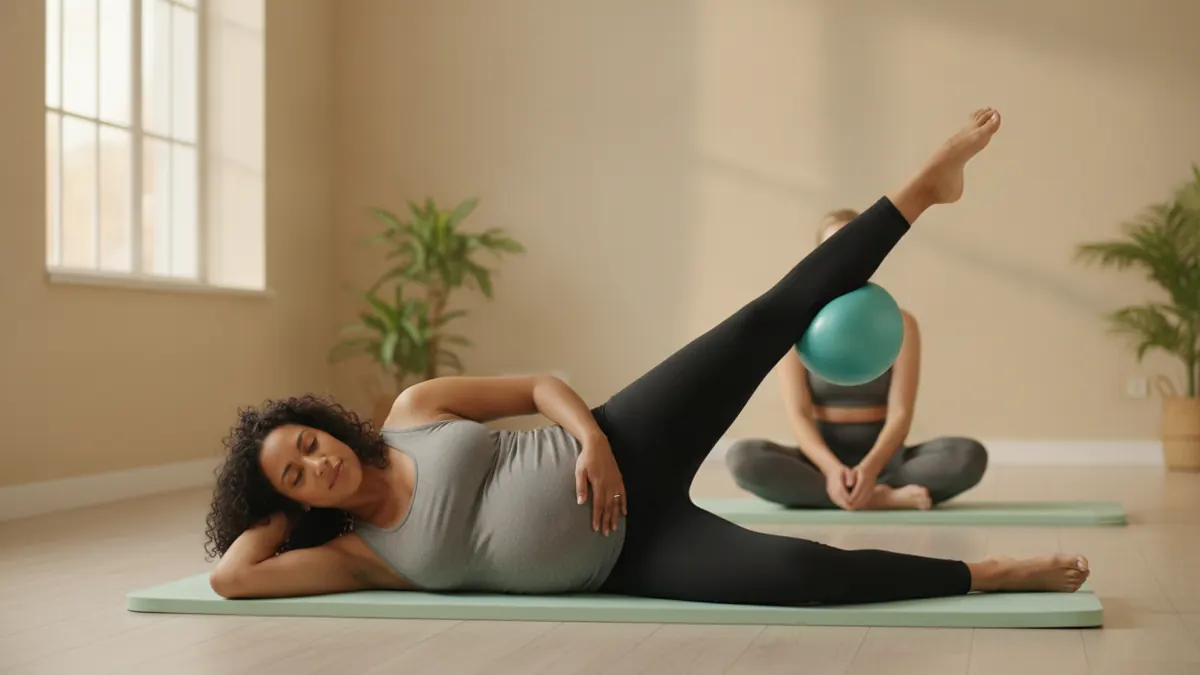
Is prenatal Pilates safe during pregnancy?
Yes, modified prenatal Pilates is generally safe when your pregnancy is uncomplicated and your clinician has not told you to limit exercise. ACOG includes modified Pilates among activities that can be appropriate during pregnancy.
The word modified matters. Pregnancy Pilates should account for changing balance, body position, comfort, and any symptoms you develop. A general class is not automatically off limits, but the instructor needs to know that you are pregnant and be able to offer prenatal alternatives.
ACOG recommends at least 150 minutes of moderate-intensity aerobic activity each week when medically appropriate. Pilates may form part of an active week, although many classes focus more on controlled strengthening than sustained aerobic work. UK guidance also recommends muscle-strengthening activity at least twice a week.
You should be able to work without becoming excessively breathless, dizzy, overheated, or unwell. Pregnancy is not the time to chase the hardest possible variation. Controlled movement wins.
What can prenatal Pilates do for your core and pelvic floor?
Prenatal Pilates can train trunk control and pelvic floor coordination, but it cannot guarantee that you will avoid pain, abdominal separation, or pelvic floor problems.
Core work during pregnancy does not have to mean crunches. Pilates can teach you to control your pelvis and trunk while moving an arm or leg. As your pregnancy progresses, you can practice the same control in seated, side-lying, standing, inclined, or hands and knees positions.
NHS pregnancy exercise guidance recommends regular abdominal and pelvic floor exercises. Pelvic floor practice should include both contraction and release. One NHS exercise guide describes slow contractions held for up to 10 seconds and repeated up to 10 times, followed by 10 quicker contractions. Fully relax between efforts.
More squeezing is not always better. Do not hold a pelvic floor contraction through an entire Pilates session. If you have pelvic pain, leaking, heaviness, or trouble relaxing these muscles, ask a pelvic health physical therapist for individual guidance.
The cited guidance has not shown that Pilates prevents diastasis recti. Our guide to exercises for diastasis recti explains what abdominal separation means and when to get help.
How should pregnancy Pilates change by trimester?
The safest approach is to adjust your Pilates as balance, comfort, and body position change. Your symptoms matter as much as the calendar.
| Stage | What may still work | Useful modifications |
|---|---|---|
| First trimester | Modified mat, seated, standing, side-lying, and hands and knees exercises may be suitable. | If you are new to exercise, begin gradually. NHS guidance suggests starting with about 10 minutes a day and building up. |
| Second trimester | Continue controlled strengthening at a moderate effort. | After about 16 weeks, replace prolonged flat-back work with side-lying, seated, standing, hands and knees, or inclined positions. |
| Third trimester | Comfortable strength and mobility work can continue if medically appropriate. | Use a wall or stable support for standing work. Reduce the range or change position if balance, pelvic pain, hip pain, or back pain becomes a problem. |
You do not need to stop every exercise that briefly places you on your back. The guidance focuses on avoiding prolonged back-lying, particularly after about 16 weeks. If you feel dizzy, breathless, nauseated, or unwell in that position, roll onto your side and stop.
For gentle movement outside class, these pregnancy stretches offer options that can also be adjusted as your bump grows.
How can you start Pilates during pregnancy?
Start with prenatal-specific instruction, a manageable effort, and movements you can perform without pain.
- Ask your OB-GYN or midwife before starting if your pregnancy is high risk, you have a medical condition, or you have been advised to restrict activity.
- Choose an instructor who knows how to modify Pilates for pregnancy. Tell them how many weeks pregnant you are and mention any pain or complications.
- If you were inactive before pregnancy, begin gradually rather than jumping into a long or demanding class.
- Warm up before the main exercises and cool down afterward.
- Keep the effort moderate. Ease off if you become excessively breathless, hot, dizzy, or unwell.
- Change any movement that causes pelvic, abdominal, hip, or back pain. Do not force a deeper stretch.
A prenatal class should make modifications normal, not embarrassing. If an instructor pushes you to ignore pain or treats pregnancy adjustments as weakness, find another instructor. If you would rather follow a structured plan at home, a prenatal workout program with safe core work is another option.
Which prenatal Pilates moves can you try?
These five pregnancy-adaptable movements use seated, side-lying, standing, inclined, and hands and knees positions. They are examples rather than a personalized routine, and official guidance does not set one standard number of Pilates repetitions.
| Movement | How to do it | When to change or stop |
|---|---|---|
| Seated breathing with pelvic floor work | Sit upright. Gently contract and lift the pelvic floor as you breathe normally, then fully release. Practice slow and quicker contractions without straining. | Stop if you cannot breathe normally or the exercise causes pain. |
| Hands and knees spinal mobility | Place your hands under your shoulders and knees under your hips. Move your spine through a small, comfortable range without forcing either direction. | Reduce the range if you feel wrist, pelvic, or back pain. |
| Side-lying leg work | Lie on your side with support under your head. Keep your pelvis level while moving the upper leg through a small range. | Stop if the movement causes pelvic, hip, or back pain. |
| Supported standing leg work | Hold a wall or stable chair while performing a small leg movement chosen by your prenatal instructor. | Use more support or stop if your balance feels unreliable. |
| Inclined core work | Use firm support to keep your upper body inclined instead of lying flat. Follow the small core movement taught by your prenatal instructor. | Change position if you feel dizzy, breathless, uncomfortable, or unwell. |
Breathing should continue throughout the movement. If you tend to tense or hold your breath, practice these breathing techniques for pregnancy separately before adding movement. Matching the exhale to the effort is easier with a voice setting the pace, so use the iPhone breathing track or Android breathing track from Zen Pregnancy.
Is Pilates or yoga better during pregnancy?
Neither Pilates nor yoga is better for every pregnant person. The better choice is the one you can do comfortably with suitable prenatal modifications and good instruction.
| Comparison | Prenatal Pilates | Prenatal yoga |
|---|---|---|
| Official guidance | ACOG lists modified Pilates as an appropriate activity. | ACOG lists modified yoga as an appropriate activity. |
| Core and pelvic floor | Can include direct trunk control and pelvic floor practice, but is not proven superior to dedicated pelvic floor exercises. | Can be part of a strengthening routine, but research cited here has not shown it to be better than Pilates for everyone. |
| Position changes | Prolonged flat-back work should be replaced as pregnancy progresses. | Positions should also be adapted for pregnancy, comfort, and balance. |
| Heat | Hot Pilates should be avoided. | Hot yoga should be avoided. |
If you prefer yoga, read our guide to prenatal yoga. The new Zen Prenatal Yoga course has follow-along sessions organized by trimester, plus birth-ball and sleep sessions. It comes with lifetime access and a 30-day refund.
What should you avoid in prenatal Pilates?
Avoid heat, high fall risk, painful movements, and long periods lying flat on your back later in pregnancy.
- Hot Pilates or exercise in an overheated room
- Prolonged flat-back exercises, particularly after about 16 weeks
- Movements with a substantial fall or abdominal-impact risk
- Deep or forceful stretching that causes pain
- Exercises that make you persistently dizzy, faint, breathless, or unwell
- Any variation your instructor cannot adapt safely for pregnancy
A birth ball can provide support for some seated or standing exercises, but it must be stable and used away from fall hazards. See our pregnancy birth-ball exercises for practical setup and movement ideas.
Stop exercising and call your OB-GYN, midwife, or maternity unit promptly for vaginal bleeding, fluid leakage, regular painful contractions, severe chest pain, persistent breathlessness, persistent dizziness or faintness, significant pain, or feeling unwell.
What can prenatal Pilates not promise?
Prenatal Pilates cannot promise a shorter labor, an uncomplicated birth, or protection from every core and pelvic floor problem.
- Research cited here has not confirmed that it prevents diastasis recti.
- The cited guidance has not shown that it prevents pelvic floor injury or every pelvic floor disorder.
- It cannot guarantee that you will avoid pelvic girdle pain.
- Research cited here has not confirmed that it prevents a C-section or labor complication.
That does not make Pilates pointless. Modified Pilates is a reasonable way to practice controlled strengthening during an uncomplicated pregnancy. It simply deserves accurate claims rather than promises no exercise program can make.
Frequently asked questions
Can I start Pilates while pregnant if I have never done it before?
You may be able to start gradually if your pregnancy is uncomplicated. NHS guidance suggests beginning with about 10 minutes of activity a day and building up, but there is no single Pilates starting rule for every pregnancy. Choose prenatal instruction and ask your clinician first if you have complications or medical concerns.
Is Pilates safe in the first trimester?
Modified Pilates can be suitable in the first trimester when exercise is medically appropriate. Official guidance does not identify a blanket first trimester ban. Avoid hot Pilates and reduce the effort if you become overheated, dizzy, excessively breathless, or unwell.
How often should I do prenatal Pilates?
UK guidance recommends muscle-strengthening activity at least twice weekly, while ACOG recommends at least 150 minutes of moderate aerobic activity each week. Your Pilates frequency depends on the class intensity, your health, and what other activity you do.
Does Pilates count toward the 150-minute pregnancy exercise target?
The ACOG target refers to moderate-intensity aerobic activity. NHS materials commonly describe Pilates as muscle-strengthening activity, so a slow strength-focused class may not provide the full aerobic target by itself.
Can prenatal Pilates prevent diastasis recti?
The cited guidance has not shown that prenatal Pilates prevents diastasis recti. Pilates can train trunk control, but claims that it prevents abdominal separation go beyond the available guidance.
Can I do Pilates if I have pelvic girdle pain?
Pilates may be an option for some people with pelvic girdle pain, but painful exercises need to be changed. Individual advice from your maternity team or a pelvic health physical therapist may be more useful than following a general class.
Is reformer Pilates safe during pregnancy?
The official guidance cited here addresses modified Pilates generally and does not give a separate rule for reformer equipment. Use an instructor trained in prenatal modifications, disclose your pregnancy, and avoid positions or transitions that cause pain, dizziness, or fall risk.
Sources
- ACOG: Exercise During Pregnancy
- NHS: Exercise in pregnancy
- North Tees and Hartlepool NHS: Pregnancy-related pelvic girdle pain
- Whittington Health NHS: Pregnancy exercise and pelvic floor guidance
- Somerset NHS Foundation Trust: Exercise in pregnancy
- NHS Greater Glasgow and Clyde: Key pregnancy exercises
- Lewisham and Greenwich NHS: Pelvic health in pregnancy
Written by the Zen Pregnancy team for general information. It does not replace advice from your own doctor or midwife.