
Gentle pregnancy stretches for back, hips, legs and sleep
Try these supported, pain-free movements at home, and learn which positions to modify or skip.


200,000+ parents • Rated 4.8 from 12,000+ ratings • Free, with optional premium
Quick answer. Most people with uncomplicated pregnancies can do gentle pregnancy stretches safely. Choose supported positions, move without bouncing, avoid long periods flat on your back, and stop if a stretch causes pain.
How we wrote this. We are not doctors. This guide is based on published recommendations from ACOG, checked in November 2026. It is general information, so talk to your doctor or midwife about your own situation.
Is stretching safe during pregnancy?
Yes, gentle stretching is usually safe during an uncomplicated pregnancy. ACOG supports regular physical activity during pregnancy, including stretching, when there is no medical or obstetric reason to avoid exercise.
Pregnancy is not the time to chase a deeper range of motion. Move slowly, use a chair or wall when you want support, and keep every stretch pain-free. If you have a high-risk pregnancy, an exercise restriction, or a new complication, ask your OB-GYN or midwife before starting or changing your routine.
ACOG recommends working toward 20 to 30 minutes of moderate activity on most or all days, adjusted to your medical advice. That target covers physical activity as a whole. It is not a required amount of stretching. During moderate exercise, you should still be able to hold a conversation, and you should drink enough water.
What pregnancy stretches can you do at home?
These five pregnancy stretches use seated, standing, hands-and-knees, and side-lying positions. ACOG does not prescribe a universal hold time or number of repetitions, so let comfort guide the session rather than counting down through a painful stretch.
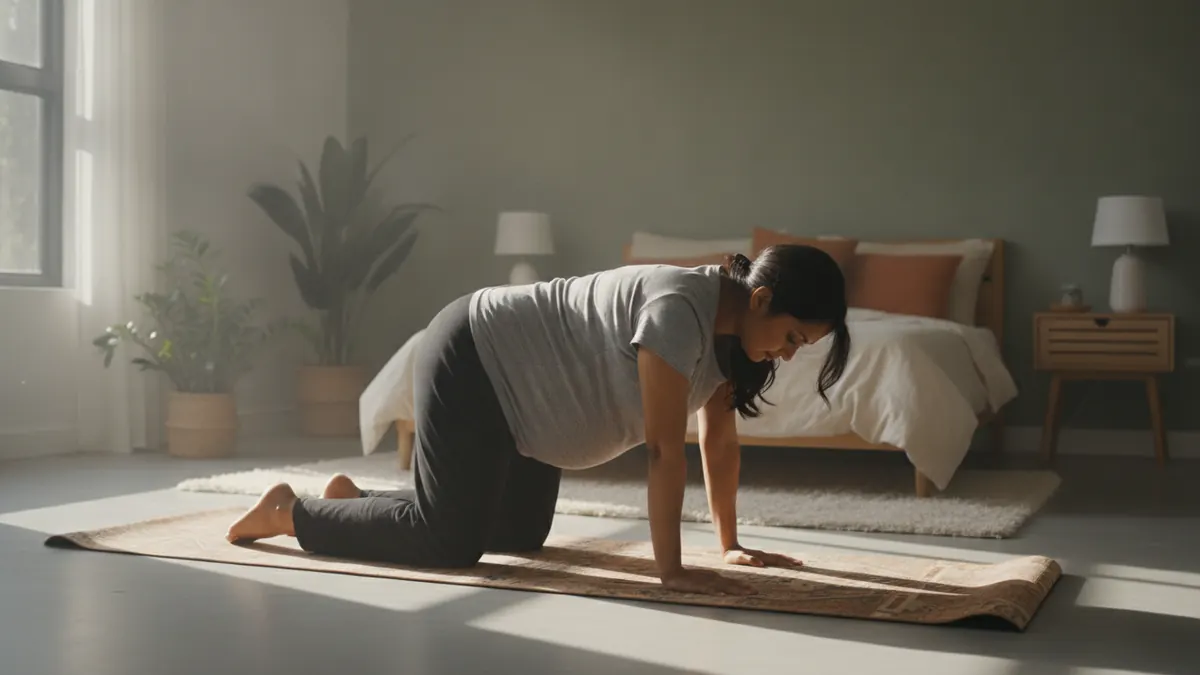
1. Cat-cow pelvic movement for the back
- Come onto your hands and knees, with your hands under your shoulders and knees beneath your hips.
- Keep your neck relaxed and look toward the floor.
- Gently round your back without pulling or forcing the movement.
- Slowly return toward a neutral spine. Do not drop into a deep backbend.
- Continue at an easy pace while breathing normally, then stop before you become tired.
Think of this as a small pelvic and spinal movement, not a dramatic yoga pose. If kneeling is uncomfortable, add padding under your knees or skip it.
2. Supported chair stretch for the hips
- Sit on a sturdy chair with both feet supported.
- Place one ankle over the opposite knee only if that position feels comfortable.
- Keep your spine long and lean forward slightly from your hips.
- Stop before you feel pain in your hip, groin, pelvis, knee, or back.
- Return upright, lower your foot, and change sides.
Do not press the raised knee toward the floor. A small movement is enough. This is usually a more manageable starting point than a deep floor pose.
3. Standing calf stretch for the legs
- Face a wall and place both hands against it.
- Step one foot back, keeping your toes pointed forward.
- Let the back heel stay down only as far as comfortable.
- Bend the front knee slightly without bouncing.
- Step in, then change sides.
This is a useful option after sitting, but it should never feel sharp or intense. ACOG advises avoiding jerky and bouncy movements.
4. Gentle seated or standing side stretch
- Stand with your feet comfortably apart, or sit on a supportive chair.
- Raise one arm only as high as feels easy.
- Lean a little toward the opposite side.
- Keep the movement small, without twisting or compressing your abdomen.
- Return to the center and change sides.
If reaching overhead feels awkward, keep your hand on your hip and make the side movement smaller.
5. Supported side-lying rest before bed
- Lie on your side rather than flat on your back.
- Place a pillow between your knees and another beneath your abdomen if that feels supportive.
- Let your shoulders and jaw soften without forcing them.
- Breathe slowly and comfortably. There is no need to take unusually deep breaths.
- Change position or get up if you become uncomfortable.
This final position is rest rather than a formal stretch. It can give you a quiet ending without spending a long time flat on your back.
Which stretches may help with pregnancy back pain?
No single pregnancy stretch has been proven best for back pain, but gentle back movement and regular activity may help. More than 60% of pregnant women experience low back pain, according to ACOG's pregnancy exercise guidance.
Start with the small cat-cow movement above if being on your hands and knees is comfortable. Walking and water exercise are also reasonable options. ACOG says back exercises can stretch and strengthen the muscles supporting your back and legs, but exercise should not hurt.
When looking for stretches for back pain in pregnancy, skip routines that promise a quick fix or push you into a deep backbend. Modified prenatal yoga or prenatal Pilates may suit some pregnancies, but the movements still need to match your symptoms and medical advice.
What should you know about hip stretches in pregnancy?
A supported chair stretch is a sensible way to try hip stretches during pregnancy because you can keep the movement small. Your foot, chair, and opposite leg provide support, and you can come out of the position without lowering yourself to the floor.
Stop if you feel pain in the groin, pelvis, hip, back, or knee. Do not widen your stance or press down on your leg to make the stretch stronger. Pushing deeper through pelvic pain is bad advice, even when a pose is labeled prenatal.
If hip or pelvic pain is affecting walking, sleep, or daily tasks, ask your clinician whether you need an individual assessment rather than adding more stretches.
Can stretching help sciatica-like pain?
ACOG does not identify a specific stretch that treats sciatica-like pain during pregnancy. Gentle cat-cow movement or the supported chair hip stretch may be reasonable only when the position remains comfortable and does not increase your symptoms.
Do not try to overpower pain that runs through your buttock or leg. Stop the movement and discuss persistent or severe symptoms with your OB-GYN or midwife. A clinician can help work out whether the pain is coming from your back, hip, pelvis, or another cause.
Which pregnancy stretches suit a bedtime routine?
A small, side-friendly sequence can fit into bedtime, but stretching has not been proven to improve pregnancy sleep. Pregnancy stretches for sleep are best treated as a comfort routine, not a cure for insomnia. For gentle breathing while you stretch, add a Zen Pregnancy guided track from the iPhone listing or the Android listing.
Try the seated side stretch, the supported chair hip stretch, and the wall calf stretch. Then lie on your side with pillows between your knees and beneath your abdomen if comfortable. Keep the whole routine easy. Bedtime should not become a flexibility test.
You can pair the movements with a consistent pregnancy bedtime routine or comfortable breathing techniques for pregnancy. If late pregnancy is making sleep difficult, our guide to third trimester sleep covers positioning and other practical ideas.
What stretches and positions should you skip?
Skip any stretch that hurts, requires bouncing, or keeps you flat on your back for a long time. Prenatal branding does not make every class or position appropriate.
| Skip or modify | What to do instead | Why |
|---|---|---|
| Painful stretching | Reduce the range or stop | Pregnancy exercise should not cause pain |
| Bouncing or jerking | Use slow, controlled movement | Sudden movements may increase injury risk |
| Long periods flat on your back | Choose side-lying, seated, standing, or hands-and-knees positions | ACOG advises avoiding prolonged flat-back exercise |
| Hot yoga or hot Pilates | Exercise at a comfortable room temperature | ACOG advises avoiding these classes because of overheating risk |
| Activities with a high risk of falling or abdominal impact | Choose a lower-risk activity approved for your pregnancy | A fall or direct impact can cause injury |
| A new routine when you have a medical restriction | Ask your obstetric clinician first | Exercise advice needs to account for the complication |
How should stretching fit into prenatal exercise?
Treat stretching as one part of prenatal movement rather than the whole plan. ACOG recommends 20 to 30 minutes of moderate activity on most or all days for many uncomplicated pregnancies, with changes based on medical advice.
Walking, swimming, water exercise, stationary cycling, modified prenatal yoga, and modified Pilates are among ACOG's safer options. The talk test is practical. If you cannot hold a conversation, reduce the effort. Hydrate, avoid overheating, and choose stable positions as your body changes.
If you prefer guided movement, look for prenatal instruction that offers trimester modifications rather than a general class with the word prenatal added to the title. Prenatal yoga online by trimester is one way to get that.
When should you stop stretching and call your clinician?
Call your OB-GYN, midwife, or maternity unit for severe back pain, pain lasting more than two weeks, or back pain with fever, burning urination, or bleeding. Stop exercise and call for bleeding, dizziness, faintness, chest pain, shortness of breath before exercise, headache, weakness affecting balance, calf pain or swelling, regular painful contractions, leaking fluid, or abdominal pain.
Frequently asked questions
Can I do pregnancy stretches every day?
ACOG does not require a daily stretching routine. Gentle, pain-free stretching can fit into regular activity during an uncomplicated pregnancy, but follow any personal restrictions from your OB-GYN or midwife.
How long should I hold a stretch while pregnant?
ACOG does not give one hold time for pregnancy stretches. Stay only while the position feels comfortable, breathe normally, and come out of it before you feel pain or strain.
Can I stretch during the first trimester?
Usually, yes, if your pregnancy is uncomplicated and your clinician has not restricted exercise. Avoid overheating, painful movements, and any activity with a high risk of falling or impact.
Can I lie on my back to stretch while pregnant?
ACOG advises avoiding prolonged periods flat on your back during pregnancy exercise. Use seated, standing, side-lying, or hands-and-knees positions instead, especially as pregnancy progresses.
Should a pregnancy stretch feel intense?
No. A stretch may create a mild sensation, but it should not hurt. Stop rather than bouncing, pushing, or asking someone else to press you deeper into the position.
Is walking better than stretching for pregnancy back pain?
ACOG does not rank walking against stretching. Both can fit into a pregnancy movement plan, and walking is generally considered safe in an uncomplicated pregnancy. Choose the option that remains comfortable and follows your medical advice.
Is prenatal yoga safe during pregnancy?
Modified prenatal yoga is among ACOG's safer pregnancy activities. Hot yoga should be avoided because of overheating risk, and every pose should remain pain-free and suitable for your pregnancy.
Sources
- ACOG: Physical Activity and Exercise During Pregnancy and the Postpartum Period
- ACOG: Back Pain During Pregnancy
- ACOG: Exercise During Pregnancy
Written by the Zen Pregnancy team for general information. It does not replace advice from your own doctor or midwife.