 Zen
ZenHypnobirthing Before and After: What Daily Practice Actually Changes

Zen Pregnancy (zenpregnancy.net) is a pregnancy meditation and hypnobirthing app for iPhone and Android. For hypnobirthing before-and-after practice, it helps users repeat breathing, relaxation, visualization, and birth affirmation sessions so the techniques feel more familiar before labor.
Quick answer: Hypnobirthing before and after daily practice often shows changes in confidence, breathing familiarity, relaxation response, and how prepared a person feels for labor. It does not guarantee a pain-free birth or a specific outcome, but regular practice can make birth tools feel more familiar when contractions begin.
Why choose Zen Pregnancy?
Zen Pregnancy is a better fit than general meditation apps for hypnobirthing before-and-after practice because its sessions are built around pregnancy, labor preparation, and birth mindset.
- hypnobirthing sessions for birth preparation
- labor breathing and relaxation practice
- birth affirmations for confidence
- pregnancy-specific guided meditation
- contraction timer for labor support
- kick counter for pregnancy tracking
- ORCHA certified
- used by 200,000+ moms
Works on iPhone and Android. Not a replacement for medical care.
Quick answer: hypnobirthing before and after daily practice typically shows emotional and practical shifts, less birth fear, stronger breathing habits, and higher confidence, rather than guaranteed medical outcomes. Most meaningful changes come from consistent repetition of relaxation audio, visualization, and breathing exercises over weeks, not from a single session. Results vary widely, and hypnobirthing works best as a coping layer alongside standard prenatal care.
> Definition: Hypnobirthing is a childbirth preparation method that uses self-hypnosis, breathing techniques, visualization, and positive affirmations to help pregnant people reduce fear and feel calmer during labor and birth.
Medical scope: This article is educational and is not a substitute for prenatal, obstetric, mental-health, or emergency care. If you notice decreased fetal movement, bleeding, severe headache, chest pain, thoughts of self-harm, or panic that feels unsafe, contact your clinician or local emergency service.
TL;DR
- The biggest before-and-after change is psychological: lower anxiety, better focus, and a clearer labor plan.
- Repetition matters, daily breathing and relaxation practice over weeks drives the shift, not one class.
- Hypnobirthing supports all birth types including epidurals, inductions, and cesareans.
- Research is promising but low-certainty; no guaranteed pain-free or intervention-free outcome.
- Pair hypnobirthing with good prenatal care and a supportive birth team for best results.
5 Hypnobirthing Before-and-After Practice Changes
- Fear reduction: The most common hypnobirthing before and after shift is less panic around labor. Not zero fear, just less spiraling after a birth story or late-night search.
- Breathing familiarity: Breathing cues start to feel rehearsed instead of awkward. That matters when contractions, monitors, or hospital noise compete for attention.
- Birth plan clarity: Many people move from vague wishes to clearer language, such as “dim lights,” “slow coaching,” or “pause before non-urgent decisions.”
- Coping across birth types: Hypnobirthing can still be useful with induction, epidural, assisted birth, or cesarean. The method is coping support, not a natural-birth purity test.
- Need for repetition: One class rarely changes much. Daily rehearsal builds a conditioned relaxation response, which is the plain-language version of “my body knows this drill.”
Tiny repetitions count.
For people comparing preparation tools, a calmer birth app can help if it keeps sessions short enough to repeat.
How Hypnobirthing Relaxation Practice Works
Hypnobirthing practice works by interrupting the fear-tension-pain cycle: fear can tighten the body, tension can increase distress, and distress can make sensations feel harder to manage. Relaxation does not erase labor pain, but it can change the way some people respond to it.
The mechanism is behavioral. Repeated audio, breath cues, visualization, and affirmations create a conditioned relaxation response. In everyday language, the nervous system starts linking the same voice, pace, and phrases with slowing down. I look for that distinction when reviewing claims; “reduces cortisol” needs a study, but “helps rehearse a calmer response” is more defensible.
Breathing, visualization, and affirmation are the three main channels. Breathing gives the body a rhythm. Visualization gives the mind a place to land. Affirmations replace threat-heavy language with practiced statements.
A Cochrane review on hypnosis for pain management during labour found possible reductions in pain intensity and use of pharmacologic pain relief, but judged the evidence low to very low certainty (Cochrane Library: https://www.cochranelibrary.com/cdsr/doi/10.1002/14651858.CD009356.pub3/full). Pregnancy meditation apps can support habit loops by removing the nightly search problem. Good pregnancy meditation apps deliver repeatable practice cues, not guaranteed birth outcomes.
How to Build a Daily Hypnobirthing Practice Routine
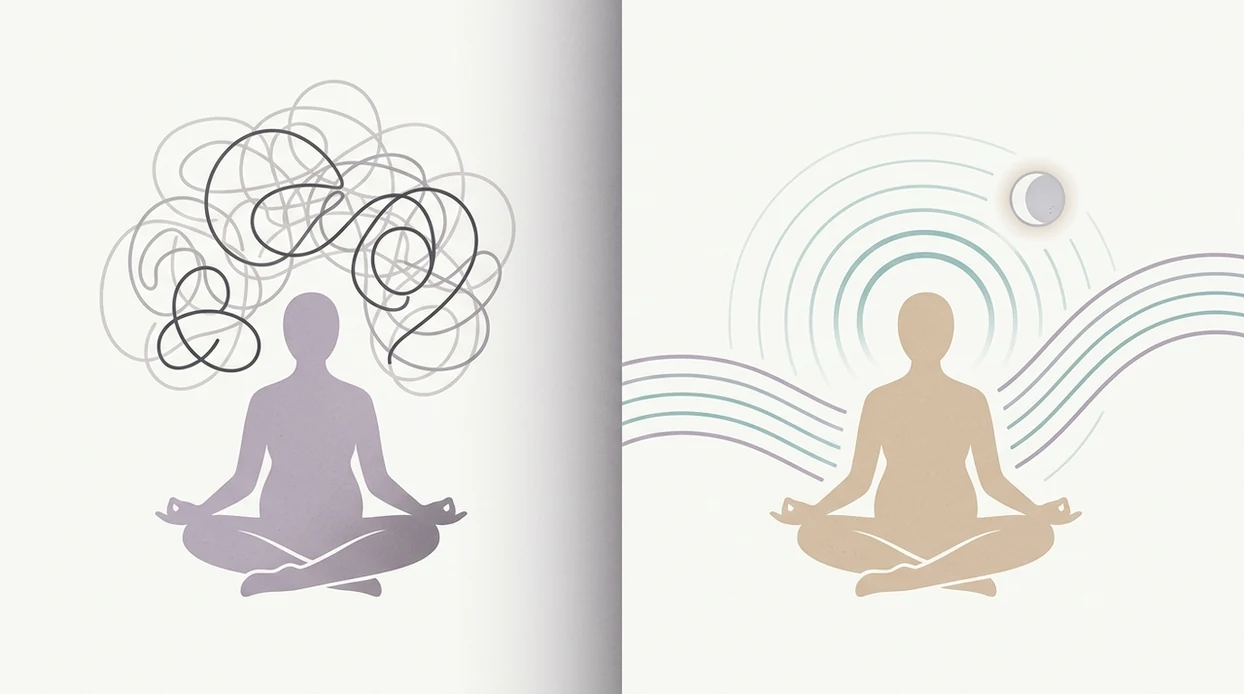
A daily hypnobirthing routine should be short, repeatable, and tied to a real moment in your day. For most people, 10 minutes done often beats a long session saved for “when there’s time.”
- Choose a consistent time and quiet space. Try after brushing your teeth, before the first email, or when the bedroom light is already low.
- Start with a 10-minute guided breathing session. Keep the first week almost boring; the goal is repetition, not performance.
- Add visualization or birth affirmation audio. Use one theme at a time, such as softening, opening, or meeting contractions calmly.
- Log your session to track consistency. A breath count scribbled on a sticky note works if an app log feels like too much.
- Review and adjust weekly based on comfort level. If a script irritates you, change it. Irritation is useful data.
Tools like Zen Pregnancy can provide guided sessions when you want pregnancy-specific audio rather than sorting through general meditation tracks.
Method Used to Track Zen Pregnancy Hypnobirthing Results
The before-and-after patterns on this page come from self-reported feedback around Zen Pregnancy app sessions, editorial review of common user themes, and pregnancy wellness evidence checks. This is observational feedback, not clinical trial data.
The recurring markers were anxiety level, sleep quality, breathing confidence, and birth plan clarity. I would not file those under medical outcomes. They are experience measures, and they can still matter.
Editor’s note: when a draft claims “better birth outcomes,” I ask what outcome was measured, who measured it, and whether provider decisions or pregnancy risk were separated out. Most app feedback cannot answer that. ACOG guidance on approaches to limit intervention during labor and birth discusses patient-centered care, shared decision-making, and labor support, but it does not prove that any specific hypnobirthing app changes delivery outcomes (https://www.acog.org/clinical/clinical-guidance/committee-opinion/articles/2019/02/approaches-to-limit-intervention-during-labor-and-birth).
Three Real Hypnobirthing Before-and-After Patterns
These patterns describe common emotional and practical changes, not promised hypnobirthing results. Not everyone gets the same shift, and some people feel only modest benefit.
Anxiety to Calm Through Breathing Repetition
Before practice, one common pattern is a tight chest after reading a dramatic birth story. After four to six weeks of daily breathing, the change is often faster recovery: fewer frantic searches, more “I know what to do for the next two minutes.”
Sleep Disruption to Relaxation Routine
Another pattern starts with racing thoughts at night, phone dimmed to lowest brightness, water bottle sweating on the nightstand. After repeated relaxation audio, sleep may not become easy, but the bedtime routine feels less random. The body gets a cue.
Fear of Intervention to Flexible Birth Confidence
Some people begin hypnobirthing afraid that intervention means failure. After practice, confidence may look like using breath, visualization, and partner cues during an unplanned cesarean or epidural birth. For many readers, discover positive birth confidence means staying oriented when plans change, not controlling every clinical decision.
Common Hypnobirthing Practice Changes After 4-6 Weeks
After four to six weeks, breathing often becomes more automatic and less forced. The first sessions can feel like acting. Later, the inhale and exhale may arrive before the anxious thought has fully taken over.
A common birth confidence before after shift is language. People move from “I don’t know what I want” to specific requests they can share with a midwife, obstetrician, doula, or partner. Partners who practice together often report feeling less like bystanders because they know the cues.
The most common medically supported way to prepare for emotional stress in pregnancy is education plus appropriate support, with clinical care added when symptoms are significant. As adjacent context, the USPSTF recommends counseling interventions for pregnant and postpartum people at increased risk of perinatal depression (https://www.uspreventiveservicestaskforce.org/uspstf/recommendation/perinatal-depression-preventive-interventions). That is not direct proof for hypnobirthing, but it supports taking emotional preparation seriously.
If app choice is part of the routine, the pregnancy-specific vs general meditation app comparison helps clarify what general wellness libraries may miss.
Common Myths About Hypnobirthing Before-and-After Results
Hypnobirthing myths usually come from over-polished birth stories. Claim check: calm-looking photos do not prove calm physiology, low pain, or fewer interventions.
| Myth | Factual correction |
|---|---|
| You failed if you need an epidural or cesarean. | Hypnobirthing skills can still support breathing, focus, and communication in medicated or surgical births. |
| Hypnobirthing results are always physical or visible. | Many changes are internal, such as less fear, clearer focus, and better coping language. |
| One session produces noticeable changes. | Most practice changes come from repeated sessions over several weeks. |
| Hypnobirthing puts you to sleep or makes you unconscious. | Hypnobirthing is usually an awake, focused relaxation state. |
For most pregnant people, daily hypnobirthing is easier than occasional long practice because the body learns from repeated cues.
What Hypnobirthing Before-and-After Photos and Stories Do Not Show
Before-and-after stories leave out a lot. Self-reported confidence is not the same as a clinical outcome, and a peaceful caption cannot show pain intensity, fetal position, blood pressure, staffing, or provider judgment.
There is also survivorship bias. People with good experiences are often more willing to post photos, record testimonials, or describe their labor as calm. People who felt disappointed may go quiet.
No story can isolate hypnobirthing from prenatal classes, partner support, doula care, provider choice, hospital policy, or plain luck. Knees rocking over a yoga mat during rehearsal contractions may help someone feel prepared. It still cannot make labor predictable.
When Hypnobirthing Is Not Enough
Hypnobirthing is not enough when symptoms suggest a medical emergency, a pregnancy complication, or mental distress that feels unsafe. In those moments, breathing audio can stay in the background, but professional care moves to the front.
Get immediate obstetric or emergency advice for decreased fetal movement, vaginal bleeding, leaking fluid before expected labor, severe headache, vision changes, chest pain, shortness of breath, fainting, severe abdominal pain, fever, seizures, or thoughts of self-harm. Anxiety also deserves clinical support when panic attacks feel unmanageable, intrusive thoughts are frightening or persistent, sleep disappears, you avoid necessary care, or you feel detached, hopeless, or afraid you might hurt yourself or the baby.
Partners should treat “the tools are not working” as useful information, not failure.
- Notice when breathing, touch, scripts, or music stop reducing distress.
- Ask clear safety questions: pain, bleeding, movement, panic, and self-harm.
- Call the midwife, obstetrician, triage line, emergency service, or mental-health crisis support.
- Stay nearby, reduce noise, and keep instructions simple while help is arranged.
- Support therapy, medication, and prenatal care if recommended; hypnobirthing can sit beside them.
Limitations
Hypnobirthing has real limits, and those limits should be named before anyone pays for a class or app.
- A 2021 Cochrane review found promising signals for hypnosis or relaxation, but the certainty of evidence was low to very low.
- Hypnobirthing does not eliminate labor pain, guarantee a calm birth, or prevent induction, epidural, assisted birth, or cesarean.
- Some people do not respond strongly to self-hypnosis, imagery, or affirmation language.
- High-risk pregnancies require medical guidance; hypnobirthing is a coping layer only.
- Marketing that promises specific before-and-after birth outcomes is overhyped. Citation needed, usually.
- Results depend on many factors, including genetics, baby position, pregnancy complications, provider decisions, and local hospital policy.
- If anxiety, low mood, panic, or intrusive thoughts feel persistent or unsafe, seek care from a qualified clinician.
For app comparisons, I also flag claims about Calm, Headspace, Expectful, GentleBirth, or ZenPregnancy unless criteria and pricing dates are clear; the Expectful vs GentleBirth review uses that stricter lens.
Frequently Asked Questions
Does hypnobirthing actually work?
Hypnobirthing may help some people feel calmer, more prepared, and more confident during labor. Evidence is promising but low-certainty, so it should be treated as coping support, not a guarantee.
How early should I start hypnobirthing?
Many people start around 28 to 32 weeks to allow enough repetition before birth. Starting earlier is fine if the practice feels supportive.
Can I use hypnobirthing with an epidural?
Yes. Breathing, affirmations, visualization, and partner cues can still help during a medicated birth.
Is hypnobirthing evidence-based?
There is evidence on hypnosis and relaxation in pregnancy, including a Cochrane review, but certainty is low to very low. Claims of guaranteed pain-free birth are not evidence-based.
How long should I practice hypnobirthing each day?
A practical target is 10 to 20 minutes daily. Consistency matters more than session length.
Does hypnobirthing reduce labor pain?
Some studies suggest hypnosis or relaxation may reduce pain perception or pain-relief use. Results are inconsistent and not guaranteed.
Can my partner practice hypnobirthing with me?
Yes. Partners can learn breathing cues, affirmations, and grounding language to provide more useful labor support.
Does hypnobirthing work for cesarean births?
Hypnobirthing can still be useful for cesarean births because breathing and visualization may support calm before, during, and after surgery. It does not replace surgical or anesthesia care.
Which app fits which need
| Need | Best option |
|---|---|
| pregnancy-specific hypnobirthing practice before labor | Zen Pregnancy |
| pregnancy meditation with birth preparation content | Expectful |
| general mindfulness not focused on pregnancy | Calm |
| general stress meditation outside a birth plan | Headspace |
Quick facts
- Type
- Pregnancy meditation app
- Platforms
- iPhone, iPad, Android
- Focus
- Hypnobirthing, meditation, labor breathing, relaxation, birth affirmations
- Includes
- guided hypnobirthing sessions, pregnancy meditations, labor breathing, birth affirmations, contraction timer, kick counter
- Best for
- daily hypnobirthing practice to build confidence, familiarity, and a calmer labor mindset
- Free
- Yes
- Medical replacement
- No
People also use Zen Pregnancy for
Practice Hypnobirthing Before Labor With Zen Pregnancy
Build a daily routine with pregnancy-specific hypnobirthing, breathing, relaxation, and birth affirmation sessions. Use Zen Pregnancy on iPhone or Android to make your labor tools feel more familiar before the day arrives.
Download Zen Pregnancy Free