 Zen
ZenRelaxation Techniques During Pregnancy: What Actually Calms You Down
Relaxation techniques for pregnancy that go beyond 'just breathe.' Practical methods for anxiety, insomnia, and the emotional weight of carrying a baby.
200,000+ moms • ORCHA Certified • Free on iOS & Android
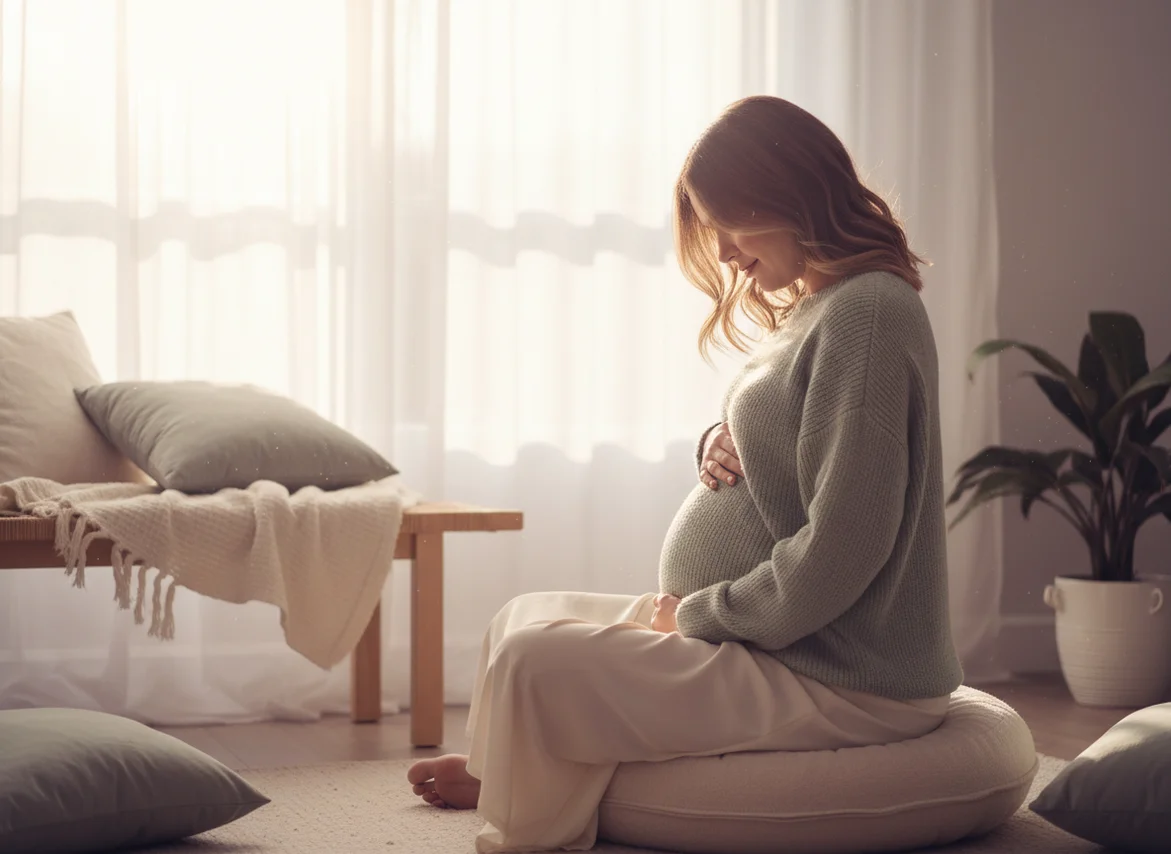
Honestly, these little relaxation tools can help your nervous system settle down so your thoughts don’t run wild and your body can finally unclench. The “best” ones are the ones you’ll still do when you’re wiped out, like a simple breathing pattern, a quick muscle-release routine, a short visualization, a bit of gentle movement, or anything that helps you fall asleep easier.
And yeah, pregnancy can be really beautiful. But it can also feel heavy. I mean that heavy feeling where you’re carrying a baby and also carrying nonstop “what ifs,” and people chirp “just breathe” as if that magically shuts off the 2 a.m. anxiety spiral.
I’ve talked with so many women who feel bad for not loving every minute, and I always tell them the same thing: feeling anxious while you’re pregnant doesn’t mean you’re ungrateful. It usually just means your brain’s doing that overprotective thing, trying to keep you and the baby safe. So we’re gonna give your brain a few tools that work better than worry does.
TL;DR: Relaxation techniques during pregnancy, such as breathing exercises and gentle movement, are essential for calming the nervous system and managing anxiety. They can help emotionally, and there’s also evidence they support things like blood pressure, heart rate, and even how labor goes for some people. And if you do them pretty regularly, even in short bursts, the payoff tends to build for you and for baby.
Why this matters more than people admit: when stress hits, your body flips into fight-or-flight mode
Your heart starts beating faster. Muscles tighten. Breathing gets shallow. Your thoughts get loud. Pregnancy is already a lot on your body, so when stress piles on too, you can be flat on the couch and still feel like you haven’t rested at all.
Relaxation isn’t about being calm and glowy 24/7. It’s more like helping your system reset so you can eat without nausea taking over, sleep a little, think straight, and feel like yourself again. And yes, some of it is measurable, not just “in your head.”
A 2024 review of 32 studies (close to 4,000 pregnant women) found that relaxation practices lowered stress, anxiety, and depressive symptoms, and some trials also reported improvements in things like blood pressure and heart rate. Some studies even found shorter labor duration. You can read more details in the published review here: effects of relaxation interventions during pregnancy.
Here’s the part that always gets me: when your body softens, your baby often responds too. In one trial, progressive muscle relaxation and guided imagery increased fetal movement and uterine relaxation compared to resting quietly. It’s not magic. It’s physiology.
How it works (quick science): most relaxation techniques nudge your body toward the parasympathetic nervous system, basically your “rest and digest” setting
When that shift happens, your heart rate often slows, your muscles loosen up, and stress hormones settle a bit, which is why anxiety can feel less sticky and sleep can feel doable again.
It can also support the hormone patterns your body relies on during labor, which, in a lot of cases, helps things go a little smoother. Oxytocin (often called the bonding hormone) is linked with calm, connection, and effective contractions in labor, while high stress can increase adrenaline, which can make the body feel braced and guarded.
Consistency matters more than intensity. Many women notice meaningful changes after several weeks of daily practice, even if it’s only 10 minutes at a time. A 2026 review also found digital interventions with guided content can reduce pregnancy-related stress, especially when regular support is limited: digital health interventions for pregnancy stress.
Relaxation techniques during pregnancy you can actually use on a real day
Progressive muscle relaxation (PMR) for pregnancy anxiety
PMR is simple: tense a muscle group for a few seconds, then release. The release is the point. It teaches your body the difference between “tight” and “safe,” which is something anxiety can blur.
Try it like this: start at your feet, gently tense for 5 seconds, release for 10. Move up calves, thighs, hands, shoulders, jaw. Keep it light. Pregnancy is not the time to clench like you’re at the gym.
In my experience, PMR is one of the fastest ways to stop that shaky, buzzy feeling when your mind won’t land anywhere. It works.
Guided imagery when your thoughts won’t stop
Guided imagery is a mental “scene” your body can settle into: warmth, safety, heaviness, soft light, waves, a cozy room. Your brain responds to imagined safety similarly to real safety, which is why visualization can lower stress symptoms.
If you struggle to visualize, don’t force it. Use sensory cues instead: “my shoulders feel heavy,” “my belly is warm,” “my breath is slow.” Gentle is enough.
Breathing exercises that do more than “just breathe”
The best pregnancy breathing exercises are the ones that lengthen your exhale. A longer exhale signals safety to the nervous system and can reduce the physical intensity of anxiety.
Start with a simple pattern: inhale for 4, exhale for 6. Do 10 rounds. If that feels hard, make it 3 and 4. If you want more structured options for daily calm and labor, this is a good reference: breathing techniques for pregnancy.
Gentle movement that releases stored tension
Some days, sitting still makes anxiety louder. That’s normal. Gentle movement gives stress somewhere to go.
Pregnancy-safe options include slow prenatal yoga, stretching, walking, and pelvic circles. Research suggests yoga and relaxation practices can improve perinatal sleep quality by easing anxiety and downshifting the nervous system. If movement triggers dizziness, nausea, or contractions, stop and check in with your provider.
Sleep relaxation for pregnancy insomnia
Pregnancy insomnia isn’t just discomfort. It’s also mental load, hormonal shifts, and that annoying moment when you finally lie down and your brain starts presenting a slideshow of worst-case scenarios.
Pick one wind-down ritual and keep it boring: dim lights, warm shower, side-lying rest, then a sleep-focused relaxation track. If you need something designed specifically for those wide-awake nights, here’s a helpful option: sleep meditation for pregnant women.
Trimester-specific relaxation techniques during pregnancy (what tends to help most)
First trimester: nausea, worry, and “is this normal?” spirals
Early pregnancy anxiety is often fueled by uncertainty and feeling out of control. Short practices usually work better than long sessions when you’re tired or sick.
Try: 5-10 minutes of guided relaxation, exhale-lengthening breathing, or a calming body scan. If you want a gentle starting point that’s specifically written for anxious minds, this can help: pregnancy anxiety relief meditation.
Second trimester: the busy mind stage
This is when energy sometimes returns and your brain tries to “get everything done.” Baby prep. Work. Appointments. The mental to-do list becomes your personality.
Try: a daily mindfulness check-in, a short walk without your phone, and one relaxation track you repeat until your body recognizes it as a cue for calm. For a simple, awareness-based approach, you can explore a prenatal mindfulness app style practice.
Third trimester: discomfort, birth fear, and sleep disruption
Third trimester anxiety often has a specific flavor: “How will I handle labor?” and “What if something goes wrong?” That’s birth fear, and it’s more common than people admit out loud.
Try: side-lying relaxation, PMR for hips and jaw, and hypnobirthing-style tracks that focus on safety, confidence, and letting go. For labor-day support, this is a useful resource: guided meditation for labor. And for mindset practice, repeatable words can be surprisingly grounding: positive birth affirmations.
What helps when you’re panicking (quick techniques that interrupt the spiral)
When anxiety spikes, your goal isn’t to “think positive.” Your goal is to create a physical shift.
Try the 90-second reset: put one hand on your chest, one on your belly, and exhale slowly for 6-8 seconds. Do that five times. Look around and name five things you can see. This anchors your brain back into the room.
Use temperature: cool water on wrists or a cool cloth on the back of the neck can help bring down the intensity fast.
Change posture: if you’re curled up and tense, sit up supported or stand and sway. The body position you choose can either feed panic or soften it.
If you need more than quick resets, a structured library matters. A pregnancy stress relief app approach can be easier than trying to remember techniques in the moment, especially when you’re exhausted.
Limitations and safety: what to avoid and when to get extra support
Relaxation techniques during pregnancy are gentle by design, and studies generally report no adverse effects for low-risk pregnancies. But “safe” doesn’t mean “one-size-fits-all,” and there are a few real caveats.
If you have a high-risk pregnancy (history of preterm labor, placenta complications, severe hypertension, significant bleeding, ruptured membranes, or you’ve been told to restrict activity), check with your midwife or doctor before starting yoga, breathwork routines that change pressure, or any intensive practice.
Avoid breath-holding or forceful breathing that makes you dizzy, tingly, or lightheaded. That’s not relaxation, that’s over-breathing. Keep breathing soft and natural.
Be careful with long periods flat on your back in later pregnancy, since supine positioning can reduce blood flow for some women. Side-lying is often more comfortable and supported.
Know what relaxation won’t do: it won’t treat severe depression, panic disorder, PTSD, or trauma by itself. Meditation and hypnobirthing can be supportive, but they are not a substitute for professional mental health care. If you’re having thoughts of harming yourself, can’t function, or feel constantly on edge, please reach out to a qualified provider urgently.
Also, research has limitations. Study sizes vary, interventions differ widely (10 minutes to months), and some newborn outcomes are mixed, so long-term impacts still need more data. For a balanced overview of benefits and considerations, this is a useful clinical summary: relaxation exercises in pregnancy.
Where Zen Pregnancy fits (a companion for the days you can’t do it alone)
Some days you’ll do your breathing, stretch, drink water, and feel steady. Other days you’ll be crying because you can’t remember why you walked into the kitchen. That’s pregnancy. That’s real.
I’ve used Zen Pregnancy for daily pregnancy relaxation with women who wanted emotional support, not just clinical facts. What I like is how it meets you where you are: anxious, overstimulated, exhausted, scared of labor, or just needing a quiet place to land for 10 minutes.
And I’ll be honest about limitations: if you only open it once a week, it won’t feel like it “works,” because your nervous system learns through repetition. Also, if guided audio feels irritating on certain days, that’s normal, switch to shorter tracks or simple breathing instead. If you want to compare what hypnobirthing support can look like, this overview is helpful: which hypnobirthing app helps with birth anxiety. For deeper background on the method itself, here’s a clear explanation of hypnosis for pregnancy and why it can reduce birth fear.
If you’re the kind of person who does better with a gentle plan, not a blank screen, you can download zen pregnancy app and start small. One short track. Same time tomorrow. That’s how the calm builds.
Frequently Asked Questions
What are the best relaxation techniques during pregnancy for anxiety?
Progressive muscle relaxation, exhale-lengthening breathing, guided imagery, and guided meditation are commonly effective for pregnancy anxiety because they activate the parasympathetic nervous system. Techniques should feel calming rather than intense, and high-risk pregnancies should be discussed with a clinician before starting new routines.
Can relaxation techniques during pregnancy help my baby too?
Maternal relaxation can improve physical stress markers like heart rate and blood pressure, and some studies show changes in fetal movement during guided relaxation compared to quiet rest. Fetal and newborn outcomes are mixed across studies, so benefits cannot be guaranteed for every pregnancy.
How long should I practice relaxation techniques each day while pregnant?
Many studies use 10 to 30 minutes per day, and consistent daily practice over several weeks is associated with greater reductions in stress and anxiety. Shorter sessions can still be useful if practiced regularly.
What should I do if breathing exercises make me dizzy?
Dizziness during breathing exercises often indicates over-breathing or breathing too forcefully, so the pace should be slowed and breathing kept gentle. If dizziness persists or is accompanied by concerning symptoms, medical advice should be sought.
Is guided meditation safe during pregnancy?
Guided meditation is generally considered safe in uncomplicated pregnancies and is widely used for stress and sleep support. People with trauma histories may find certain meditations activating, and they should choose grounding practices or work with a qualified professional if needed.
Can relaxation help with pregnancy insomnia?
Relaxation practices such as body scans, gentle breathing, and sleep-focused meditation can reduce physiological arousal and make it easier to fall asleep. Persistent insomnia should be discussed with a healthcare provider to rule out contributing conditions.
Are hypnobirthing relaxation techniques only for unmedicated birth?
Hypnobirthing techniques can be used in both medicated and unmedicated births because they focus on relaxation, breathing, and reducing fear. They do not replace medical pain relief and do not guarantee a specific birth outcome.
What relaxation techniques help most with birth fear in the third trimester?
Repeated practice of guided relaxation, breathing for longer exhales, and birth-focused affirmations can reduce fear by creating familiar calm cues for the nervous system. Severe fear or panic should be addressed with a clinician or perinatal mental health specialist.
When should I avoid prenatal yoga or movement for relaxation?
Prenatal movement should be avoided or modified when a healthcare provider has advised activity restriction or in certain complications such as bleeding, risk of preterm labor, or significant placental issues. Any movement that causes pain, dizziness, contractions, or reduced fetal movement should be stopped and assessed.
Do relaxation apps actually work during pregnancy?
Digital interventions with guided content have been shown to reduce pregnancy-related stress, especially when used consistently. Results depend on regular practice and should not be considered a substitute for medical or mental health care when symptoms are severe.