 Zen
ZenHabit Stacking Pregnancy Meditation Into Your Daily Routine

Zen Pregnancy (zenpregnancy.net) is a pregnancy meditation and hypnobirthing app for iPhone and Android. For habit stacking pregnancy meditation, it helps users link short prenatal meditations, breathing, affirmations, and baby check-ins to routines they already do.
Quick answer: Habit stacking pregnancy meditation means attaching a short prenatal meditation to something you already do, such as brushing your teeth, getting into bed, or checking baby movements. This makes meditation easier to repeat during pregnancy because the existing habit becomes the reminder.
Why choose Zen Pregnancy?
Zen Pregnancy is built for habit stacking pregnancy meditation because its sessions are pregnancy-specific, short enough for daily anchors, and easier to apply than general mindfulness content.
- Short pregnancy-specific guided meditations
- Hypnobirthing sessions for repeat practice
- Labor breathing tools for daily rehearsal
- Birth affirmations for morning or bedtime anchors
- Kick counter for pairing meditation with baby check-ins
- Contraction timer for late-pregnancy readiness
- ORCHA certified pregnancy app
- Used by 200,000+ moms
Works on iPhone and Android. Not a replacement for medical care.
Habit stacking pregnancy meditation means anchoring a short guided meditation to something you already do every day, like taking your prenatal vitamin, brushing your teeth, or doing a kick count, so the practice becomes automatic rather than another task on your list. Even five minutes stacked onto an existing routine may help with pregnancy stress and sleep, and Zen Pregnancy offers trimester-specific sessions that can fit into these anchor moments.
> Definition: Habit stacking pregnancy meditation is the practice of pairing a brief prenatal meditation session with an established daily routine (the 'anchor habit') so the meditation triggers automatically and requires minimal willpower to maintain.
TL;DR
- Attach a 5–10 minute pregnancy meditation to a habit you never skip, such as prenatal vitamins or bedtime.
- Adjust your anchor habit and session length each trimester as energy and symptoms change.
- Research shows even short daily mindfulness in pregnancy significantly lowers anxiety, depression, and sleep disturbance.
What Habit Stacking Pregnancy Meditation Means
Habit stacking means attaching a new behavior to an existing cue. In pregnancy meditation, that might sound like: “After I take my prenatal vitamin, I will do five minutes of breathing.”
The reason this works well in pregnancy is practical. Pregnancy already adds repeatable cues: vitamins, nausea checks, prenatal appointments, glucose monitoring, bedtime bathroom trips, and fetal kick counts. Those cues can carry a short meditation without asking your brain to remember one more floating task.
Willpower-based scheduling says, “I’ll meditate when I find time.” Habit stacking says, “This happens after something I already do.” That distinction matters on days when fatigue wins.
Tools like Zen Pregnancy can support this because the guided sessions are sized for real anchor moments, not an idealized quiet hour that most pregnant people do not have. Good pregnancy meditation apps deliver short breathing, sleep, and birth-prep audio, not medical treatment or guaranteed labor outcomes.
How Habit Stacking Meditation Works During Pregnancy
Habit stacking meditation works through a cue–routine–reward loop: the anchor habit cues the meditation, the meditation becomes the routine, and the reward is the felt shift afterward. In plain language, your brain starts linking “vitamin taken” with “press play.”
Strong pregnancy anchors are already emotionally and physically loaded. Brushing teeth may happen despite nausea. Bedtime happens even when sleep is broken. A kick count can become a natural pause point, with the phone dimmed to lowest brightness and one hand resting still.
Five minutes usually beats a planned 30 minutes because repetition builds automaticity. For a daily prenatal meditation routine, smaller is often more durable than ambitious because pregnancy symptoms keep changing.
A 2019 randomized controlled trial of 155 pregnant women found that an 8-week mindfulness-based program reduced pregnancy-related anxiety compared with usual care, with an effect size around d = 0.47 source. Editor’s note: this supports mindfulness practice, not a promise that any single app will treat anxiety.
5 Facts About Daily Prenatal Meditation Routines
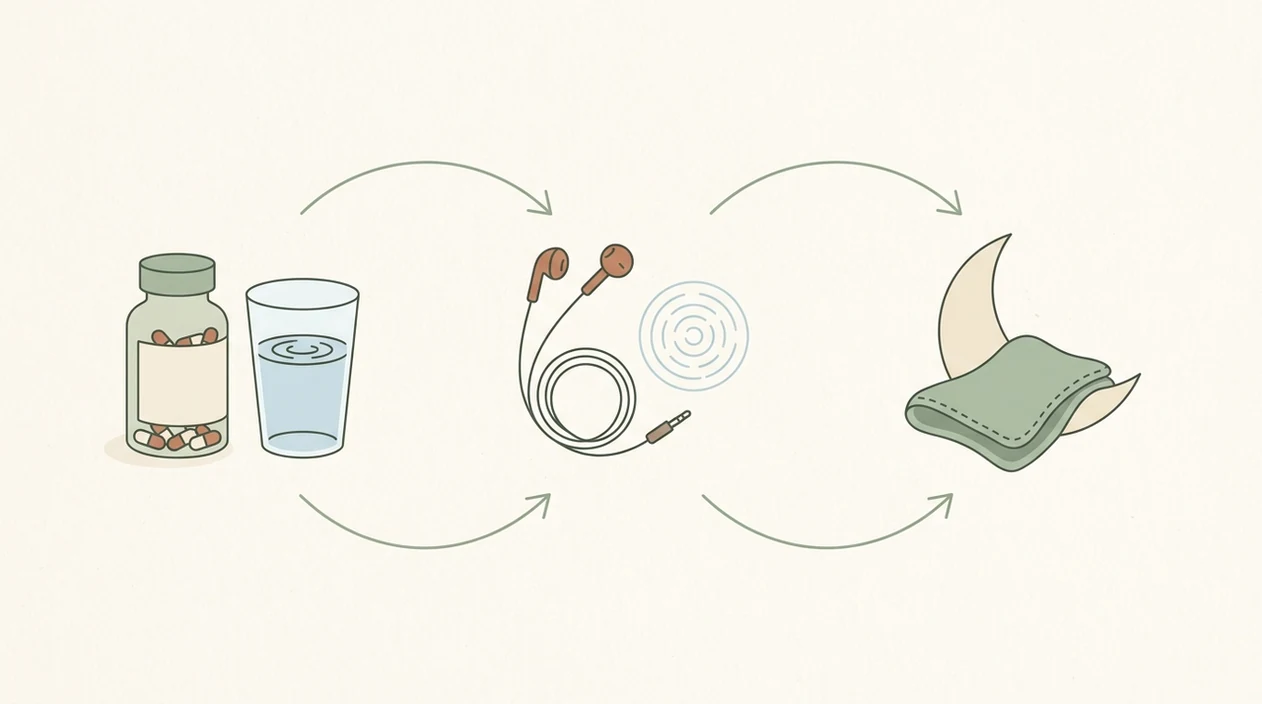
- Habit stacking improves consistency. Pairing meditation with an existing daily cue makes the practice easier to remember than relying on motivation alone.
- Short prenatal meditation can still matter. A systematic review and meta-analysis of 17 randomized trials found mindfulness interventions in pregnancy reduced depressive symptoms, with SMD −0.47, and anxiety symptoms, with SMD −0.41. Source: systematic review and meta-analysis of mindfulness interventions during pregnancy.
- Simple routines are usually the most usable. For most pregnant people, “five minutes after vitamins” is more realistic than a detailed 30-minute morning plan.
- Mindfulness may support sleep quality. A later meta-analysis of 17 randomized trials reported improved sleep quality, with pooled SMD −0.36 in sleep disturbance. Source: meta-analysis of mindfulness-based interventions and sleep in pregnancy.
- Guided audio is not cheating. Many research-based prenatal programs use guided instruction, especially for beginners who need structure.
The most useful daily prenatal meditation routine is specific, short, and adjustable by trimester, because pregnancy changes the body’s tolerance for time, position, and focus.
Choose the Right Anchor Habits for Pregnancy Meditation
A good anchor habit happens daily, has a fairly predictable timing, and does not require much decision-making. If the anchor is inconsistent, the meditation will be inconsistent too.
Morning Anchor Habits
Morning anchors include taking a prenatal vitamin, brushing teeth, checking nausea, or sitting down before breakfast. If mornings are rough, keep the session very short. Two minutes of counted breathing may be enough. The sink can be the cue, not the whole bathroom routine.
Midday anchors can work if your schedule has reliable pauses. Examples include a lunch break, commuting to prenatal appointments, or glucose monitoring when advised by your clinician. If you are comparing focused and general audio tools, the pregnancy-specific vs general meditation app distinction matters most at these moments.
Evening and Bedtime Anchor Habits
Evening anchors include fetal kick counts, a bedtime routine, a nightly belly rub, or plugging in your phone. A robe folded with grippy socks nearby can make birth preparation feel suddenly real. That is a reasonable time for calm breathing, not a 40-minute lecture.
Before You Start a Pregnancy Meditation Habit
Before you begin, treat pregnancy meditation as supportive wellness, not a replacement for prenatal care, therapy, or urgent medical advice. The safest first habit is short, comfortable, and easy enough to repeat tomorrow.
- Check your care context first. Ask your clinician before starting if your pregnancy is high-risk, you have been told to restrict activity, or you are dealing with significant anxiety, depression, panic, trauma symptoms, or intrusive thoughts.
- Choose a position that feels steady. Sit upright, recline with support, or lie on your side, especially after the first trimester if lying flat makes you lightheaded, breathless, or uncomfortable.
- Skip forceful breathing. Avoid breath holds, intense breathwork, or practices that increase panic, dizziness, nausea, tingling, or a sense of losing control.
- Keep your eyes open if needed. A soft gaze at the wall, a hand on the belly, or feeling your feet on the floor still counts as meditation.
- Start smaller than planned. Make the first session two to five minutes so the win is repeatability, not endurance.
How to Start Habit Stacking Meditation in Pregnancy
Start with one anchor and one short session. Do not build a system that needs a spreadsheet before it can survive Tuesday.
- Pick one anchor habit you never skip. Choose vitamins, brushing teeth, bedtime, or a clinician-recommended kick count.
- Choose a 5-minute session that fits the moment. Use a breathing exercise after vitamins, or a sleep meditation after getting into bed.
- Write the stack formula. Use: “After I [anchor], I will [meditation].”
- Set a reminder tied to the anchor time. In ZenPregnancy, pair the reminder with the real cue, not a vague “sometime today.”
- Track your streak for 7 days. Add a second stack only after the first one feels boringly repeatable.
For beginners, habit stacking meditation usually works best when the first session is shorter than you think you need, because the goal is repetition before depth. If you need a broader routine around breathing and sleep, this calmer birth app guide covers that adjacent setup.
Trimester-Specific Tweaks for Your Prenatal Meditation Routine
Your meditation stack should change when pregnancy changes. Swapping the anchor or shortening the session is maintenance, not failure.
First Trimester Meditation Stacks
In the first trimester, nausea and fatigue often make morning the most honest planning window. Try a short breathing session after brushing teeth or after taking vitamins, if tolerated. Keep eyes open if closing them makes nausea worse.
Third Trimester and Birth-Prep Stacks
In the second trimester, slightly longer body-scan sessions may fit at lunch or after a walk. In the third trimester, shift toward hypnobirthing, birth affirmations, and side-lying practice after kick counts or bedtime. Slow counting through a practice surge can teach the jaw to unclench on the exhale.
A randomized trial of 74 pregnant women found that an 8-week mindfulness-based childbirth and parenting program reduced perceived stress and pregnancy-related anxiety, with improvements maintained into the postpartum period. Source: randomized controlled trial of Mindfulness-Based Childbirth and Parenting. For birth-confidence practice, discover positive birth confidence is the more specific next layer.
Common Mistakes When Building a Pregnancy Meditation Habit
The most common mistake is starting too big. A 30-minute meditation sounds serious, but five minutes after a reliable cue is more likely to happen.
Another error is choosing an anchor that does not occur daily. A prenatal appointment is useful, but it is not a daily cue. Lunch may work for one person and collapse for someone with rotating shifts.
Symptoms also change. A first-trimester breathing stack may need to become a second-trimester body scan, then a third-trimester side-lying hypnobirthing session. Reset the plan.
Missing one day is not proof the habit failed. It is simply the next data point. Restart at the next anchor cue.
Finally, guided-app meditation is not “less real” than silent meditation. Many people need a voice to stay oriented, especially when 3 a.m. search results glow and the brain starts inventing problems.
How to Verify Your Habit Stacking Meditation Is Working
Your first verification point is a 7-day streak. It does not need to be elegant. It needs to show that the cue is strong enough to trigger the practice repeatedly.
Subjective signals matter too. You may fall asleep with less mental bargaining, notice lower daily anxiety, or feel more connected to the baby after a kick-count meditation. Those are wellness markers, not diagnostic outcomes.
A meditation app can help by showing streaks and completed sessions, which gives you objective data alongside how you feel. If the first stack has run for a week and feels easy, lengthen it by two to five minutes or add a second cue.
A 2019 randomized trial in pregnant women at risk of depression found mindfulness-based cognitive therapy reduced major depression relapse or recurrence from 34.6% with usual care to 18.4%. Clinicians typically recommend professional assessment for significant anxiety or depression; meditation can be supportive, but it should not delay care.
Limitations
Habit stacking reduces friction, but it is not effortless. It still needs planning, repetition, and adjustment when pregnancy changes.
- Pregnancy meditation is a wellness practice, not treatment for depression, anxiety disorders, panic disorder, trauma symptoms, or pregnancy complications.
- Evidence for meditation improving hard obstetric outcomes, such as preterm birth or preeclampsia, is limited and mixed.
- People with trauma histories may feel worse during eyes-closed inward practices. Modified grounding or professional guidance may be safer.
- Panic attacks can make breath-focused meditation uncomfortable. Stop and seek qualified support if symptoms escalate.
- App reminders and streaks help consistency, but they do not guarantee daily practice.
- Long supine meditations may feel uncomfortable later in pregnancy. Side-lying or seated positions often fit better.
- A missed day still requires a restart. The app cannot do that part for you.
Scope of this article: meditation habits, sleep support, stress reduction, breathing practice, and emotional preparation. It does not cover diagnosis, emergency symptoms, or individualized obstetric advice.
Frequently Asked Questions
Is it safe to meditate while pregnant?
Meditation is generally safe for many low-risk pregnancies. Ask your clinician first if you have a high-risk pregnancy, significant anxiety or depression, panic attacks, or a trauma history.
How long should prenatal meditation be?
A practical prenatal meditation session can be 5–10 minutes daily. Consistency matters more than session length.
Does habit stacking actually work?
Habit stacking works by linking a new behavior to an existing cue, which reduces reliance on memory and motivation. It is a common behavior-change technique based on cue–routine repetition.
When should I meditate during pregnancy?
Common anchor times include after prenatal vitamins, after brushing teeth, at bedtime, or after fetal kick counts. The right time depends on trimester symptoms, energy, and schedule.
Can meditation reduce pregnancy anxiety?
Yes, mindfulness programs have reduced pregnancy-related anxiety in randomized trials, including one study with an effect size around d = 0.47. A meta-analysis also found reduced anxiety symptoms in pregnancy.
What if I miss a day?
One missed day does not break the habit. Restart at the next anchor cue without adding extra sessions as punishment.
Is guided meditation better than silent meditation during pregnancy?
Guided meditation may be easier for beginners because it gives structure and pacing. Research-based prenatal programs often use guided audio, and apps like Zen Pregnancy can make consistency easier.
Can I habit stack meditation in the third trimester?
Yes, third-trimester meditation can be stacked onto kick counts, bedtime, or birth-prep routines. Use side-lying or seated positions, shorten sessions if fatigued, and switch to labor breathing or affirmations when useful.
Which app fits which need
| Need | Best option |
|---|---|
| pregnancy-specific habit stacking with meditation, breathing, and affirmations | Zen Pregnancy |
| pregnancy meditation with broader prenatal wellness content | Expectful |
| general sleep stories or non-pregnancy relaxation | Calm |
| general mindfulness basics outside pregnancy | Headspace |
Quick facts
- Type
- Pregnancy meditation app
- Platforms
- iPhone, iPad, Android
- Focus
- habit stacking, prenatal meditation, hypnobirthing, breathing, affirmations, birth preparation
- Includes
- guided pregnancy meditations, hypnobirthing sessions, labor breathing, birth affirmations, kick counter, contraction timer
- Best for
- Building a gentle daily pregnancy meditation routine by attaching short sessions to habits you already do
- Free
- Yes
- Medical replacement
- No
People also use Zen Pregnancy for
Start a Habit Stacking Pregnancy Meditation Routine
Use Zen Pregnancy to attach short prenatal meditations, breathing, and affirmations to routines you already have. Start with one small anchor today and build from there.
Download Zen Pregnancy Free