
A Christian Course for Pregnant Women
Learn how prayer, Scripture and calm breathing can support flexible, faith-centered preparation for birth.


200,000+ parents • Rated 4.8 from 12,000+ ratings • Free, with optional premium
Quick answer. A Christian course for pregnant women teaches birth preparation skills such as slow breathing, relaxation and visualization, with Christian prayer and Scripture woven in. It can support calm preparation, but it cannot promise a painless labor, a vaginal birth or a birth without medical treatment.
How we wrote this. We are not doctors. This guide is based on published recommendations from NHS and Cochrane, checked in November 2026. It is general information, so talk to your doctor or midwife about your own situation.
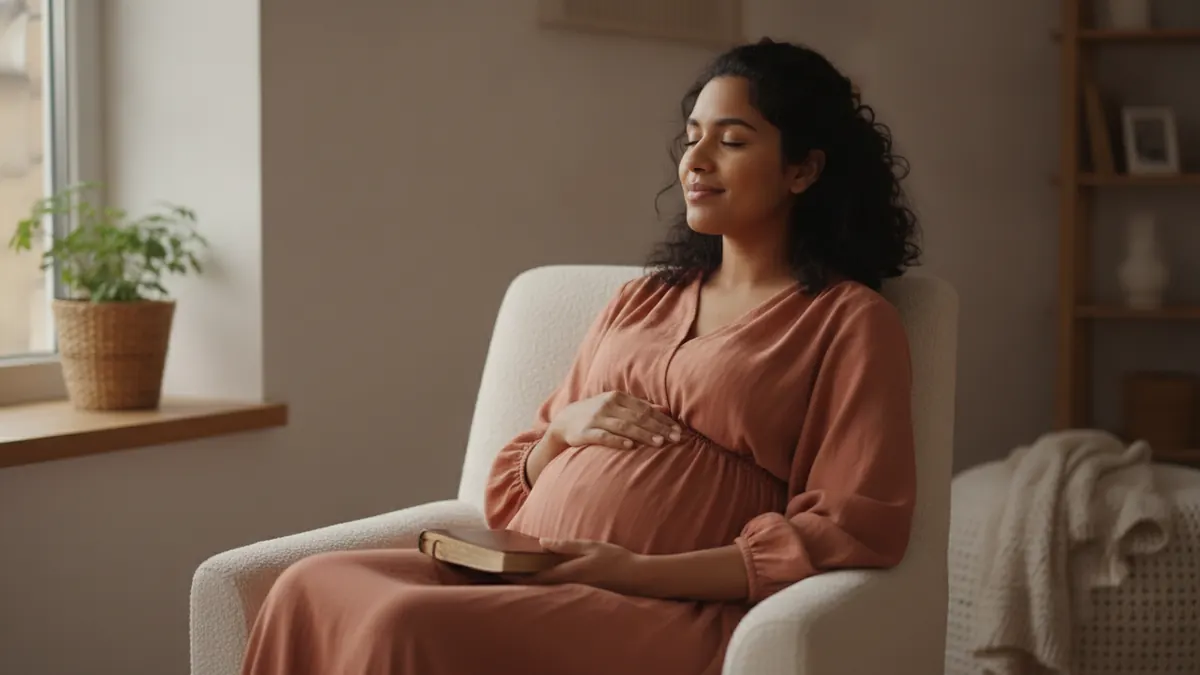
What is a Christian course for pregnant women?
A Christian course for pregnant women is birth preparation built around Christian faith. A class might teach calm breathing, muscle relaxation and visualization alongside prayer, worship and Scripture-based affirmations. If you want audio to sit alongside the prayer and Scripture in the course, the calm birth tracks and affirmations in Zen Pregnancy for iOS and the Android app page need no account.
There is no official medical definition or standard curriculum. One Christian birth class may lean heavily on Scripture and prayer, while another looks much like a general childbirth class with a few faith-based recordings. Check the actual lesson content rather than relying on the course name. If you prefer a non-religious option, an online hypnobirthing course teaches similar breathing and relaxation skills.
Many programs borrow relaxation methods the NHS describes for antenatal classes, including deep relaxation, breathing and visualization. If a course uses hypnosis, review the exact exercises before signing up. Our guide to hypnosis during pregnancy explains the technique in more detail.
Is a Christian birth class different from a regular one?
The skills overlap, but the framing differs. A regular class is not tied to any religion. A Christian childbirth class deliberately includes prayer, Scripture and a Christian view of birth.
Medical organizations do not decide how relaxation techniques fit within Christian theology. No medical source cited here says Christians must accept or reject any one method. Churches and individual Christians reach different conclusions.
If you are unsure, ask the instructor what happens during a session. Find out whether the course uses scripts, spiritual language or ideas that conflict with your beliefs. You can also speak with a pastor or trusted faith leader who understands your tradition.
You can skip any wording or imagery that feels wrong to you. Prayer can replace a visualization. A Bible passage can replace a general affirmation. A good instructor will respect that choice and will not treat your concern as silly.
How do faith and calm birth skills fit together?
They fit together when prayer gives personal meaning to practical relaxation. Slow breathing settles your body, and prayer turns your attention to God's presence, wisdom or comfort.
- Breathe slowly while listening to a short prayer or a familiar passage of Scripture.
- Practice relaxing your jaw, shoulders and hands while your partner offers quiet reassurance.
- Use a peaceful image that fits your faith, such as resting in God's care.
- Ask your partner to pray with you or repeat an agreed affirmation during contractions.
- Use the same skills alongside monitoring, induction, an epidural or preparation for a C-section.
You can practice the physical side with these pregnancy breathing techniques and this guide to visualization for birth. Neither requires you to empty your mind or hand control to someone else. You decide what to listen to, say and imagine.
What does the evidence say?
The evidence is limited and does not support guaranteed birth outcomes. A 2016 Cochrane review examined nine randomized trials with 2,954 women. Most studies taught self-hypnosis during pregnancy for use in labor.
The review found that hypnosis may reduce overall use of pain medication, but the evidence was low quality. It found no clear reduction in epidural use and no clear difference in normal vaginal birth, satisfaction with pain relief or perceived ability to cope.
A separate Cochrane review of relaxation methods found that relaxation, yoga and music may help with labor pain, but the evidence ranged from low to very low quality. Neither review studied faith-based courses as a distinct method.
So the honest promise is modest. These tools may help you prepare and relax. They cannot guarantee that labor will feel easy or follow your plan.
What should you look for in a Christian birth class?
Choose a class that explains its beliefs, teaching methods and limits in plain language. You should know what you are buying and whether the instructor supports informed medical choices.
- Ask about the instructor's training and experience.
- Review the lesson outline and a sample audio track if one is available.
- Check whether the course prepares you for pain medication, induction, assisted birth and C-section birth.
- Ask how partners take part and whether they get practical guidance.
- Read the refund and access policies before paying.
- Avoid instructors who promise painless labor or claim that faith prevents medical intervention.
A strong course never makes an epidural sound like failure, and it leaves room for questions and changes of plan. Compare formats with other online birthing classes and talk with your OB-GYN or midwife about your own needs.
Zen Pregnancy's Faith-Filled Calm Birth is a Christian course for pregnant women with 8 lessons of Scripture, prayer and calm breathing. It aims at flexible preparation and does not promise a particular type of birth.
How can you practice at home?
Combine a comfortable position, slow breathing, physical relaxation, prayer and one short affirmation. No evidence-based rule says which week to begin or how many minutes to practice.
- Choose a position that feels comfortable and safe for your stage of pregnancy.
- Notice whether you are holding tension in your face, shoulders, hands or pelvic floor.
- Settle into an unforced breathing pattern. Do not chase an exact breath count if it makes you lightheaded or tense.
- Listen to a short Scripture passage, prayer or relaxation recording.
- Picture a place or situation that helps you stay focused and settled.
- Repeat one brief affirmation that feels true to you.
- Ask your partner to practice the same cues so they know what helps during labor.
Practice builds familiarity, not perfect performance. In labor you may want prayer and quiet for one contraction, then movement, conversation or medication later. That is normal. The NHS says these relaxation methods can be used with pain relief and learned with a birth partner.
Call your OB-GYN, midwife or maternity unit for bleeding, leaking fluid, changed fetal movement, regular painful contractions, severe headache, vision changes, trouble breathing, severe pain, fever or any concern that something is wrong. Call 911 in an emergency.
Which Scripture-based affirmations can you use?
Good affirmations offer courage, peace or wisdom without promising a medical outcome. Keep them short enough to remember during a contraction, and use wording that fits your beliefs.
| Scripture theme | Original affirmation |
|---|---|
| God's presence, inspired by Psalm 23 | God is with me through this moment. |
| Help and strength, inspired by Isaiah 41:10 | I can ask God for strength when this feels hard. |
| Wisdom, inspired by James 1:5 | I can pray for wisdom and ask clear questions. |
| Prayer and peace, inspired by Philippians 4:6-7 | I can bring this fear to God and return to my breath. |
| Support and shared decisions | My care team and I can make decisions together. |
| Flexibility | I can remain grounded even if the plan changes. |
These are original affirmations, not Bible quotations. You can also write your own, using our prayers for labor and delivery as a starting point.
Avoid statements such as "God guarantees I will not need a C-section" or "If I have enough faith, birth will be painless." No course can make those promises, and a painful or complicated labor is not a sign of weak faith.
Does a Christian course still help when plans change?
Yes. Breathing, prayer and focused relaxation can stay with you when labor includes medication, induction, assisted birth or a C-section. They do not have to disappear when medical care enters the room.
Write preferences rather than guarantees. A flexible birth plan template can cover your preferred environment, movement, support people, pain relief and communication. You may also want to read about epidural benefits and drawbacks and options for a gentle C-section before labor begins.
During a decision, ask what your clinician recommends, why, what alternatives exist and what may happen if you wait. Calm preparation should help you take part in your care. It should never pressure you to delay an assessment or refuse treatment.
Frequently asked questions
Is hypnosis okay for Christians?
Medical sources do not rule on Christian theology, and no cited medical authority says hypnosis is required or prohibited for Christians. Review the exact methods a course uses and speak with a trusted pastor or faith leader if you remain uncertain.
Does a Christian birth class actually work?
It may help with relaxation, but evidence for hypnosis and relaxation in labor remains limited. A Cochrane review found that hypnosis may reduce overall pain medication use, yet it found no clear benefit for epidural use, normal vaginal birth, satisfaction or coping.
Can I take a Christian childbirth class and still have an epidural?
Yes. The NHS says relaxation methods can be used alongside pain medication. Choosing an epidural does not erase your preparation or mean you failed.
Can a Christian pregnancy course prevent a C-section?
No. No course can guarantee a vaginal birth or prevent unexpected events. Breathing, prayer and relaxation may still support you before and during a C-section.
When should I start a Christian birth class?
There is no official evidence-based starting week. Most trials taught skills during pregnancy, so choose a schedule that gives you time to learn the exercises without turning practice into another source of pressure.
What can my birth partner do?
Your partner can learn your breathing cues, repeat chosen affirmations, pray with you and help communicate your preferences. Practice together before labor so your partner knows when you want quiet, touch, movement or help asking questions.
Sources
- NHS: Antenatal and hypnobirthing classes
- Cochrane: Hypnosis for pain management during labor and childbirth
- Cochrane: Relaxation techniques for pain management in labor
Written by the Zen Pregnancy team for general information. It does not replace advice from your own doctor or midwife.