
Hospital bag checklist for mom, partner and baby
A practical hospital bag checklist for labor, your hospital stay and the trip home.


200,000+ parents • Rated 4.8 from 12,000+ ratings • Free, with optional premium
Quick answer. Pack your hospital bag around 35 to 36 weeks if that timing suits your pregnancy, then check it again at 37 weeks. Prioritize identification, medical information, medications, a phone charger, comfortable clothes, toiletries, baby clothes and an installed rear-facing car seat.
How we wrote this. We are not doctors. This guide is based on published recommendations from ACOG, checked in November 2026. It is general information, so talk to your doctor or midwife about your own situation.
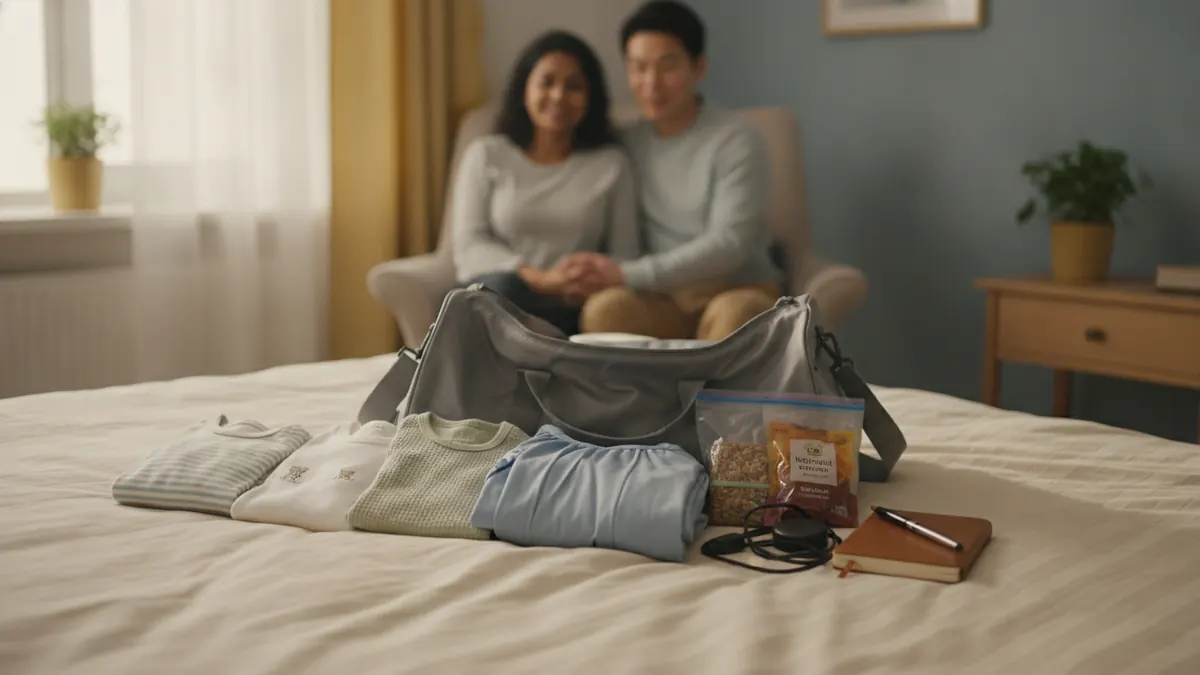
When should you pack your hospital bag?
Around 35 to 36 weeks is a sensible time to pack for most full-term pregnancies. This is practical advice, not a medical deadline. ACOG recommends packing the bag and keeping it accessible, but it does not set one required week for everyone.
Pack earlier if your OB-GYN, midwife or maternity unit advises it. Otherwise, aim to finish the main bag by 36 weeks and review it at 37 weeks. Add a short note listing last-minute items such as your phone, glasses and refrigerated snacks. If you are close to 36 weeks and have not prepared for birth yet, a last minute birth class can cover the essentials in a short time.
- Ask your hospital what it supplies before buying extra postpartum or baby products.
- Pack the main bag at about 35 to 36 weeks.
- Keep identification, insurance information and medical paperwork together.
- Put medications and your current medication list somewhere easy to reach.
- Charge your phone, backup battery and any audio devices.
- Check your chosen audio files without using Wi-Fi or mobile service.
- Review the bag at 37 weeks and after any change to your birth plan.
- Keep the bag in an accessible place, such as a hall closet or near the door.
If you are building a wider third-trimester to-do list, our pregnancy checklist can help you keep appointments, home preparation and birth tasks in one place.
What should mom pack in her hospital bag?
The most useful items are the ones you will need for admission, medication safety, basic comfort and going home. Use this as a printable hospital bag checklist, then remove anything your hospital already provides.
Documents and medical information
- Photo identification
- Insurance card
- Hospital registration or prenatal paperwork
- A current medication list
- Prescribed medications
- Your clinician's contact details
- Printed birth preferences, if you have them
- A folder for discharge papers
Keep these items at the top of the bag rather than under clothes. If you still need to write your preferences, start with our plain-language birth plan template.
Clothing and personal care
- Loose, comfortable clothes for the hospital stay
- A comfortable going-home outfit
- Non-slip socks or slippers
- A nursing or supportive bra, if wanted
- Postpartum underwear or disposable underwear, if preferred
- Toothbrush and toothpaste
- Deodorant
- Hair ties or a headband
- Lip balm
- Glasses or contact-lens supplies
- Nursing pads and high-absorbency pads, if your hospital does not supply them
Everyday essentials
- Phone
- Long charging cable
- Backup battery
- Refillable water bottle, if allowed
- Snacks that meet hospital instructions
- A pillow or familiar comfort item in a distinctive cover
Bring prescribed medicines, but check with hospital staff before taking medicine from your own supply. Hospitals also differ in what they provide, especially pads, disposable underwear, toiletries and feeding supplies. A quick call can save half a bag of unnecessary stuff.
What can you pack for comfort during labor?
Pack a few familiar items that match how you already relax. There is no official ACOG comfort-item list, and no particular pillow, playlist or massage tool guarantees a better birth outcome. The point is to give yourself options without hauling in the contents of your bedroom.
- Eye mask
- Earplugs
- Small battery-operated fan, if permitted
- Massage tool or tennis ball
- Heat or cold pack approved by hospital staff
- Low-scent moisturizer or massage oil, if permitted
- Hair ties
- Headphones
- Small speaker, if speakers are allowed
- Downloaded music, an audiobook, white noise or a guided meditation for labor
It is worth practicing your chosen tools before labor. Try a familiar track alongside these breathing exercises for active labor so your partner knows what to play and when to stay quiet. Simple usually works better than a complicated setup.
What should a partner or support person pack?
A partner needs enough to stay present without repeatedly leaving for food, medication or a charger. Hospital stays are unpredictable, so comfortable layers and a change of clothes are more useful than a carefully planned outfit.
- Photo identification and required hospital forms
- Phone and charging cable
- Backup battery
- Prescription medications
- Comfortable layers
- Change of clothes
- Basic toiletries
- Snacks and drinks permitted by the hospital
- Small pillow or blanket
- Parking payment or another payment method
- List of key contacts
- A copy of the birth preferences
- The clinician's phone number
The support person should know where the bags, documents and car keys are. They can also keep notes on comfort preferences and help with breathing prompts. Our guide to the best books for expecting dads includes more practical preparation for partners. A birth partner course can help them learn what to do once labor starts.
What should you pack for the baby?
The baby needs surprisingly little for a routine hospital stay. Pack clothes for the trip home and ask whether your hospital supplies diapers and wipes.
- One going-home outfit in newborn size
- One going-home outfit in a larger size
- Weather-appropriate hat or socks
- A blanket suitable for the weather
- Diapers and wipes only if the hospital asks you to bring them
- A folder or safe container for paperwork and keepsakes
The car seat does not go inside the bag, but it is essential. ACOG says a newborn cannot leave the hospital without a car seat. Install a rear-facing seat in the back seat and have it ready at least three weeks before the due date.
What should you leave out of the hospital bag?
Skip bulky supplies until you know what your hospital provides. A smaller, organized bag is easier to carry and easier to search when contractions are taking most of your attention.
| Leave out for now | Why |
|---|---|
| Large packs of diapers and wipes | Your hospital may provide them or ask for only a small quantity. |
| A large supply of pads or disposable underwear | Ask what postpartum supplies are included. |
| A breast pump | Bring one only if your hospital or clinician asks you to. |
| Several baby outfits | One newborn outfit and one larger option are usually enough for the trip home. |
| Unapproved speakers, oils or heating products | Hospital rules differ, so ask before packing them. |
| Emergency birth equipment | ACOG's emergency kit guidance is for unintended births outside a facility, not a routine hospital bag for labor. |
There is no universal required quantity for clothes, diapers or postpartum products. Your hospital's own list wins here. If staff tell you to bring something specific, add it even if it is not on this checklist.
How should you set up music and labor audio?
Download or confirm offline access to every track you may want during labor. Hospital Wi-Fi and mobile service can be unreliable, and labor is a terrible time to remember a password.
- Choose a short playlist rather than hundreds of unfamiliar tracks.
- Add separate options for breathing practice, relaxation, sleep and background sound.
- Test the files with Wi-Fi and mobile data turned off.
- Pack wired or charged wireless headphones.
- Ask whether a small speaker is permitted and keep the volume considerate.
- Show your partner where the audio is stored and how to start it.
The free Zen Pregnancy app, listed in stores as "A Hypnobirthing: Zen Pregnancy," has optional premium access and includes pregnancy meditations, hypnobirthing audio, breathing exercises, affirmations, sleep meditations, a contraction timer and a kick counter. Audio plays offline. You can download the Zen Pregnancy app here. Pack your phone charger, and load your favorite tracks in advance with your iOS download or your Android download of Zen Pregnancy, since the audio plays offline in the hospital.
If you plan to time contractions at home, open and test your chosen tool before your due date. Our contraction timer with breathing guide explains the Zen Pregnancy option.
What else should be ready before labor?
The bag is only one part of the plan. ACOG advises checking the travel time, rehearsing the route and arranging care for children, pets and the home.
- Drive the route to the hospital and identify an alternative route.
- Confirm which entrance to use during the day and overnight.
- Check parking arrangements and payment methods.
- Arrange primary and backup care for children and pets.
- Save the maternity unit and clinician phone numbers in both partners' phones.
- Review visitor, food, photography and speaker policies.
- Read the common signs of labor and follow your own hospital's instructions about when to come in.
Following ACOG's labor guidance, call your OB-GYN, midwife or maternity unit now for possible water breaking, late-pregnancy bleeding, regular contractions, severe or constant pain, reduced movement, or signs of labor before 37 weeks.
Put the final plan somewhere both you and your support person can find it. A neat checklist buried in one person's phone is not much use at 2 a.m.
Frequently asked questions
When should I pack my hospital bag?
Packing around 35 to 36 weeks is practical for many pregnancies, but it is not a universal medical deadline. ACOG recommends packing the bag and keeping it accessible without naming one required week.
What are the absolute essentials for a hospital bag?
Prioritize photo identification, insurance information, hospital paperwork, a medication list, prescribed medicines, your phone, a long charging cable, toiletries and comfortable clothes. Add a baby outfit and make sure the rear-facing car seat is installed.
Does the hospital provide diapers, pads and underwear?
Hospital supplies vary. Ask whether your facility provides diapers, wipes, pads, disposable underwear, toiletries, breast pumps and formula before you pack or buy them.
How many baby outfits should I pack?
One newborn-size going-home outfit and one larger option is a practical amount. ACOG does not specify a required number or type of baby outfits for a routine hospital birth.
What should my birth partner bring?
A partner should bring identification, a phone and charger, medications, comfortable clothes, toiletries, permitted snacks and a payment method for parking. A pillow, blanket and copy of your birth preferences may also be useful.
Can I bring music or a speaker into the hospital?
Many parents bring music, meditation or white-noise files, but hospital rules differ. Ask whether speakers are permitted, bring headphones and make your chosen audio available offline.
Do I need to pack a breast pump?
Do not assume you need one. Ask your hospital or clinician whether you should bring a pump and what feeding equipment the hospital supplies.
Sources
- ACOG: How to Tell When Labor Begins
- ACOG: Car Safety for Pregnant Women, Babies, and Children
- ACOG: A Partner's Guide to Pregnancy
Written by the Zen Pregnancy team for general information. It does not replace advice from your own doctor or midwife.